How can I increase my chances of IVF success?

IVF is a process which shouldn’t be taken lightly. It is hard on couples from all angles; emotionally, mentally and physically.

IVF eggs under microscope.

The drugs used are heavy duty; creating all sorts of side effects and mood swings. The process involves physical incisions through the vaginal wall and on the ovaries – multiple cuts in fact – depending on how many follicles you have. A lot of energy is required for your body to heal. You will also be sedated and this can take time to recover from.

Then there is the agonizing wait to see if any eggs fertilized, and how well they develop to day 5 where you will then have another procedure to transfer the embryo into your womb. And the 2 week wait begins, alongside more drugs.

It is an emotional roller coaster and exhausting; taxing mentally and physically with trips in and out of the clinic for tests and scans.

For such a consuming process, wouldn’t you want to prepare the best that you can to maximise your chances of success? Its not something you should walk into without first fully investigating what the problems are with your inability to conceive naturally, and to really prepare your body and the environment within which your eggs are recruited and collected, and then transferred back for implantation and ongoing pregnancy.

Preparation is key when it comes to IVF success. Don’t allow a fertility clinic to use your first round as a diagnostic; that’s way too expensive both financially and for your health and overall wellbeing.

Find someone to help you through the process and work with a specialist who can take a deep dive into your lifestyle and nutrition, and offer you acupuncture as part of your preparation program.

Contact me for an initial chat and start your preconception journey with me today.

Does ICSI have all the answers?

Since the advent of ICSI (Intracytoplasmic Sperm Injection) problems with male factor in infertility can be addressed and bypassed with this procedure. The ICSI procedure allows particular sperm to be selected for use and manually injected into the egg by the embryologist using a microscopic needle.

But does ICSI always give us the best outcomes?

If the quality of sperm is sub-optimal, the question one has to ask is what impact will this have on the ongoing pregnancy and health of the child going forward?

In Traditional Chinese Medicine (TCM) our Jing is the substance we inherit from our parents at the moment of conception. Our Jing fuels our growth and development not just through conception and prenatal growth, but all through our lives from infancy to puberty, adulthood and beyond. Jing dictates our constitution and vitality as we move and age through life.

So if we completely disregard the quality of the sperm in favour of the ICSI procedure, what impact will have on the health of the life created? If a sperm is unable to penetrate an egg on its own, what does that say about the underlying Qi of that sperm?

So although ISCI is a wonderful and exceptional advancement in fertility medicine and assisted reproductive techniques, I do believe it should be firmly balanced with other perspectives of male health and vitality.

Sperm are continually created within the body, so taking a break for around 3 months before the next round of IVF is an optimal amount of time to put lifestyle changes in place. Dietary, lifestyle and nutritional changes can have a huge impact on sperm quality.[1] Taking this time and making this effort to improve the underlying Qi and Jing that is passed onto the next generation is fundamentally important. Things to consider:

  • Stop smoking/vaping;
  • Reduced consumption of refined sugars, processed foods,
  • Reduced consumption of alcohol;
  • Increased consumption of a wide variety of vegetables and fruit;
  • Take regular exercise;
  • Increased water intake;
  • Reduce the use of plastics for cooking and water/food storage (switch to glass)
  • Supplement with a good quality preconception multivitamin to include zinc, selenium, omega 3 fatty acids, antioxidants;
  • Reduce stress (look at meditation, reflexology, acupuncture, spending time in nature);
  • Keep mobile phone away from body [2];
  • Ejaculate frequently [3].

Other options to explore before diving straight into IVF/ICSI:

  • Having a full examination to rule out varicocele, hydrocele and other physical abnormalities;
  • Bloods taken for a full hormone profile;
  • Checking the microbiome to rule out any infection which might be causing levels of damage to the sperm.

“Mounting evidence suggests that the gut microbiome plays a key role in normal spermatogenesis and can be negatively impacted by diet and environmental perturbations.” [3]

Of course, every couple is individual, and factors such as age, for example, will also determine your route to IVF and ICSI.

If you are looking for fertility support in Lancashire please get in touch.

If you would like support through your fertility/IVF/ICSI journey with acupuncture please get in touch.

References

[1] https://pubmed.ncbi.nlm.nih.gov/32397485/

[2] https://www.ncbi.nlm.nih.gov/pmc/articles/PMC7848840/

[3] https://rbej.biomedcentral.com/articles/10.1186/1477-7827-10-115

[4] https://www.fertstertreviews.org/article/S2666-5719(23)00001-4/fulltext

PMS and it’s extremes

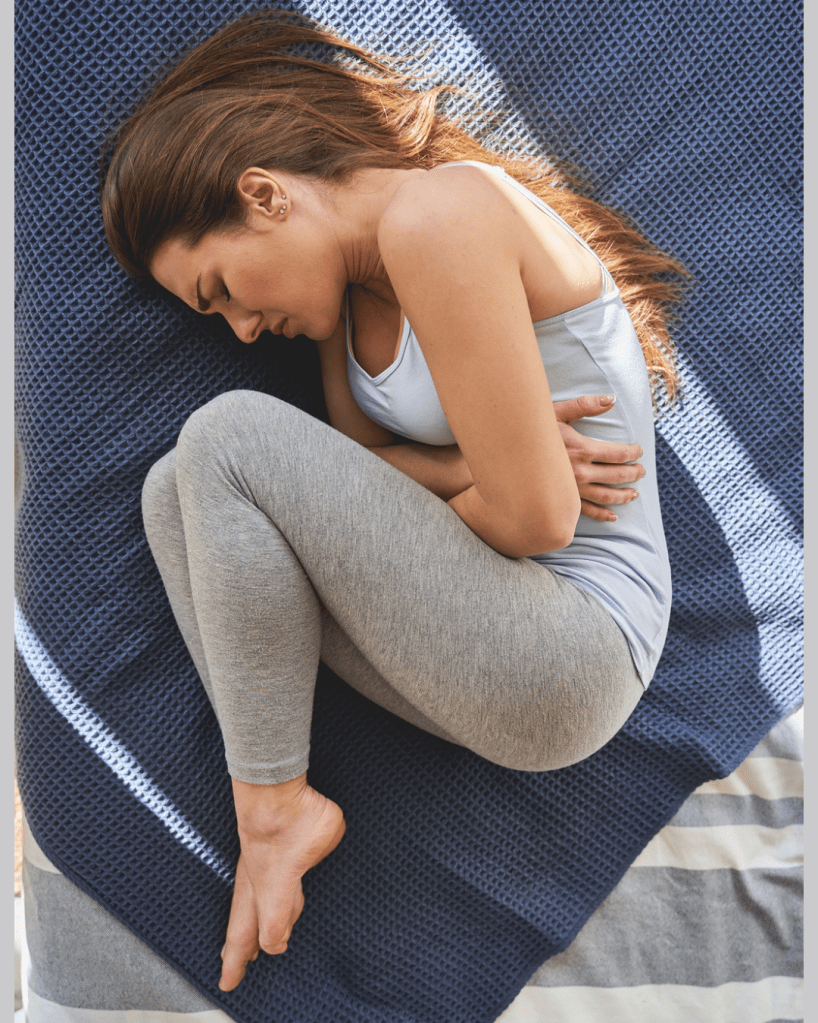
Woman experiencing severe menstrual cramping.

Approximately 90% of women suffer from Premenstrual Syndrome (PMS) at some point in their lives. During the few days leading up to menstruation can present with all sorts of symptoms such as bloating, irritability, frustration, anger, back ache, acne, abdominal cramping and pain, feeling tearful and emotional, as well as anxious and depressed.

Every cell in our body has a hormone receptor, so PMS can be attributed to over 200 symptoms as fluctuating hormone levels can have an impact everywhere in the body. These may be symptoms you only experience during the build up to your period, or perhaps these are symptoms you already experience, but are exacerbated at this time of your cycle.

In TCM terms, the luteal phase of your cycle e.g. the second half of your cycle between ovulation and your period, is when your body is at its most Yang. It is the part of the cycle where there is the most energy. Your body is gearing up for the possibility of a pregnancy with the surge of progesterone helping to really plump up the uterine lining for an embryo to implant. This surge of hormone and surge of energy can make us feel energised and productive, however as this starts to wane and drop just before our period starts, can suddenly leave us feeling depleted. The smooth flow of Qi is now not so smooth, as the progesterone starts to dip and body temperature starts to drop, our overall hormone levels can quickly leave us feeling grumpy and moody, and present us with physical symptoms too.

Switching between the Yang half of our cycle to the Yin half i.e. our menses, can create Qi stagnation. Getting to know your cycles by charting on a calendar, or Basal Body Temperature (BBT) charting can really help you to understand what is going on inside your body, help you identify symptoms and mood changes, and shed light onto areas that perhaps might need further attention.

For example, some people do not just suffer with “regular” PMS, but can experience more extreme versions such as Premenstrual Dysphoric Disorder (PMDD) and Premenstrual Exacerbation (PME). These extreme versions of PMS can be very difficult to deal with and manage on a monthly basis. “Experiencing PMDD can make it difficult to work, socialise and have healthy relationships. In some cases, it can also lead to suicidal thoughts.”1

Understanding your own personal cycle, the length of your follicular and luteal phases, and looking at your BBT throughout your cycle can open up possibilities to improve symptoms you’re experiencing. You might discover that phases of your cycle are too long/short or your temperature is not high enough or too high for example.

Supporting progesterone can help with PMS. To support progesterone production and your luteal phase, add more nutrient dense calories into your diet at this phase of your cycle. After all, your body is gearing up for a potential pregnancy, and some women find that they are hungrier at this time. Adding more protein, and looking at using adaptogens such as Ashwaganda to help manage stress and change. “Adaptogens are the umbrella term for fungi and plant-derived compounds that help the body adapt to stress.”[2] Magnesium is also said to help, as many of us are depleted in magnesium and it is involved in a myriad of daily bodily functions. Using a topical spray or adding in Epsom Salts to your evening bath are easy ways to get magnesium into your body. Magnesium often becomes low as a result of stress. [3]

Managing stress is also key to supporting your luteal phase. Booking in for regular reflexology or acupuncture can offer you the opportunity to feel relaxed and receive some downtime already scheduled into your diary. With acupuncture in particular, treating throughout the cycle can help you regulate and improve your quality of life. Vitamin B complex supports the body’s ability to handle stress. [3]

Understanding your cycle can help you to prepare and plan for what might be up ahead. Scheduling your diary around your cycle can help you to be more productive when you are feeling at your most energised, and avoid difficult social situations when you’re likely to be feeling fragile. You can also use your cycle to help with meal planning and snacking, and scheduling in more gentle exercise within the luteal phase.

If you would like fertility support in Lancashire and to book in with me please get in touch.

  1. https://www.mind.org.uk/information-support/types-of-mental-health-problems/premenstrual-dysphoric-disorder-pmdd/about-pmdd/
  2. https://www.parsleyhealth.com/blog/what-are-adaptogens/
  3. https://webfmd.com/hpa-axis-dysfunction-treatment/

Molecular Hydrogen

Hydrogen is the smallest molecule in the universe. It has only 2 atoms, and binds with oxygen to give us water – H2+0.

Molecular hydrogen is the name given to hydrogen that is released into water to give it highly antioxidant properties. There are over 1000 published studies now providing evidence that hydrogen-rich water has many health-giving and therapeutic effects.

Why is water good for you?

If we consider that, as humans, we are made up of approximately 70% water, we should really make clean, living, health-giving water and hydration our number one priority when it comes to health and nutrition.

Tap water is not the same as filtered water

Tap water is drinkable but it is full of various extras such as the growing concern around micro-plastics, chlorine, fluoride, pharmaceutical residues and hormones. Because of these, as well as poor water structure, the tap water consumed does not effectively hydrate the body and penetrate deep into the cells where it is needed. It is a bit like watering a dried up pot plant: most of the water runs straight through into the saucer.

By releasing molecular hydrogen into clean, filtered and restructured water, we are left with water that is highly bioavailable and hydrates the body much quicker and effectively that regular tap water.

How do I get molecular hydrogen into my water?

There are various ways you can get molecular hydrogen into your water. The system I use at home (and have done so since 2021 – I never promote anything I do not use myself) is the Energy Plus Undersink Filter System from Water for Health.

This is a 4 stage filtration process which sits neatly under the sink. The first two filters remove debris and particulate, and other contaminants such as chlorine and fluoride. The third filter uses bioceramics to mineralise the water to give it good structure. It then finally passes through the fourth filter which uses a magnesium substrate to release molecular hydrogen into the water.

Which water filter is best?

A water filter of this nature is my preferred way to filter water, over reverse osmosis (ro) and distilling. This is mainly down to the fact that both of these methods remove absolutely everything from the water, including the good stuff – the minerals – which not only provide all the trace elements your body needs, but also provide a basic structure to the water. So if you do choose “ro” or distilling then make sure you re-mineralise the water before drinking.

For further information please see my affiliate link here. There are currently over 1000 published studies available on the benefits of molecular hydrogen.

Water droplets suspended in mid air.

Salts explained

Salt with a wooden spoon.

Sea salt is really good for soaking in a bath. It is believed to stimulate circulation, help ease muscle cramps, help relieve stiff joints, and soothe the skin.

Sea salt isn’t generally processed that much, it is simply evaporated off the water. So its very rich in trace minerals such as calcium, potassium, magnesium, zinc and iron.

Himalayan salts are very similar to sea salt in composition and trace minerals. However, because Himalayan salt is mined near the foothills of the Himalayan mountains, from some really ancient sea beds which were covered over with ice, lava and snow for millions of years, its thought that Himalayan salts are much purer than our regular sea salt because they are not full of our modern day pollutants.

Epsom salts aren’t actually a salt. They are magnesium, sulphur and oxygen. So when you use Epsom salts you are really using them for their magnesium content. Magnesium is needed in the body for all sorts of daily functions at a cellular level, and it is thought that in this day and age we are all lacking in magnesium due to the erosion of soil quality. Magnesium is very easily absorbed through the skin so soaking in a bath of Epsom salts is a great way to boost your magnesium levels.

Although we do need magnesium to support a whole host of bodily functions, one of the main things we all need it for is stress-management and improved sleep.

So these are the different types of salt explained, so you can now make an informed choice as to which type you would like to bathe in. Happy soaking!

View the bath salts from Neal’s Yard Remedies Organic.

When East Meets West

I often find myself pondering on the little nuances of my practice. Those little subtleties that signal you to the next revelation or lead you onto another level of awareness.

My recent pondering takes me down both the reflexology and the acupuncture avenues and meets to bring another level or dimension to my understanding.

Acupuncture needle at acupuncture point Liver 3 on the foot.

I have been using the Reflexology Lymph Drainage (RLD) technique a lot lately, and really focussing a lot of attention on this sequence; looking at the particular reflexes and how the areas of the body represented by these points actually function. One of the key points of the RLD sequence is the reflex point for the Subclavian Vein (SV). This point is on the dorsal of both feet and is situated exactly at the same acupoint Liver 3.

The SV is an important point for the RLD sequence, as this is where the lymphatic system, once finished cleaning and transporting lymph through the body, will return it back into the cardiovascular system i.e. the blood. This point gets used A LOT during the RLD sequence; after every sweep and general movement, we ask the body to deposit the lymph back to the cardiovascular system via the techniques of reflexology. It is gently stimulated a minimum of 18 times on each foot, plus additional linking at the end.

From an acupuncture point of view, this point is known as Liver 3. The energy of the Liver is to govern “spreading and draining”. By this we mean that it is responsible for maintaining the free flow of Qi (energy). Liver Qi can be restricted emotionally by anger, and physically by damp-heat. “When Liver Qi stagnates, it gives rise to sensations of pressure, distention and pain”. So these are the same symptoms that we are addressing in the RLD sequence; pressure and distention from oedema, and subsequent pain that this causes. Oedema is a “damp” symptom; fluid starts to stagnate and that is what is known as “damp”. If it stagnates for long enough it can start to warm up which is known as “damp-heat”.

On each acupuncture meridian, there is a principal or “source” point which is known as the most powerful point of that particular channel. Liver 3 is the source point for the Liver channel and it is the main point we would chose to promote free-flowing Qi. In addition, this point (or points if we are thinking bilaterally) combined with Large Intestine 4 (Li4) on the hands, make up the “four gates” which are used for the relief of pain. What is interesting to me is that Li4 is the exact same point we would use for the SV in RLD on the hands!

We might ask what this all means? It just consolidates for me that what we do from either angle, whether its from a western medical viewpoint or whether it is from a Traditional Chinese Medicine viewpoint, it all slots together. The two approaches fit neatly together side by side. They both make sense.

Lymphatic Drainage using Reflexology on the Feet

I have been using the well established Reflexology Lymph Drainage technique for 6 years now. This technique isolates the reflexes of the lymphatic system using gentle circling and sweeping techniques with the intention of moving fluid in the body.

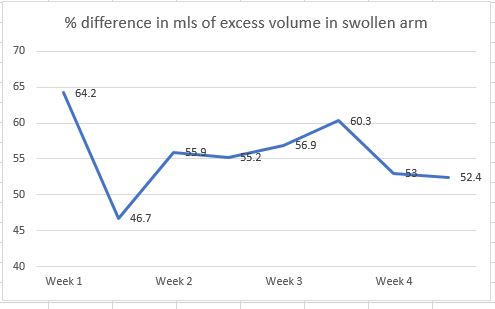
During September I have been treating a client with unilateral secondary lymphoedema in the arm, wrist and hand. We took some basic measurements in the distal (lower) arm before and after the sessions each week.

The graph below presents the results over the 4 week period. As you can see, the percentage difference in millilitres of excess fluid volume in the swollen arm compared to the unaffected arm reduces significantly after the first session, then continues to adjust then plateau after the 4th session.

Graph showing % difference in mls of excess volume in swollen arm.

Over the 4 weeks my client also noticed an improved range of motion in the wrist, and more normal sensations with the skin on the back of hand; reduced tightness and more elasticity.

My client has enjoyed the sessions so much, finding them deeply and surprisingly relaxing, and has booked another course which begins in a few weeks time.

If you are interested in trying this technique with me, or know someone who suffers with secondary lymphoedema, or other symptoms that might benefit, please get in touch for an initial chat. I offer 5 weekly sessions at a discounted price of £210. Subsequent courses are 4 weekly sessions at £150.

Other health related problems that have seen good results in the past are:

  • Heavy legs
  • Lipoedema
  • Lipo-lymphoedema
  • Autoimmune disorders
  • Injury recovery
  • Swelling
  • Recovery from cancer treatment

Elder Cottage Clinic, Warton, Preston, PR4. For more information see my dedicated pages https://fyldelymphatics.wordpress.com

The Internal Seasons

I’ve had this blog idea on my “to-do” list for ages, but I’ve not been inspired to write it until today. Do you ever have that? Where something is there to be done but you’re just not inspired to do it until one day, ping! the inspiration comes.

This blog is about outlining the menstrual cycle from a TCM (Traditional Chinese Medicine) point of view, and how are cycles are similar to the seasons. By becoming more aware of our internal cycles we can really look after ourselves in understanding when times of rest, nourishment and calm are needed (Winter) and when times of high energy can bring us productivity and rejuvenation (Spring and Summer). And those times of preparation (Autumn). A bringing together of the physical and the mental/emotional.

However I feel that there is more to this blog than I originally thought. This is because it is becoming more and more apparent to me that we are not just similar to the seasons, we ARE the seasons. We don’t just live here on this planet, we ARE part of the fabric of creation itself. There is no coincidence that our cycles move in time with the moon; that the tides are pushed and pulled by the forces of the lunar cycle, that so many animals, sea creatures and insects follow the phases of the moon for their own reproduction. Everything in nature includes us. There is no separation. When we talk about “connecting with nature” I think what we are actually doing is “reconnecting with who we are”. We are nature. We don’t walk in nature, or spend time in nature; we ARE nature. This is why these times make us feel so good, because there is a sense of coming home, of becoming one, of belonging, of lessening the grips of the idea that we are seperate from the world and from each other. I find I have more and more of these moments of inner knowing, connectedness and understanding of life, and this is the first time I have been able to grab it and get it down into words.

When we discuss the theory of TCM we often mention the seasons and the weather when we talk about particular energies and meridians. TCM philosophy really harnesses the idea of connectedness with our environment and with nature. I really appreciate this concept in my own understandings of life and of health and wellbeing. I also like the idea of likening the menstrual cycle to the ebb and flow of the tides; the tides of Yin and Yang. Understanding these tides and the transitional points between the two can offer huge benefits of understanding to support one’s own monthly cycles:

Phase 1 (days 1-5) is about Blood as we menstruate, it is a restful Yin phase focusing on nourishing ourselves and taking care of ourselves. Honour this time and avoid sexual intercourse and strenuous exercise. The external pathogenic factor of Cold can penetrate particularly at this time so take note of this in the activities you pursue. Remember that Blood is flowing downwards so sanitary items such as tampons obstruct this downward movement. Better to use pads or a menstrual cup.

Phase 2 (days 6-13) is focusing on Yin as increased amounts of oestrogen cause the lining of the uterus to thicken. Eating protein and mineral-rich foods in this phase will help to replenish Blood and Yin. This phase is building towards Yang.

Day 14 is when ovulation happens, and some cramping or spotting can occur as the body prepares to move from Yin to Yang. Get to know your cycles and allow your body and mind space to transition.

Phase 3 (days 15-21) is very Yang focussed; the body is building and nourishing the uterus ready for implantation if fertilization occurs, or shedding the lining if it doesn’t. This segment of the cycle is very energetic. Remember to support yourself during this energetic time with nutrient dense foods and adequate hydration.

Phase 4 (days 22-28) focusses on Qi. As oestrogen levels drop, serotonin levels can also drop and this can affect our mood and emotions. PMS can occur, tears, frustration, anger, as well as physical symptoms such as bloating or breast tenderness. All of these symptoms are based on the lack of free flowing Qi and result in Qi stagnation. So this segment of the cycle it is important to eat clean, take gentle exercise and avoid stimulants in order to support the Liver energy to keep Qi gently flowing freely. It might be a time where you might want to reach for those sugary snacks, so try to substitute those with better choices. We can also choose to eat warming foods because Qi needs heat to keep the fluids moving. Avoiding cold foods and drinks, and exposure to cold weather, swimming and sitting on cold surfaces can all help to support this phase of the cycle.

If you are looking for fertility support in Lancashire please get in touch.

[Perspectives in Foot Reading #2] – An Example

One of the services I provide is “Foot Reading” which can be done in person, or remotely via photographs, messages and/or phone/video calls. This blog gives an outline as to what you might expect to see in a Foot Reading, what information you might receive from my observations, and what kind of suggestions you might be asked to pursue to improve your overall health based on my findings. I hope you find it interesting and useful! If you would like to use this service please get in touch or see this page for further info on price.

Markers observed on the feet are categorised into 4 elements: Earth, Air, Fire and Water. We all need an even balance of these elements, and when one becomes deficient or in excess, this an reveal where imbalances reside and provide a greater awareness into our own physical and mental/emotional health and well-being.

The feet are a wonderful extremity: we tend to neglect our feet, stuffing them into socks and shoes and walking on them all day, however they hold such fascinating insights into our bodies, emotions and our overall health.

As a general guide, the left foot represents the left side of the body and what is going on in the present moment, while the right foot represents the right side of the body and what is still being processed from the past. Together, they form a perfect picture of present and past experiences, as well as a map of the whole body.

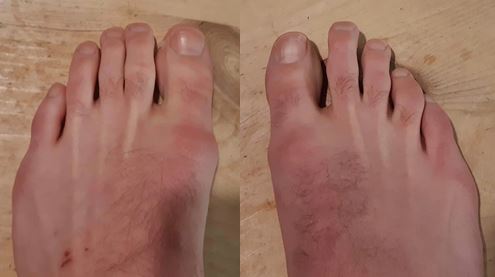
Popped dorsal tendons reveal upper back tension. Popped tendons are a fire marker and tell us that there is potentially heat, over exertion, strain, tension and/or tightness. These tendons are on the top of the foot and beneath the toes, so this is the reflex point for the upper back area across the shoulders and upper thoracic. We can see clearly that the tendons presenting here are beneath the 2nd, 3rd and 4th toes. These represent vertical zones of the feet and are “influencers”. So we could say here that the torso and pelvic regions are influencing the tension held in the upper back.

In addition, these markers are apparent on the top of the foot, which tells us that these issues are exposed to the outside world. Markers on the bottom (or plantar) surface are hidden and are more about what is going on inside of ourselves and which are not as visible or “on show”.

Looking at the bottom or plantar aspect of these feet, we can see that the right foot appears fairly uniform in its position, compared to the left which turns inwards. The left foot is also presenting with more colour which is again a fire marker.

When one foot turns inwards this can reveal an imbalance in the skeletal structure of the body; more weight is likely being put through the lateral edge of the foot where the shoulder, knee and pelvic reflexes reside.

So this can tell us that there is likely to be an issue further up the body, the root cause possibly on the right side of the body causing the left side to compensate.

Lets focus on the toes. These reveal a lot about what is going on in the head, neck and shoulders. Looking at the right foot, the toes seem fairly regular until the 5th toe which is turned and sits tucked underneath the 4th toe. This lateral area of the foot underneath the 5th toe is the shoulder reflex. I often find that 5th toe irregularities are to do with the shoulder leading up into the neck. In addition, and fascinatingly, this individual also has a skin-coloured mole in the right eyebrow; another indication of congestion in the general shoulder area (according to face reading).

Any skeletal irregularities in the feet (and a skin-coloured mole) would be regarded as earth markers; a build up around a vulnerable area, congestion, restriction. Too much earth will result in less mobility and flexibility. In addition too much fire can consume a lot of air (mobility) and dry out the water (flow), leaving an excess of earth (tension, less mobility, feeling stuck).

Mentally and emotionally all of these markers reveal that this person carries a lot on their shoulders, they feel under pressure (from others, or from themselves) and potentially are doing more than they should. Fire markers indicate tendencies to over-do things without scheduling enough rest periods.

Irregularities in the 5th toes indicate emotional insecurities; topics such as finance, home, and their ability to feel confident moving forward in life can be challenging. They represent our sense of security. As this is more apparent on the right foot, it is an indicator of emotional battles from the past still being processed. On the flip side though, these toes also show me that this person has a huge sense of fun!

This person also tends to keep their head separate from their heart; the space between the 1st and 2nd toes reveals a lot about their perceived importance in doing the sensible thing and pushing their hearts desire away, and focussing on the “what I should do” rather than following the freedom of life. As this person has fairly long 2nd toes this shows that they have natural leadership qualities.

To balance out an “infection” of earth, from a physical point of view activities such as massage, stretching and breath-work can help to increase mobility and flexibility. Internally, a lot of hoarding has taken place, so a release of this mental/emotional build up can come from journalling or any form of writing, counselling, crafts and meditation. Reflexology can also be a lovely way to promote deep relaxation and balancing and easing the body and the mind.

To balance out an “infection” of fire, we want to “reduce the forest fire to the hearth”; we don’t want to put it right out, just get it under control and set some boundaries. Physically we can look at hydration, restorative and gentle activities such as yoga and walking. Internally, routines and time budgets can help, as well as venting instead of stoking up the fire with stored anger, and spending time looking at and questioning the real priorities of one’s life.
Are You Getting Enough Vitamin Sea?

Vitamin Sea? What is this I hear you cry?!

During 2018 I discovered my love for wild swimming, and this has become a regular outing for me: in particular, sea-swimming, even during the winter.

What has this got to do with anything?

Well, there are many health benefits to cold water swimming, of which I won’t go into detail about here because they are not relevant to every reader.

What is relevant and universal to all, is the identification of that certain something that makes your heart sing, what excites you, what do you look forward to the most? What is that sparkly thing that gets you out of bed in the morning? What is that one element that keeps you going during the tough times?

We all have these special connections within our lives. Yours might not be sea-swimming, but it could be another sport, or it could be a particular place, activity, food, book, music, event.

It is also important to note that your special connection to something may change over time, and perhaps you fall out of love with it, or it evolves into something else. This is absolutely fine too. Don’t hold onto it if it no longer serves you. Change is always inevitable.

Continue to explore your life, try new things, keep going, be aware of everything, appreciate each moment and those moments that sparkle will stand out (if you are paying attention).

And if you do this, you will find a happiness, a contentment, an eagerness, and a drive that you wholeheartedly know.

But sometimes the hardest part is the identification. We don’t really know what it is we want, or what will bring us happiness or joy. This is where courage has to play a part; we have to face our fears. For example, it may be finding the courage to go forward alone, try something new, it might be doing something that gets the adrenaline pumping, it might be overcoming self-doubt, it might be perseverance, hard work, a struggle of some kind.

Set out to make small steps forward. The greater your fear the higher the sense of achievement. The more nervous you are, the more there is to gain. The steeper the learning curve, the further there is to travel and grow. Don’t compare yourself to others, go at your own pace. If you are surrounded in darkness, don’t try to pull the curtains drawn all at once. Be kind to yourself.

You are in control of your own well being, and what better way to be well? To find your passion and follow it.