How to Manage a Stye

We have had quite a few styes in our household this year. Bathe with a warm chamomile compress for rapid healing. We put 1-2 drops of chamomile essential oil in a small bowl of warm water and then soaked cotton wool in the water to make the compress. Then relax back and place over the eye for a few minutes. We repeated this daily for a few days and the stye disappeared.

Don’t forget the mental/emotional aspect of styes which might suggest looking at the world through angry eyes. From a Traditional Chinese Medicine (TCM) view, anger manifests in the Liver which opens out into the eyes, so this all ties in.

Spend time checking into yourself.

Chamomile is gentle and calming. This same eye compress can be used for itchy eyes, red and sore eyes, hay fever.

It’s always handy to have Roman Chamomile and Lavender essential oils in your cabinet for first aid/little emergencies.

Chamomile essential oil from Neal’s Yard Remedies, next to bowl of warm water and cotton wool pads.

When East Meets West

I often find myself pondering on the little nuances of my practice. Those little subtleties that signal you to the next revelation or lead you onto another level of awareness.

My recent pondering takes me down both the reflexology and the acupuncture avenues and meets to bring another level or dimension to my understanding.

Acupuncture needle at acupuncture point Liver 3 on the foot.

I have been using the Reflexology Lymph Drainage (RLD) technique a lot lately, and really focussing a lot of attention on this sequence; looking at the particular reflexes and how the areas of the body represented by these points actually function. One of the key points of the RLD sequence is the reflex point for the Subclavian Vein (SV). This point is on the dorsal of both feet and is situated exactly at the same acupoint Liver 3.

The SV is an important point for the RLD sequence, as this is where the lymphatic system, once finished cleaning and transporting lymph through the body, will return it back into the cardiovascular system i.e. the blood. This point gets used A LOT during the RLD sequence; after every sweep and general movement, we ask the body to deposit the lymph back to the cardiovascular system via the techniques of reflexology. It is gently stimulated a minimum of 18 times on each foot, plus additional linking at the end.

From an acupuncture point of view, this point is known as Liver 3. The energy of the Liver is to govern “spreading and draining”. By this we mean that it is responsible for maintaining the free flow of Qi (energy). Liver Qi can be restricted emotionally by anger, and physically by damp-heat. “When Liver Qi stagnates, it gives rise to sensations of pressure, distention and pain”. So these are the same symptoms that we are addressing in the RLD sequence; pressure and distention from oedema, and subsequent pain that this causes. Oedema is a “damp” symptom; fluid starts to stagnate and that is what is known as “damp”. If it stagnates for long enough it can start to warm up which is known as “damp-heat”.

On each acupuncture meridian, there is a principal or “source” point which is known as the most powerful point of that particular channel. Liver 3 is the source point for the Liver channel and it is the main point we would chose to promote free-flowing Qi. In addition, this point (or points if we are thinking bilaterally) combined with Large Intestine 4 (Li4) on the hands, make up the “four gates” which are used for the relief of pain. What is interesting to me is that Li4 is the exact same point we would use for the SV in RLD on the hands!

We might ask what this all means? It just consolidates for me that what we do from either angle, whether its from a western medical viewpoint or whether it is from a Traditional Chinese Medicine viewpoint, it all slots together. The two approaches fit neatly together side by side. They both make sense.

The Internal Seasons

I’ve had this blog idea on my “to-do” list for ages, but I’ve not been inspired to write it until today. Do you ever have that? Where something is there to be done but you’re just not inspired to do it until one day, ping! the inspiration comes.

This blog is about outlining the menstrual cycle from a TCM (Traditional Chinese Medicine) point of view, and how are cycles are similar to the seasons. By becoming more aware of our internal cycles we can really look after ourselves in understanding when times of rest, nourishment and calm are needed (Winter) and when times of high energy can bring us productivity and rejuvenation (Spring and Summer). And those times of preparation (Autumn). A bringing together of the physical and the mental/emotional.

However I feel that there is more to this blog than I originally thought. This is because it is becoming more and more apparent to me that we are not just similar to the seasons, we ARE the seasons. We don’t just live here on this planet, we ARE part of the fabric of creation itself. There is no coincidence that our cycles move in time with the moon; that the tides are pushed and pulled by the forces of the lunar cycle, that so many animals, sea creatures and insects follow the phases of the moon for their own reproduction. Everything in nature includes us. There is no separation. When we talk about “connecting with nature” I think what we are actually doing is “reconnecting with who we are”. We are nature. We don’t walk in nature, or spend time in nature; we ARE nature. This is why these times make us feel so good, because there is a sense of coming home, of becoming one, of belonging, of lessening the grips of the idea that we are seperate from the world and from each other. I find I have more and more of these moments of inner knowing, connectedness and understanding of life, and this is the first time I have been able to grab it and get it down into words.

When we discuss the theory of TCM we often mention the seasons and the weather when we talk about particular energies and meridians. TCM philosophy really harnesses the idea of connectedness with our environment and with nature. I really appreciate this concept in my own understandings of life and of health and wellbeing. I also like the idea of likening the menstrual cycle to the ebb and flow of the tides; the tides of Yin and Yang. Understanding these tides and the transitional points between the two can offer huge benefits of understanding to support one’s own monthly cycles:

Phase 1 (days 1-5) is about Blood as we menstruate, it is a restful Yin phase focusing on nourishing ourselves and taking care of ourselves. Honour this time and avoid sexual intercourse and strenuous exercise. The external pathogenic factor of Cold can penetrate particularly at this time so take note of this in the activities you pursue. Remember that Blood is flowing downwards so sanitary items such as tampons obstruct this downward movement. Better to use pads or a menstrual cup.

Phase 2 (days 6-13) is focusing on Yin as increased amounts of oestrogen cause the lining of the uterus to thicken. Eating protein and mineral-rich foods in this phase will help to replenish Blood and Yin. This phase is building towards Yang.

Day 14 is when ovulation happens, and some cramping or spotting can occur as the body prepares to move from Yin to Yang. Get to know your cycles and allow your body and mind space to transition.

Phase 3 (days 15-21) is very Yang focussed; the body is building and nourishing the uterus ready for implantation if fertilization occurs, or shedding the lining if it doesn’t. This segment of the cycle is very energetic. Remember to support yourself during this energetic time with nutrient dense foods and adequate hydration.

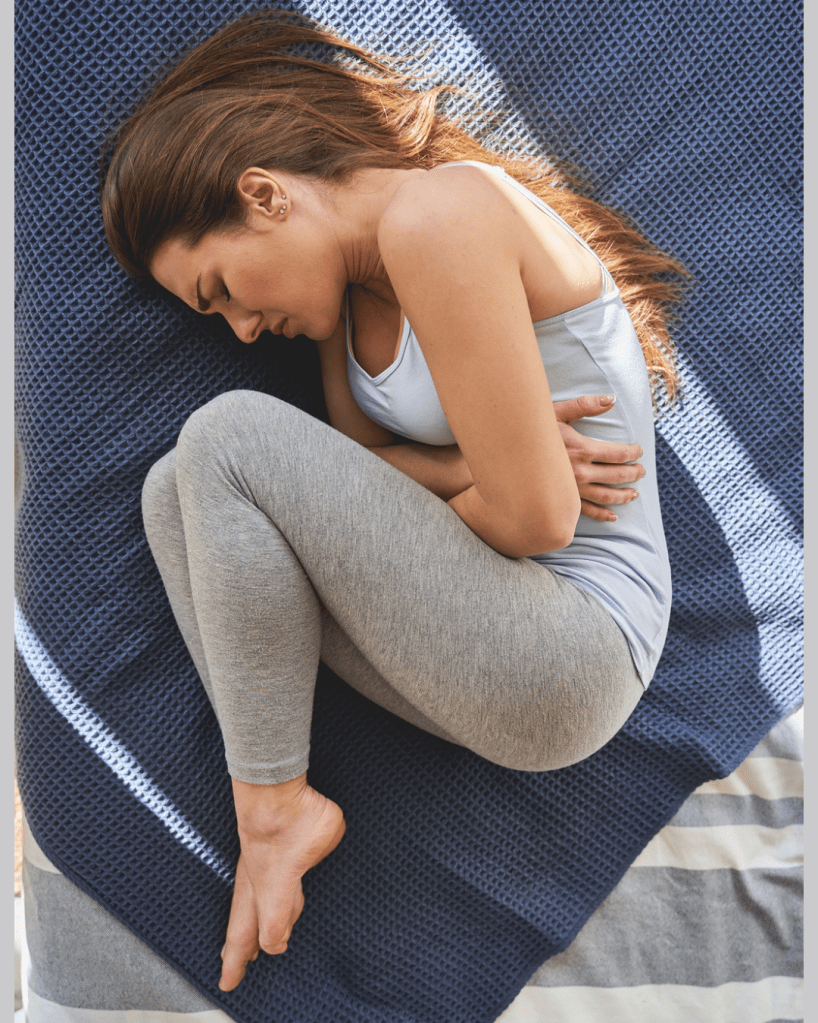
Phase 4 (days 22-28) focusses on Qi. As oestrogen levels drop, serotonin levels can also drop and this can affect our mood and emotions. PMS can occur, tears, frustration, anger, as well as physical symptoms such as bloating or breast tenderness. All of these symptoms are based on the lack of free flowing Qi and result in Qi stagnation. So this segment of the cycle it is important to eat clean, take gentle exercise and avoid stimulants in order to support the Liver energy to keep Qi gently flowing freely. It might be a time where you might want to reach for those sugary snacks, so try to substitute those with better choices. We can also choose to eat warming foods because Qi needs heat to keep the fluids moving. Avoiding cold foods and drinks, and exposure to cold weather, swimming and sitting on cold surfaces can all help to support this phase of the cycle.

If you are looking for fertility support in Lancashire please get in touch.

Self Help for Constipation

Constipation can vary from being an irritating problem that flares up from time to time, to a debilitating chronic condition causing abdominal pain and other complications.

Physically, constipation can be caused by all sorts of things including a lack of fluid and healthy fats and oils, a diet lacking in fibre, medication and food intolerances. 

Mentally and emotionally it can be triggered by stress, inability to let go of things such as the events from the past, and unwillingness to take in new life, new things, change. 

If there is a lot of faecal compaction the laxatives will only soften the newer stool; the compacted stool will remain. The best way to move stool is to bulk it out with insoluble fibre. This will create a larger stool to push everything through, without absorbing water which would make the stool very hard, difficult and painful to pass. Good sources of insoluble fibre are flax seeds soaked in water, or porridge oats. Both will form a “gloopiness” which is known as mucilage. This is an oily lubricant which will help assist the intestinal tract.

Both reflexology and acupuncture would be beneficial for constipation as both will offer space and time to deeply relax which will switch on the “rest and digest” and break the cycle of “fight or flight”.

Below are some self help tips you can try if you’re are suffering with constipation. These can be tried alongside the general advice of increasing water intake, increasing fibre intake, increasing healthy fats and oils and reducing white refined carbohydrates, sugary foods, caffiene, alcohol and stress.

Look up the following acupuncture points using the internet and gently massage these twice a day for 2 minutes. Do both left and right sides. San Jiao 6 (lower arm) and Gall Bladder 34 (lower leg below the knee).

Ask a friend or family member to gently massage the lower half of the soles of your feet. This general guidance will cover the small and large intestine reflexes. Here is a foot map as a general guide.

Ear points for the intestines (large circle) and rectum (smaller circle) can be gently massaged. Please see the diagram here. Add gentle pressure using finger and thumb, rotate and release. Do this no more than once to begin with, covering the whole area. Then wait as the body digests the action. Note that over stimulation can create feelings of nausia and dizziness, so “less is more” in this case. If any point is sensitive, this is a good indication of imbalance. Treat both ears.

When using the toilet, use a stool to raise up your feet so that you are replicating the squatting position, which is the best position to pass stools. For more information see Squatty Potty.

Ask a friend or family member to massage your abdomen in a clockwise direction. You could also include hips and lower back. Essential oils could also be used. A recommended book would be The Fragrant Pharmacy by Valerie Woomwood. As I’m not a qualified aromatherapist I won’t make suggestions here.

Take a table of flax seeds, cover in water, and soak. Once softened add more water and a small amount of good honey and drink. Do this twice a day. If this is completely undesirable then an alternative option would be to make up porridge using organic oats and water (no milk or sugar). Sweeten lightly with good honey.

Deep breathing exercises. In Traditional Chinese Medicine the Lung and Large Intestine channels are paired; the Lung is the Yin breathing in our essential life Qi, and the Large Intestine is letting go of waste, and the old. Spend a few minutes focusing on taking deep breaths, through the nose and into the belly, and then release. 

As with all self-help information, use at your own risk and do not substitite for prescribed medication or consultation with your GP/medical practitioner.

Understanding puberty in girls from a TCM perspective

We can all remember the struggles of our teenage years; problems such as acne, the start of our periods, breasts forming, getting used to wearing bras, peer pressure, increasing levels of school work and home work, not being able to get out of bed in the mornings.

As a parent, I want my own daughters to have an easier time than I did. As a therapist, I am more aware of the strains put upon children and teenagers, and how this can effect them physically, psychologically and emotionally.

In my previous blog post, I explained in general terms about our Kidney energy being responsible for our growth and development, and reproductive health. If we experience a painful puberty it is likely that we will experience a more difficult menopause. We also want to optimise fertility, pregnancy and childbirth in between these two milestones, as well as general health and wellness, and they are all interlinked.

The following behaviours can have a significant impact on a young woman’s health:

  1. Early sexual activity. This can have an impact on uterine health at such a vulnerable time, causing imbalances such as blood stasis.
  2. Excessive physical work and exercise, During puberty, this may cause weakness and deficiency in the developing body (Spleen and Kidney), which in turn can lead to stagnation. Of course this depends on the individual constitution, but it is important to be aware of as a parent.
  3. Exposure to external cold. Young women are vulnerable to invasion of external cold, particularly during puberty. Social pressure to wear clothes that reveal the lower back and abdomen, going out without a coat and scarf, prioritising their physical appearance over their well-being can leave them prone to being attacked by the external pathogen of cold. If cold attacks the uterus, it will contract and cause stagnation.
  4. The use of tampons blocks the natural downward flow of blood and can cause stagnation. There are also many other health risks associated with tampons including the exposure to environmental oestrogens which is covered in a different blog post.
  5. Emotional stress and anxiety will have a massive impact on energy levels, depleting the Kidneys and creating excess Heart energy. If it is held onto then this can cause stagnation.

Taking care during this sensitive time will have a massive impact on our young women’s health as they get older. Common problems such as period pain, irregular periods, heavy/scanty periods, infertility, endometriosis, anxiety and depression, fatigue can all be improved through gentle communication, education and sensitivity around these issues at a young age.

If you are interested in receiving some acupuncture or reflexology sessions please contact me directly for an initial chat.

If you are looking for fertility support in Lancashire please get in touch.

Jackie Marsden is a Reflexologist, Acupuncturist and Foot Reading Practitioner, based at Elder Cottage Clinic, Warton, Preston, PR4. She is a full member of the Association of Reflexologists.

A healthy mid-life means an easier menopause

The most important thing to know about the menopause is prevention, so if you are a woman in your midlife, getting the support and balance you need will help you in your menopausal years. This blog aims to explains the menopause in Traditional Chinese Medicine (TCM) terms, and gives indicators on how you can support yourself as well as receiving treatments in-clinic.

As a therapist with a predominantly female clientele, and a 40-something woman myself, I have a particular interest in this subject. Many women suffer with the two main symptoms of menopause: hot flushes and dryness (an excess of heat and a lack of moisture). In addition to these symptoms, women can also feel emotionally unstable, have difficultly sleeping and concentrating, experience frequent headaches, feel lethargic and tired, irritable, anxious, depressed and nervous.

Although the menopause usually comes at around the age of 50, the decline in the ovarian follicles and in oestrogen occurs throughout our lives. The number of follicles at birth has already halved by puberty, and continues to decline up to the menopause. Thus the menopausal symptoms can start to appear at an earlier stage in life, so we are never too young to take notice.

In TCM, from our conception, our Kidneys store our vital life essence (Jing). Jing circulates over long periods, dominating our developmental stages (usually 7 year cycles in women and 8 year cycles in men). Our Kidneys dominate growth and reproduction. They also dominate water metabolism and bone, and produce marrow (brain). So you can see that our Kidney energy is very important in not only giving us our life force and will-power, it also governs our reproductive systems, and works closely with the lungs to moisten the body, as well as strengthens our skeletal system. These are all closely linked to common health problems in women (osteoporosis, dryness, infertility, irregular menstrual cycles and fatigue to name a few).

Thinking about menopause, anything that will weaken our Kidney energy is going to have an impact on our menopause. Our busy modern day lives seem to dictate a very stressful way of living. For example, parents going out to work as well as looking after children will often feel overwhelmed and unrested, causing tiredness, fatigue and irritability. Smoking will “burn fluids” and dry out moisture. Irregular diets high in beige carbs, processed foods and sugars will create “phlegm” (this is a TCM term for thick stagnation). Too much tea, coffee and alcohol is very “yang” in nature and therefore will add heat to the body and thus aggravate symptoms such as hot flushes. Not enough fluid/water intake will have an effect on moisture levels. Emotional stress will also deplete Kidney energy.

As women, we need to create space in our lives to allow balance. We need to replenish our Kidney energy with enough rest between busy times, we need to eat and drink in moderation and eat well; foods that are nutrient dense and foods that add moisture. Drink enough fluids. Only do what we can comfortably do and don’t over stretch ourselves. If we do all of this then we will naturally regulate our day-to-day emotional stresses, but anything lying deeper should be dealt with and not “carried” as this will also deplete the Kidneys, as well as create excess Heart energy adding fire/heat, exacerbating hot flushes, irritability and dryness.

If you are interested in receiving some acupuncture or reflexology sessions please contact me directly for an initial chat.

If you are looking for fertility support in Lancashire please get in touch.

Jackie Marsden is a Reflexologist, Acupuncturist and Foot Reading Practitioner, based at Elder Cottage Clinic, Warton, Preston, PR4. She is a full member of the Association of Reflexologists.

Lung Season

As summer draws to a close we start to move away from the relaxed and carefree attitudes of the warmer and longer days, and move into more serious and introspective energies of autumn. This is the season of the Lung.

Create Space

In Traditional Chinese Medicine, the season of the Lung is all about organisation, setting limits and protecting boundaries. It’s element is metal (air); clean, pure and purposeful. It is a great time to have a clear out, get organised and tidy up, creating space. It is important to be letting go of any strong attachments you have to people, objects and experiences: attachment can hinder opportunities to learn and for growth.

Breathe in, Breathe out

The Lung is all about breathing in the new, and letting go of the old or the waste. It is no surprise then to find that the Lung (yin) is paired with the Large Intestine (yang). Yin is fluid and yang is flow. We must have fluid in order to flow. If the fluid becomes depleted, or stagnated, or in excess, then this will consequently effect the flow. Traditional Chinese Medicine understands that life is all about balance: if the body and mind are out of balance then this is where dis-ease can occur.

Grief

The emotion of the Lung is sadness (grief). If we spend a lot of time re-living the past in our minds, or having strong attachments, this can deplete our Lung energy and create deficiency. Of course it is only natural and healthy to experience sadness and loss, but it must be resolved and not prolonged. It must be experienced and learned from, not perpetually endured. Grief cleanses us of what is not needed in our lives. Chronic deficiencies in Lung energy lead to depletion and consequently to depression and other issues.

Things we can do

The Lung is the only yin organ with direct contact to the exterior, and therefore we must take care of this delicate organ by protecting our wind gates and wrapping up warm with collars and scarves as the colder weather prevails.

The climate of Lung season is dryness. We can eat warm and foods that are cooked for longer; nourishing and moisturising, supporting the body and the immune system.

If we live in balance with nature, Autumn is about contracting and slowing down, looking inwards, getting ready to rest (for the winter).

Spend time deep breathing and visualising letting go of everything that no longer serves you.

These are just some simple things we can pay attention to during the season of the Lung. The element of metal gives us our sense of self worth, our own self-value. We must look inside ourselves for that.

Next up: winter – season of the Kidneys.

If you are looking for fertility support in Lancashire please get in touch.

Jackie Marsden is a Reflexologist, Acupuncturist and Foot Reading Practitioner, based at Elder Cottage Clinic, Warton, Preston.

Image courtesy of Graphics Mouse at FreeDigitalPhotos.net

What can we do for Eczema?

Eczema is dry, itchy, flaky, red and inflamed skin (and sometimes worse). It is largely a chronic condition meaning that it is long-lasting and can be controlled but not cured.

Those suffering with eczema usually suffer also with other conditions such as asthma and hay fever. This is because they are all types of allergies; the body has an inappropriate allergic reaction to antigens that are usually harmless (e.g. animal hair, pollen, dust). When the body reacts in this way it releases huge amounts of histamine which then causes inflammation, itching, sneezing, wheezing etc. It is usually the immune response that causes the damage to the body, not the allergen itself. (1)

So what can we do for eczema, and why do people suffer with eczema? I believe it has a lot to do with the gut. If we don’t have good gut health then the toxic overload is too much for our bodies and the skin will try to help by excreting those toxins. Remember that the skin is an outlet as well as a protective barrier and receptor. So cleaning up diets, eliminating processed foods, sugar, caffeine etc. and increasing the intake of vegetables and water is going to have a profound effect in the long term. I think we all have room for improvement with our diets!

But in the shorter term something is needed to apply to the skin to reduce the symptoms and give relief. This is particularly true for children whom are a large group of atopic (hereditary) eczema suffers.  Any petroleum-based products are not going to do this. The skin might feel soft and moisturised initially but after continued use the product will block the skin’s pores, causing imbalances in the skin’s natural equilibrium and resulting in even more problems.

Sodium Lauryl Sulfate (SLS) and its replacement, Sodium Laureth Sulfate (SLES) are both known irritants. Beware of products labelled “sensitive”. Many products on the market are full of chemicals that have no place on the skin. However, most people can tolerate them. For those who can’t, the manufacturer removes the problem chemicals, and replaces them with some that are actually worse, on the basis that the customer is unlikely to react to both. (2)

The following products are those which myself and colleagues have seen to be helpful with treating eczema:

NYRO baby balm. This balm protects and calms the skin with a combination of gentle, moisturising ingredients, including olive oil, coconut oil and shea nut butter. Apply as required to affected areas. One mother kindly shared these amazing photographs of her daughter’s eczema, before and after using the NYRO baby balm for 6 weeks.

eczema before

eczema after

For small patches of eczema or dermatitis, consider the NYRO Stellaria Cream  which is fabulous at reducing itching. Chickweed, a traditional herb renowned for cooling and soothing itching or red skin, is the active ingredient in this formula.

Another fantastic product to try is the anti-inflammatory and deeply soothing Calendula and Oat Lotion, which is suitable for extreme dryness and sensitive skin.

calendula_oatOne particular customer has experienced great success with seemingly uncontrollable eczema by the daily application of organic virgin coconut oil. Try to find a coconut oil that is raw, unrefined, unbleached, and processed without heat to retain its unique balance of nutrients. Applied directly to the skin, coconut oil makes an extremely effective conditioning treatment, gently soothing dry, sensitive skin or scalps.

As a reflexologist, I am very much aware of the power of stress and what it can do to the body. If you are suffering with eczema it could be exacerbated by stress, or vica versa. A course of reflexology might help the situation, calming the sympathetic nervous system and in turn stimulating the parasympathetic nervous system and allowing the body to regain a state of relaxation and homeostasis. During the reflexology sessions particular emphasis would be paid to specific reflex points, particularly those of the digestive system, endocrine system, lymphatics and immune systems.

In Traditional Chinese Medicine (TCM) the lungs are linked to the colon; they share the same meridian. This ties in with the commonalities between eczema, asthma and hayfever, and highlights another reason to look to improve digestive health. They are both organs of elimination.

Along with a cleaned-up diet, a cleansing and healing supplement such as aloe vera juice and/or beauty oil might also be used to help with the healing and replenishing process.  Aloe vera juice is an excellent digestive tonic. Beauty oil is a blend of avocado, hemp, flax and evening primrose oils.

(1) Ross & Wilson Anatomy & Physiology  in Health and Illness. p371

(2) Closed discussion thread

Jackie Marsden MAR is a qualified reflexologist and independent consultant (Team Leader) for Neal’s Yard Remedies Organic. Jackie leads and mentors a growing team of consultants (many of whom are therapists integrating organic products into their existing businesses) via the NYRO social selling channel, holding regular team meetings, one-to-one coaching via phone and facetime, and a closed facebook group. All views are my own.

independent-consultant-long-logoGrowyourbusiness

unnamed2mooncup_banner

Dry Eye Syndrome

Dry eye syndrome can occur when the eyes do not produce enough tears or the tears evaporate too quickly. This can leave incredibly dry eyes, or the other extreme, the eyes can water continually to try and remedy the imbalance.  This condition can affect up to 60% of menopausal/perimenopausal women. There is some evidence that shows imbalances in progesterone, testosterone and oestrogen can affect the eye. There are progesterone, testosterone and oestrogen receptors on the cornea and the meibomion glands (sebaceous glands located on the rim of the eyelid).[1] This means that there is a connection between tears and the sex hormones. There is an understanding that dry eyes can result from a deficiency in any one of the sex hormones.

ID-100202869In treating a client with dry eye syndrome, I developed a treatment plan focusing on re-balance and detoxification. Attention to the endocrine system is key, along with the liver, gallbladder, and also the urinary system, particularly the kidney.

In Traditional Chinese Medicine (TCM) the organ of the liver rules the eye; the eye it its outlet. So dry eyes might be an indicator that the body is not efficient in detoxifying or there might be an imbalance which is preventing this from happening optimally.

The eye and the kidney, in reflexology terms, are within the same zone, zone 2. In addition, thinking about meridians (the TCM energy channels) the kidney’s paired meridian is the bladder, and this starts in the medial aspect of the eye. For this reason I decided to pay attention to the urinary system during the treatments.

Sure enough, some nodules presented around the bladder and ureter on the left foot. The following day my client contacted me to tell me that she discovered she was suffering with cystitis. It was fascinating to to find symptoms of an imbalance presenting in the feet before it had presented itself to the person. My client self-treated the cystitis with an over-the-counter remedy which cleared it up in two days. But one could argue, without the reflexology treatment, the bout might have lasted longer, or been more severe.

Another interesting consequence of the treatment was that the client’s eyes stopped watering during the treatment. An instant effect like this I find truly remarkable, even though they continued to water after the treatment.

Let’s return to the liver: TCM would suggest that the liver be worked as the eye is the outlet for this organ, but also it’s pairing: the gall bladder. Emotionally the liver is associated with anger, so as a therapist it is beneficial to remain open minded about what is going on “inside” your client, mentally and emotionally, and not just recently, but long-standing emotions that can manifest in different ways. Similarly, the kidney is associated with the emotion of fear, and this conjures up images of water (crying, tears, weeping, bed-wetting, urinating).

Similarly to my advice given for perimenopause, eating a balanced diet of whole foods, whole grains, organic vegetables and fruit, reduced sugar and processed foods, and a reduction in the use of stimulants such as caffeine and alcohol, can help in re-balancing. In addition, an uptake in omega-3 can also help reduce inflammation caused by dry eye syndrome, as well as balance tear stimulation and the secretion of sebum which assists eye lubrication.

Another client who suffers with chronic dry eye syndrome as an after effect of cancer treatment, has been successful in dramatically improving symptoms by taking re-hydration salts daily. (Please consult your GP if you are currently on medication such as water or blood pressure tablets before trying this.)

Dehydration can be a cause of a wide range of health problems, and by installing a filter to restructure the tap water you are drinking to make it more bioavailable to the body is a good idea.

In addition to these options, omega 7, found in Sea Buckthorn Oil, is widely recommended by many for help with dryness during perimenopause and menopause. Not just dry eyes, but also dry skin, and intimate dryness. I recommend those made by Cytoplan. Please reach out to me if you need help or advice.

THIS IS NOT A SUBSTITUTE FOR MEDICAL ADVICE. PLEASE CONSULT YOUR MEDICAL PRACTITIONER OR GP.

[1] http://www.womentowomen.com

Jackie Marsden MAR is a qualified reflexologist and independent consultant (Team Leader) for Neal’s Yard Remedies Organic. Jackie leads and mentors a growing team of consultants (many of whom are therapists integrating organic products into their existing businesses) via the NYRO social selling channel, holding regular team meetings, one-to-one coaching via phone and Facetime, and a closed Facebook group. All views are my own.

independent-consultant-long-logoGrowyourbusiness

unnamed2

mooncup_banner

Image courtesy of stockimages / FreeDigitalPhotos.net