[Yoga Series #5] Discipline. Are you worth it?

Some days I find it hard to come to the mat. I will divert and do all manner of jobs and tasks to avoid it. To get onto the mat every day takes discipline.

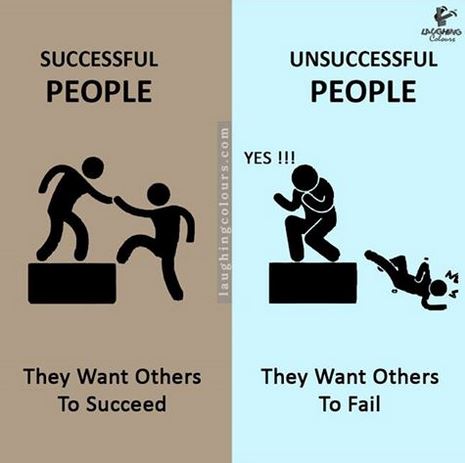
But isn’t it the same with anything in life? To meet the challenge and to move forward we have to be disciplined. Whether you want to build a business, learn a new skill, get better at something, lose weight, meet a target or achieve a goal: discipline is involved. We can’t just coast our way through life and expect things to drop into our laps.
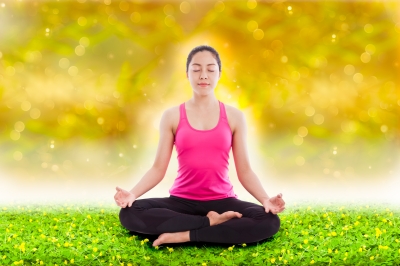
ID-100423155Bearing in mind I am still a fairly new yogi: yoga is teaching me about practice. The more I practice the more I am understanding my body. The more I understand the more I want to learn, and the more I want to discover. Parallels to my reflexology journey. You can’t be a good reflexologist unless you practice, no matter how much reading and theory you learn.

The more challenging poses are becoming less of a dread and more of a journey of revelation. The poses I can’t get into fully are less of a brick wall and more of an acceptance of where I am at this moment. I modify to suit me at this time and that is perfectly OK (wow did I just say that?)

But all of this comes from discipline. Being disciplined to practice every day is hard. But look at the rewards. I feel great during and afterwards. Better than if I don’t practice. And if I don’t practice there is always the guilt, the feeling of letting myself down, the weakness to come and consume me. Because I know that I am worth more.

Once the discipline sets in, whatever you are doing becomes less of a “chore” and more of a good habit. Something you just do because that’s what you do and who you are. Good habits are difficult to form. That’s where discipline comes in. But I know that I am worth it and that’s what keeps me motivated.

Image courtesy of kdshutterman at FreeDigitalPhotos.net

Jackie Marsden MAR is a qualified reflexologist, acupuncturist, promoter of healthy living and independent consultant (Group Leader) for Neal’s Yard Remedies Organic. Jackie leads and mentors a growing team of consultants (many of whom are therapists integrating organic products into their existing businesses) via the NYRO social selling channel, holding regular team meetings, one-to-one coaching via phone and facetime, and a closed facebook group. All views are my own.


Growyourbusiness

[Yoga Series #4] Essential Oils for Yoga

I’m not a big fan of incense. I don’t like the burning or the smell. Its just my personal preference. Of course if I’m practising yoga as part of a class then I don’t complain; I’m not that adverse to it. However when I’m at home during my self-practise I prefer to diffuse essential oils.

ID-100120457Using a diffuser, the essential oils are diffused into the yoga practice space to create an inspiring and motivating mood and to enhance breathing.

The successful practice of yoga requires some motivation and dedication.  Yoga is a journey to a balanced body that is properly aligned with mind and spirit (yoga means union). Incorporating the intensely therapeutic properties of essential oils into the practice can help for a fulfilling journey. The following essential oils and benefits can help make yoga practice a much more unifying experience of body, mind and spiritual well-being. [1]

Vetiver, ginger and patchouli will be grounding and earth-connecting, while sandalwood and cedarwood are stabilizing, strengthening and centring. All of these essential oils will help with balance and stability in the yoga poses. A great blend for this is the Aromatherapy Blend – Vitality.  Energising ginger and clove help a depleted system recuperate, giving you essential support and vitality when you need it most. A pure essential oil blend which brings renewed vigour for life.

Myrrh, frankincense, eucalyptus and rosemary encourage the flow of energy and self-expression while helping you achieve steady, deep inhalations and exhalations. As I explained in my previous blog, the breathing process is hugely important to successful yoga practice in order to support the spine during the poses. [1]

Frankincense and Myrrh aromas have been used throughout time as aids for spiritual transcendence and peace, to manifest Heaven on Earth.  Frankincense is an excellent oil for yoga as it is fantastic for the respiratory and nervous systems. [3]

Myrrh is known to unite Heaven and Earth in a person, the spiritual with the physical. It is aromatherapy for manifestation of the spiritual in oneself.  Like with Frankincense, Myrrh works therapeutically on the nervous system, to calm the mind and instil tranquillity. It is an aroma to bring peace and inner stillness. Also like Frankincense it is also a very earthy aroma. Both Frankincense and Myrrh are ideal in supporting the philosophy of yoga! [3]

Lavender, geranium and chamomile are calming and relaxing. Try the Aromatherapy Blend – Women’s Balance, especially good for balancing our emotions relating to our female cycles.

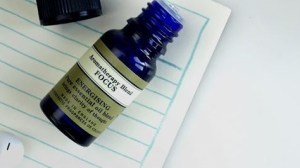
FocusBergamot, lemon and orange are all citrus oils and can provide an uplifting and energising sense to the practice. Try the Aromatherapy Blend – Focus to help you take your mind into the body for those more challenging poses, focus on your breathing and even help you onto the mat in the first place (I know I sometimes need some encouragement!)

Neroli and ylang ylang promote transcendence and spiritual expression. Try the Aromatherapy Blend De-Stress to transport you to a place of tranquillity. This one is a favourite of mine for yoga, as it smells very earthy and deep.

[1] https://www.auracacia.com/community/be-inspired/how-to-use-essential-oils-in-your-yoga-practice

[2] http://www.yogabasics.com/connect/yoga-blog/using-essential-oils-in-your-yoga-practice/

[3] http://www.care2.com/greenliving/frankincense-and-myrrh.html

Image courtesy of Worakit Sirijinda at FreeDigitalPhotos.net

Jackie Marsden MAR is a qualified reflexologist, promoter of healthy living and independent consultant (Team Leader) for Neal’s Yard Remedies Organic. Jackie leads and mentors a growing team of consultants (many of whom are therapists integrating organic products into their existing businesses) via the NYRO social selling channel, holding regular team meetings, one-to-one coaching via phone and facetime, and a closed facebook group. All views are my own.
Growyourbusiness

[Yoga Series #3] Engage the Pelvic Floor for Spinal Health

When we talk about pelvic floor muscles it is usually relating to urinary and sexual health, pregnancy or post-partum issues and problems. But actually the pelvic floor is also fundamental to our spinal health.

ID-100197696The deepest muscles of the pelvic diaphragm run from front to back (pubic joint to coccyx). The more superficial layers are those including the anal and urethral sphincters. During yoga the focus should be on engaging the deeper fibres which encourage an upward motion of energy, permitting the diaphragm to lift the base of the rib cage forward.

I have a tendency to over extend my lumbar spine and stick out my bottom: this isn’t good for spinal health, and my yoga journey is now showing me this.

To be able to flex the lumbar spine, the psoas, abs and pelvic floor must concentrically contract. So my natural tendency to over-extend, in combination with attempting postures of deep lumbar-flexion (for example a standing or seated forward bend) without engaging the core muscles properly will lead to pain. Combine this with other personal issues such as emotional stress and poor posture during work (treatments, sitting at desk, driving) has led to much discomfort.

In yoga there are three main diaphragms (pelvic, respiratory and vocal) which come together in movements that are coordinated with inhaling and exhaling. These coordinated actions of the diaphragms (in yoga these are known as “bandhas”) create more stability in the body, protecting it from injury by redistributing mechanical stress.

For example, when performing a forward bend, if the thoracic, abdominal and pelvic cavities are not supported with the breath, then there is no single centre of gravity. This puts extreme pressure on the posterior spinal muscles with a pivotal point in the lumbo-sacral junction, which is vulnerable to damage (exactly where my back pain has been!)

Have you ever reached or bent over to do something and automatically held your breath? The body does this to try and protect our spinal structures.

Actively employing the breath which engages all three diaphragms including the all important pelvic floor muscles, offers the spinal column complete support during a forward bend, by centering gravity in the pelvis, legs and feet, and allowing the spine to relax and allow in space. Remember – build the foundation! This is explained beautifully in [1].

In understanding this during the yoga practice, as well as daily activities, I have managed to reduce my lower back pain considerably. As always, stepping onto the yoga mat takes us on a journey inside the body.

For some fabulous diagrams of the pelvic floor muscles see [2].

[1] Yoga Anatomy by Leslie Kaminoff, Amy Matthews

[2] http://www.dailybandha.com/2015/05/the-pelvic-floor.html

Image courtesy of cooldesign at FreeDigitalPhotos.net

Jackie Marsden MAR is a qualified reflexologist, promoter of healthy living and independent consultant (Team Leader) for Neal’s Yard Remedies Organic. Jackie leads and mentors a growing team of consultants (many of whom are therapists integrating organic products into their existing businesses) via the NYRO social selling channel, holding regular team meetings, one-to-one coaching via phone and facetime, and a closed facebook group. All views are my own.

Growyourbusiness

[Yoga series #2] Feet are our Foundation

Following on from my previous blog in this yoga series, I’m continuing with feet.

Our feet are a masterpiece of natural engineering, however this masterpiece is not used to its full advantage in our civilised world. Shoes and flat, paved surfaces block nature’s proprioception and allow the feet to be indifferent to the environment and the surroundings.

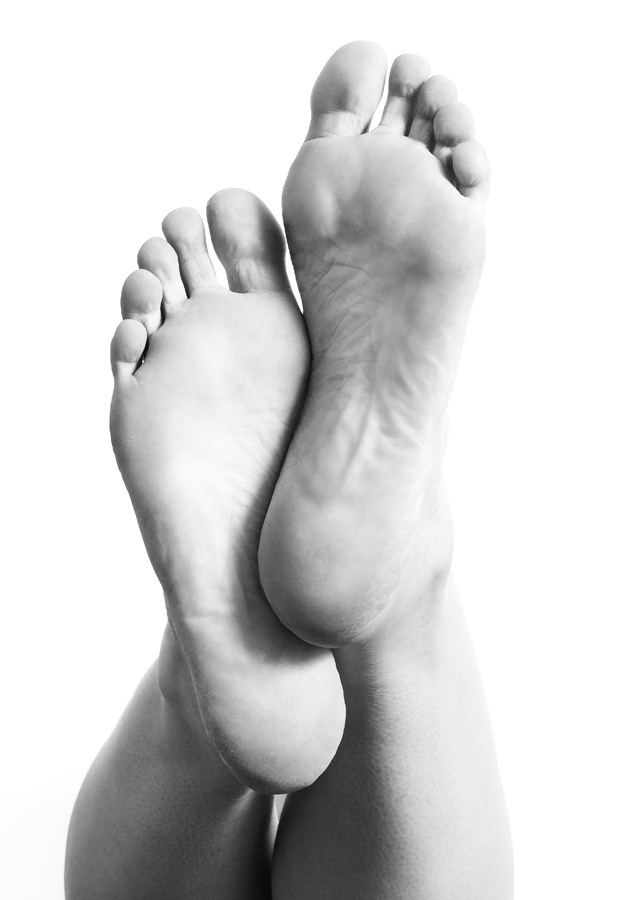
ID-100162292The less we use our feet the weaker the detailed musculature become, and the weaker the muscles then more pressure is placed on the plantar fascia, causing heel spurs and plantar fasciitis.

The practise of yoga is carried out in bare feet. This act alone reconnects us to the earth beneath us, and makes us pay attention to restoring the strength and flexibility of the foot and the lower leg. [1]

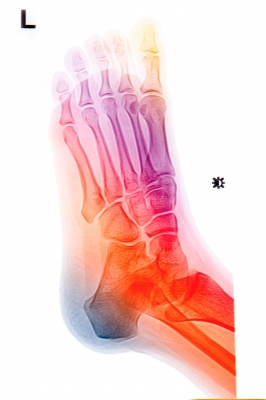
Each foot has 3 main arches: from the heel to the distal end of the first metatarsal (base of big toe), from the heel to the distal end of the fifth metatarsal (base of little toe) and the line connecting the distal ends of the first and fifth metatarsal. This creates a triangle of support for each foot. There is also a 4th arch which goes across the tarsal bones.

When we are standing in Tadasana (Mountain Pose), the arches of the feet are engaged and connecting with the support of the pelvic floor, lower abdomen, rib cage, cervical spine and the crown of the head. [1] The fundamental lessons you learn from the standing postures can illuminate the practice of other asanasas and poses. [1]

So my advice is to pay attention to your foundation: your feet. Take off your shoes and reconnect with the earth and the environment. Take time to stand quietly in Tadasana, focusing on your feet, how they feel, how your weight shifts and balances. Try “lifting” your arches and see how this ripples up through the rest of your body, improving posture and balance.

Once your foundation is improved, it is much easier to put the rest of your house in order. [1]

Read my previous blog in this series [Yoga Series #1] Yoga for Foot Health.

[1] Yoga Anatomy by Leslie Kaminoff and Amy Matthews.

Image courtesy of Praisaeng at FreeDigitalPhotos.net

Please note that I a not a yoga instructor.

Jackie Marsden MAR is a qualified reflexologist and independent consultant (Team Leader) for Neal’s Yard Remedies Organic. Jackie leads and mentors a growing team of consultants (many of whom are therapists integrating organic products into their existing businesses) via the NYRO social selling channel, holding regular team meetings, one-to-one coaching via phone and facetime, and a closed facebook group. All views are my own.
Growyourbusiness

[Yoga Series #1] Yoga for Foot Health

Our feet are our foundation. We often use language like “take a stand” or “stand on your own two feet”; phrases that represent our feet as an action of autonomy, and one of independence. Our feet create a stable base for us to live our lives.

Much of this is covered during yoga. I love my regular yoga practise and it really is something that unfolds over time, and is always a journey of self-discovery. It helps me listen to my body and thus get to know it. But I have recently found that my focussing more attention to my feet during my practise can really make such a huge difference to the poses and what I get out of my practise. If my feet are positioned correctly and active, then everything else follows.

So let’s look at the feet in yoga and see this in action. Being a reflexologist I’m always interested in feet! So below are a few poses I’ve selected especially for the feet.

Tadasana (Mountain Pose) This pose is all about grounding through the feet, feeling the earth energy pulling us down but at the same time our cosmic energy pulling us up through the crown. Working with this pose will over time give you a great sense of stability, just like a mountain, and this largely comes through focussing on the feet. Spreading the toes and lifting up the arches while simultaneously grounding the foot down into your mat.

Thai Goddess Squat Pose. This pose is an intense stretch of the foot flexor muscles on the plantar of the foot. Start on your hands and knees with your toes curled under. Gradually over time decrease the weight bared by the hands and shift over to the feet until you are in an upright position. The intense stretch can be painful and intense for the toes so don’t attempt this if you have any contraindication in your toes or feet. This stretch also works into the plantar fascia and the Achilles tendon. It is a great foot strengthener. Start of with holding for just a few seconds and progress over time.

ID-100258273

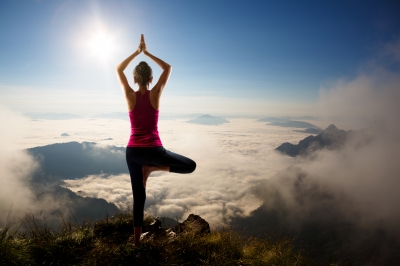
Tree pose. This is a balance, and no matter where you have your other leg or foot lifted, the grounding foot and leg is always going to get a good workout. Concentrating on the foot here is crucial – the positioning of the foot must be good to maintain balance and prevent toppling over!

Adho Mukha Svanasana (Downward Facing Dog). This is a great overall stretch for the body, both a resting and active pose, however if you concentrate on your feet during this pose it will open out a new level of discovery. Once I’m warmed up and my heels start to touch the mat, this is where focussing on grounding through the feet and toes, but lifting up through the arches can really help with alignment of the hips and engage the root lock (pelvic floor area).

Trianga Mukhaikapada Paschimottanasana. This pose is great for helping to correct dropped arches and flat feet, stretching into the foot flexors. It’s also a great stretch for the ankle. In a seated position bend one leg so that the foot is beside the outside of the hip. This can be intense for the knee so don’t attempt if your knee is contraindicated in anyway. Either sit tall for 5 breaths or bend forward at the hip holding onto the foot of the straight leg.

Please note that I a not a yoga instructor.

Read the second in this series [Yoga Series #2]: Feet are our Foundation.

Image courtesy of pat138241 at FreeDigitalPhotos.net

Jackie Marsden MAR is a qualified reflexologist and independent consultant (Team Leader) for Neal’s Yard Remedies Organic. Jackie leads and mentors a growing team of consultants (many of whom are therapists integrating organic products into their existing businesses) via the NYRO social selling channel, holding regular team meetings, one-to-one coaching via phone and facetime, and a closed facebook group. All views are my own.

Growyourbusiness

Pace yourself

Why do we push ourselves so hard and then crash and burn?

A new start to the year sees us set goals and make new year resolutions, but perhaps we go a little too “gung-ho” when what we should do is a “soft launch”.

For example, if a new years resolution is to start exercising, then this should be a slow and gradual build up to the new goal, rather than tackling three new exercise classes in week 1 and then injuring yourself.

image1(1).JPG

Another example might be working long hours to meet a business goal; never giving yourself downtime, just piling on more and more pressure upon yourself to achieve highly and quickly. This soon results in the onset of a cold, cough or virus of some description.

The moral of this story is to maintain balance. New goals and targets take ongoing dedication and commitment at the correct pace; the pace which is right for you.

Perhaps January 1st is not the best time to set new goals or new habits for ourselves? Its the middle of winter (in the UK), and its cold and dark, not the best environment to motivate, encourage and nurture. Is it not kinder for us to set our new goals in the spring, when the weather is warmer, days are brighter and nature all around us is coming to life?

Jackie Marsden MAR is a qualified reflexologist and independent consultant (Team Leader) for Neal’s Yard Remedies Organic. Jackie leads and mentors a growing team of consultants (many of whom are therapists integrating organic products into their existing businesses) via the NYRO social selling channel, holding regular team meetings, one-to-one coaching via phone and facetime, and a closed facebook group. All views are my own.
Growyourbusiness

Be Prepared for Biting Insects (let’s live together!)

We’re off to the midge haven of Scotland for our summer holiday, so in  true girl guide fashion I’ve followed the motto of “be prepared” and have stocked up on insect repellent and cream to apply on bites.

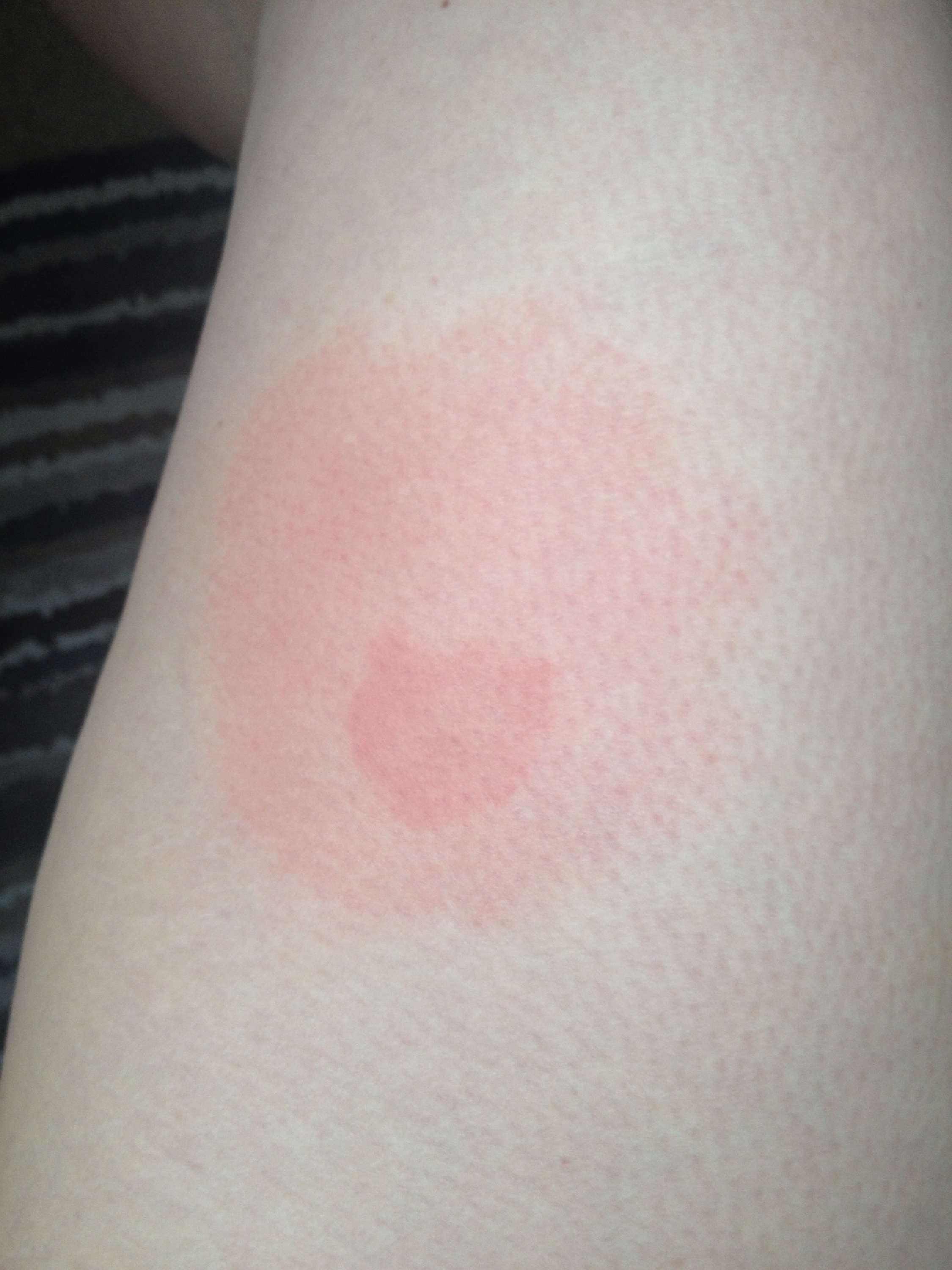
Just as well I did because just as my stock arrived I suffered this nasty bite to my thigh whilst outside in our garden, from what I can only imagine was a horse fly.

As is usually the case I only noticed it when it started to itch. Immediately applied a generous amount of Stellaria cream from Neal’s Yard Remedies. This cream is rich in almond oil and chickweed extract – exactly what the skin needs to reduce inflammation, itching and allergy. I applied approximately every 3 hours (basically when the itching re-started after the last application) and now 5 days later it no longer itches and has reduced considerably. It didn’t bother me during the night either which was surprising!

I’m sure if I hadn’t had this cream to hand the itching would have been unbearable and I probably would have been scarred from scratching.

When I was bitten I was outside taking my regular yoga practice. It’s so liberating and uplifting to practice outside, and I don’t want to stop doing this. So insect repellent to the rescue! The Neal’s Yard Remedies citronella formula spray has worked a treat ever since. With witch hazel and citronella it is cooling to the skin and smells great (but not so attractive for those pesky insects!)

If you prefer to make your own insect repellent lotion, then the following ingredients will serve well: create your own face and body lotion, citronella essential oil, thyme essential oil, lavender essential oil, pine essential oil, peppermint essential oil. Work to 2% of oils to lotion to keep it skin safe. Switch the lotion for a little alcohol (to disperse the oils) and water to make a spray instead. [Note I am not an aromatherapist however I sought this advice from a qualified colleague.]

While we’re away I will also pop a few drops of citronella in a bowl of boiling water to diffuse through the van of an evening.

Jackie Marsden is a qualified Reflexologist and Clinical Acupuncturist. She is also an independent consultant for Neal’s Yard Remedies Organic. All views are my own.

independent-consultant-long-logoGrowyourbusiness

unnamed2

Are you getting enough Vitamin O?

What am I talking about? Oxygen.

I’m no expert on yoga/breathing/meditation, however what I learn and find useful for myself, I always share where needed, particularly with my clients.

Many people come to me with stress-related issues, anxiety, sleep problems. Our minds wander and we worry, we ask:

  • Why me?
  • Why (insert loved ones name here)?
  • Why did it happen?
  • I wished it hadn’t happened
  • I’m worried it will happen
  • … the list could go on but you get the idea.

While we’re wasting our time doing this, our bodies are responding with the “fight or flight” response. Heart rate quickens, blood pressure increases, our immune and digestive systems start slowing. Our breath becomes shallow.

We need something to get away from the mind’s futile worrying. What could be easier and more opportune than our breath? Take some deep, slow breaths. Allow the oxygen to fill up our chests, our tummies, our whole bodies. Sweep in through the nose, and if you can, out through the nose, if not slowly and gently through the mouth. Try counting 1,2,3,4 as you inhale, 1,2,3,4 as you exhale. Add in some pauses. Count 1,3,3,4 after every inhale and exhale.

These simple techniques should help you tune out your mind’s babble and focus on the present moment. What is actually bothering you right now at this present moment? Nothing.

Posture during these breathing exercises is important too. If you’re doing them in bed in the middle of the night then you should be horizontal and comfortable. Make sure you’re warm and you can relax your muscles. If you’re sitting then it might be useful to use a small cushion to “prop up” your seat bones (those bony bits in your bottom cheeks). Tilting the pelvis forward like this will shift the spine straighter and open up the chest area, allowing more space.

During my reflexology treatments, my sequence always starts with the diaphragm line, followed by lung reflex, to help calm the breath and aid relaxation.

When we breathe we are literally giving our whole bodies oxygen: what could be more holistic?

The breath is so obvious that it often gets overlooked, but this is one of the greatest tools we have to help ourselves.

Are you getting enough Vitamin O?

Jackie Marsden MAR is a qualified reflexologist and independent consultant (Team Leader) for Neal’s Yard Remedies Organic. Jackie leads and mentors a growing team of consultants (many of whom are therapists integrating organic products into their existing businesses) via the NYRO social selling channel, holding regular team meetings, one-to-one coaching via phone and facetime, and a closed facebook group. All views are my own.

independent-consultant-long-logoGrowyourbusiness

unnamed2

Image courtesy of hinnamsaisuy at FreeDigitalPhotos.net

What’s the buzz about those blue bottles?

…and I’m not talking about flies!

First and foremost I am an holistic therapist. This means I take the whole person into consideration, looking at the whole body, the mind, the emotions, and the integral biology when a client comes to me for reflexology: it’s not just about trying to reduce symptoms in an isolated manner.

Pairing this approach with Neal’s Yard Remedies Organic (NYRO) is the perfect way to continue a sustained holistic mindset once the reflexology session has ended. I can use and recommend NYRO products to clients with 100% confidence that these blue bottles contain nothing but organic, natural and ethical loveliness for the wellbeing of our skin, hair and inner health such as nutrition and emotional wellbeing.

But it’s not just about the blue bottles – there’s another buzz happening and it’s called community. The NYRO motto is “People Helping People”, and this is what’s at the heart of being an Independent Consultant for NYRO.

People helping peopleThere is a huge community of consultants, many of whom are therapists too (and many are not I might add) and we are all there to help and support each other, and not just with NYRO related issues and questions. We’re there for each other whether it’s personal or professional, whether its brainstorming or off-loading our woes – you never feel alone on the journey.

Turn those “I can’t” thoughts into “I can”, “I will” and most importantly “I want”. Meet new people and make new connections. See yourself grow and develop in confidence and learn things about yourself that you didn’t know before. Apply new skills, new mindsets to other areas of your life. Challenge yourself, step outside your comfort zone and see it stretch out from a small patch of rough ground to a big expase of lush grass. Someone will be with you to hold your hand. Most importantly – enjoy yourself!

So if you want to see what the buzz is about, why not get in touch? Phone or message me, or look at my website – we’re waiting with open arms to welcome you to our blue bottle community.

Jackie Marsden MAR is a qualified reflexologist and independent consultant (Team Leader) for Neal’s Yard Remedies Organic. Jackie leads and mentors a growing team of consultants (many of whom are therapists integrating organic products into their existing businesses) via the NYRO social selling channel, holding regular team meetings, one-to-one coaching via phone and facetime, and a closed facebook group. All views are my own.
independent-consultant-long-logoGrowyourbusiness

unnamed2

mooncup_banner

Why Reflexology?

Many of my clients ask me, “what made you want to become a reflexologist?” and this is certainly an interesting question.

The short answer is that it just “came” to me. I woke one morning and knew that this is what I wanted to do.Feet together

Building up to this answer, I enjoyed regular reflexology during my first pregnancy. I always found it hugely relaxing, and liked the thought that by having reflexology my baby was receiving benefits from the treatment too. However, even back then, I still believe reflexology came to me; it found me.

I was introduced to Dr. Gowri Motha’s Gentle Birth Method by my yoga teacher, and was enlightened to improving my lifestyle and well-being in order to optimize my pregnancy and to give birth to a healthy baby. Throughout the book, each week of pregnancy gave information and advice and included here were various recommended complementary therapies. I wasn’t able to afford every treatment it suggested (however tempting it seemed!) but the one that leapt out at me was, yes you’ve guessed it, reflexology.

My reflexology training is hugely rewarding and satisfying. I have a greater understanding of the human body,  not just anatomically, but also those deeper aspects such as stress, emotions and thought processes – they each impact on our physical well-being and should not be underestimated. Taking an holistic approach to healing is something of which I am particularly passionate. I doubt I will ever stop learning and developing my knowledge and experience on this incredible journey.

Jackie Marsden MAR is a qualified reflexologist and independent consultant (Team Leader) for Neal’s Yard Remedies Organic. Jackie leads and mentors a growing team of consultants (many of whom are therapists integrating organic products into their existing businesses) via the NYRO social selling channel, holding regular team meetings, one-to-one coaching via phone and facetime, and a closed facebook group. All views are my own.
independent-consultant-long-logoGrowyourbusiness

unnamed2mooncup_banner

Image copyright Jackie Marsden 2016