Trying to Conceive? Why Natural Skincare Matters More Than You Think

When you are trying to conceive, it is natural to focus on diet, supplements and lifestyle. You might start tracking your cycle, supporting your hormones, or eating more nourishing, fertility-friendly foods. But one area that is often overlooked is the everyday products we apply to our skin, hair and body.

We are usually careful about what we eat, but do we pay the same attention to what we put on our skin? The skin is permeable and many ingredients in personal care products are absorbed into the bloodstream. This becomes particularly relevant in the preconception phase, when you are working to create the healthiest possible internal environment for pregnancy.

The Problem with Petrochemicals

A large number of mainstream skincare, body care and cosmetic products are based on petrochemicals. These are substances derived from petroleum and crude oil. They may be used to preserve products, make them feel silky, create foam or fragrance, or simply to bulk them out because they are cheap and widely available.

Petrochemicals can burden the liver and disrupt the endocrine system. Some are known or suspected endocrine-disrupting chemicals, which means they can interfere with your hormones. This is especially important during the delicate process of trying to conceive, when hormonal balance is essential for ovulation, implantation and embryo development.

Petrochemical-Derived Ingredients to Avoid

Here are some common ingredients that may appear in your skincare products, all of which are derived from petrochemicals and can impact fertility:

  • Paraffinum liquidum (mineral oil) Often used in moisturisers, this is a by-product of petroleum refining. It forms a film on the skin that may block pores and inhibit natural detoxification.
  • Propylene glycol Common in creams and serums to help retain moisture, but it can irritate the skin and increase the penetration of other chemicals.
  • Parabens (methylparaben, propylparaben, butylparaben) Used as preservatives, they mimic oestrogen in the body and are linked to hormonal disruption.
  • Phthalates Often hidden under the word “fragrance” or “parfum,” these are plasticisers that can disrupt reproductive hormones and have been associated with reduced fertility.
  • Sodium lauryl sulphate (SLS) and sodium laureth sulphate (SLES) These are foaming agents that can irritate the skin and are often contaminated with by-products of the petrochemical industry.
  • Synthetic fragrance or parfum A single artificial fragrance can contain dozens of undisclosed chemicals, many of which are derived from crude oil and may disrupt hormones or sensitise the skin.

The Preconception Window is Precious

In the months leading up to conception, your body is preparing in subtle but powerful ways. Detoxification, hormonal signalling, egg and sperm quality, and the uterine environment are all influenced by your internal balance. Reducing your toxic load by avoiding petrochemicals is a simple but significant step that supports these natural processes.

Nourish Yourself Naturally

Choosing natural personal care products is an act of self-love. Look for certified organic or naturally formulated options that are free from petroleum-derived ingredients, artificial fragrance and synthetic preservatives.

Brands such as Neal’s Yard Remedies focus on high-quality botanical ingredients that support rather than suppress your body’s natural rhythms. Begin with the products you use most often, such as body lotion, deodorant and facial care. These small shifts create long-term benefits, not only for fertility but for overall well-being.

Conclusion

Trying to conceive is a time to simplify, nourish and connect more deeply with yourself. By making thoughtful changes to the products you use every day, you support your body in doing what it was made to do. Natural personal care is not about being perfect. It is about creating space for your hormones to settle, your liver to work freely, and your skin to breathe.

You deserve to feel safe, supported and ready. Let nature take care of you, so you can take care of what matters most.
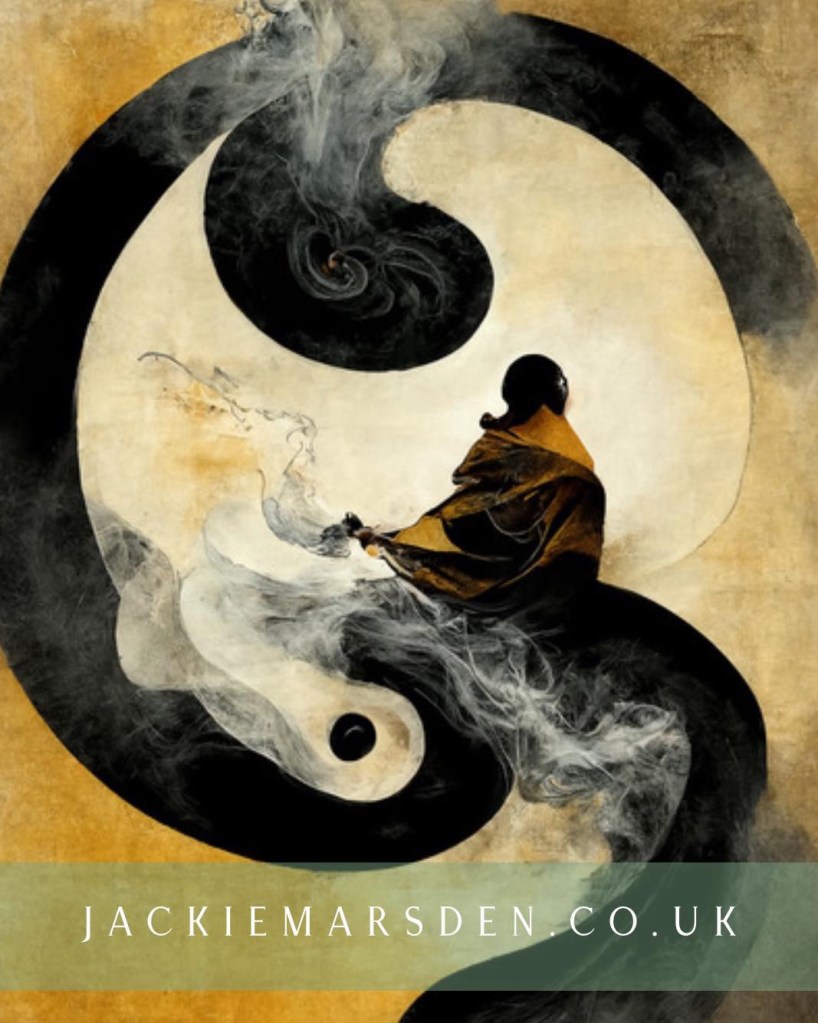
Cortisol and Melatonin: The Yin and Yang of Your Circadian Rhythm

In the quiet rhythm of day and night, two powerful hormones guide our daily flow: cortisol and melatonin. These hormones play a crucial role in maintaining our body’s natural rhythm; you could think of them as the Yin and Yang of our circadian cycle: distinct in nature but working in harmony to help us feel balanced, focused, and rested.

Understanding their roles can help you align with your body’s natural flow, fostering better health and more restful sleep.

Cortisol: The Active Yang of the Day

Often labelled as the stress hormone, cortisol is essential for us to function properly, especially in the morning. It naturally rises when we wake up, helping to energize the body, sharpen focus, and prepare us for the day ahead. This is the Yang energy: active, outward, and purposeful.

Cortisol levels peak shortly after we wake up and begin to decline as the day progresses, supporting our ability to stay alert, handle stress, and perform tasks efficiently. Without sufficient cortisol, we may feel sluggish and less motivated in the morning; it’s as if we can’t quite get going.

Melatonin: The Restful Yin

As the sun begins to set, melatonin enters the scene: the Yin to cortisol’s Yang. Melatonin is often called the sleep hormone, but its job goes beyond just helping us fall asleep. It’s about inviting the body to slow down, repair, and rejuvenate during the night. When melatonin is released as daylight fades, it encourages us to rest, reduce our mental chatter, and prepare for the restorative sleep our bodies need to stay healthy.

Just as cortisol rises with daylight, melatonin rises when it gets dark. It acts as a signal that it’s time to let go and settle into rest, nurturing our recovery and internal restoration.

The Delicate Balance: Why It Matters

The relationship between cortisol and melatonin is delicate. These two hormones need to remain in a balanced dance throughout the day for you to feel your best. If cortisol remains high into the evening – perhaps due to stress, artificial light, or late-night stimulation – melatonin struggles to rise, and sleep may be disrupted. Over time, this throws the entire rhythm off course.

When this happens, it can interfere with your body’s natural recovery during sleep; affecting your energy, mood, and overall health.

Supporting Your Natural Cycle: Simple Practices for Balance

To maintain the delicate balance between cortisol and melatonin, it’s important to align your daily habits with the natural rhythms of your body. Here are a few practices to help keep your hormones in harmony:

  • Seek natural morning light: Exposure to sunlight in the morning helps signal your body that it’s time to rise and activate cortisol naturally. This simple habit can help improve your focus and alertness during the day.
  • Support rising cortisol with a healthy breakfast: Eat a balanced meal around 7am to give your body the nourishment it needs to maintain energy and focus throughout the day.
  • Avoid bright screens, intense exercise, and stimulants in the evening: These can keep cortisol levels elevated and interfere with melatonin production. Instead, opt for calming activities such as reading, meditation, or light stretching in the evening to help your body transition into rest mode.
  • Aim for regular sleep and wake times: Going to bed and waking up at the same time every day helps support your circadian rhythm and ensures your body knows when it’s time to rest.
  • Allow your digestive system to fast between 6pm and 7am: This simple practice allows your body to reset overnight, promoting better sleep and hormonal balance.
  • Get regular reflexology or acupuncture: These holistic therapies can support your body’s natural rhythm by reducing stress, improving circulation, and helping your body relax, making it easier for cortisol and melatonin to maintain balance.

Embracing the Quiet Wisdom of Yin

In a culture that often celebrates the energy of Yang – doing, pushing, and striving – we can sometimes forget the quiet wisdom of Yin. But it’s in the balance of these two forces that true health, clarity, and calm reside. When you nurture both your active and restorative energies, you create a foundation for lasting well-being and peace.

If you’re struggling to find balance in your circadian rhythm or need support with sleep, hormonal health, or stress management, reflexology and acupuncture can be powerful tools in restoring your body’s natural flow. Reach out for personalised guidance and care – together, I can help you nurture your Yin and Yang for a more vibrant and balanced life.

What is the difference between regular acupuncture and fertility acupuncture?

Fertility acupuncture is very similar to regular acupuncture in that it will still try to address common issues such as pain, digestive issues, headaches, hormonal imbalances etc. as part of the wider picture of a fertility patient. However it focuses a lot on reproductive health and treating the meridians that target this area of health. Common points are found on the wrists, ankles, feet, lower legs, abdomen and lower back.

Fertility acupuncture aims for the optimal internal environment for each particular patient. This means that it’s not a generic set of acupuncture points for everyone; each patient is treated as an individual. There is no one size fits all in any aspect of health.

Happy pregnant woman preparing for her baby.

Fertility acupuncture tends to prioritise regulating the menstrual cycle, increasing blood flow to the ovaries and uterus, and regulating sperm health for the men. Stress management and building resilience to stress is also key when trying to conceive. This is something that is always prioritised in clinic.

When coming for fertility acupuncture it’s advisable to plan to come weekly for 3 months as this is the length of time it takes for an egg to be recruited, matured and finally ovulated. What we do now has an effect on those eggs ovulating (or collected via IVF) three months down the line.

During those 3 months we treat through the menstrual cycle, meaning that when you’re bleeding the focus is on good blood flow and emotional support as a period means no pregnancy. During the follicular phase the focus is on follicular development so good blood flow to the ovaries and uterine lining.

Fertility acupuncture works with each phase of assisted reproductive techniques such as IVF/ICSI to really enhance your response to the treatment you’re having, and manage the side effects of the medication.

When you work with a fertility acupuncturist, you gain insights and education from someone who has a regular practice in this area of health; someone who understands the process and what is involved. It’s not just needles; it’s fully rounded support.

If you would like to discuss your situation with me or would like to book in with the clinic in Warton, near Preston, Lancashire, please get in touch. Please read some of the success stories from the clinic here.

How does Acupuncture work?

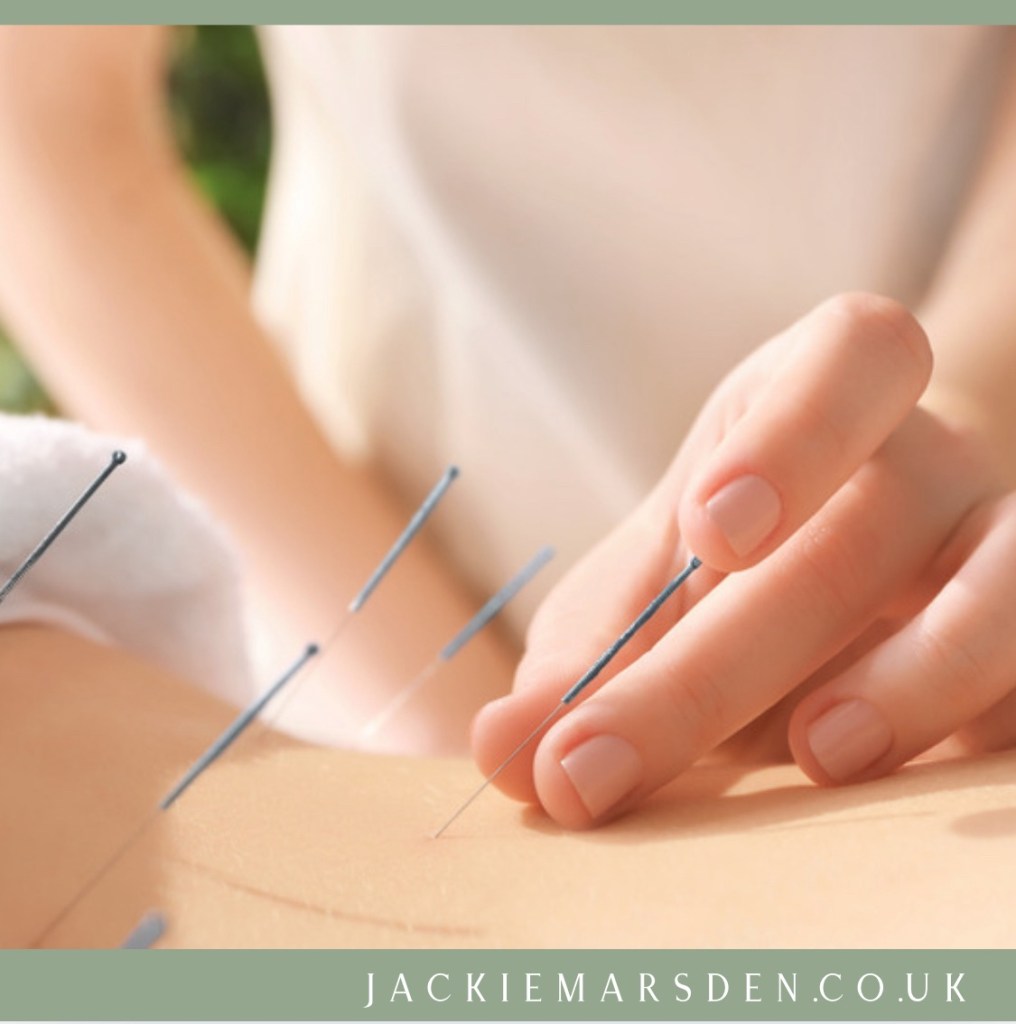
Fertility acupuncture in abdomen.

Traditional Acupuncture uses the understanding of health and wellness that’s been developed over thousands of years (Traditional Chinese Medicine). This theory uses the concept of Qi (energy) our life force energy. Qi flows up and down the meridian system which is a network of channels connecting the main organs with the rest of the body.

When we are well, the Qi is said to be flowing freely. When we are unwell, the Qi is said to be blocked, or stagnant, and not flowing as freely.

Acupuncture uses particular points on the channels to rebalance the flow of Qi and improve our physical, mental and emotional wellbeing.

A good analogy is of the body as a circuit board. An acupuncturist uses these circuits to rewire and reconnect the flow of electricity.

Evidence based research on how acupuncture works is highlights its impact on the central nervous system (CNS). The CNS governs fight or flight vs rest and digest. When we are chronically stressed we get stuck in fight or flight. Acupuncture appears to release endorphins, natural pain killers and those happy chemicals, to rebalance the CNS. The process acupuncture ignites within the body increases blood circulation, reduces inflammation, helps regulate blood sugars and reduces stress, which can all have a positive impact on our wellbeing.

If you’d like to try acupuncture for your own wellbeing book in today.

Salts explained

Salt with a wooden spoon.

Sea salt is really good for soaking in a bath. It is believed to stimulate circulation, help ease muscle cramps, help relieve stiff joints, and soothe the skin.

Sea salt isn’t generally processed that much, it is simply evaporated off the water. So its very rich in trace minerals such as calcium, potassium, magnesium, zinc and iron.

Himalayan salts are very similar to sea salt in composition and trace minerals. However, because Himalayan salt is mined near the foothills of the Himalayan mountains, from some really ancient sea beds which were covered over with ice, lava and snow for millions of years, its thought that Himalayan salts are much purer than our regular sea salt because they are not full of our modern day pollutants.

Epsom salts aren’t actually a salt. They are magnesium, sulphur and oxygen. So when you use Epsom salts you are really using them for their magnesium content. Magnesium is needed in the body for all sorts of daily functions at a cellular level, and it is thought that in this day and age we are all lacking in magnesium due to the erosion of soil quality. Magnesium is very easily absorbed through the skin so soaking in a bath of Epsom salts is a great way to boost your magnesium levels.

Although we do need magnesium to support a whole host of bodily functions, one of the main things we all need it for is stress-management and improved sleep.

So these are the different types of salt explained, so you can now make an informed choice as to which type you would like to bathe in. Happy soaking!

View the bath salts from Neal’s Yard Remedies Organic.

Lymphatic Drainage using Reflexology on the Feet

I have been using the well established Reflexology Lymph Drainage technique for 6 years now. This technique isolates the reflexes of the lymphatic system using gentle circling and sweeping techniques with the intention of moving fluid in the body.

During September I have been treating a client with unilateral secondary lymphoedema in the arm, wrist and hand. We took some basic measurements in the distal (lower) arm before and after the sessions each week.

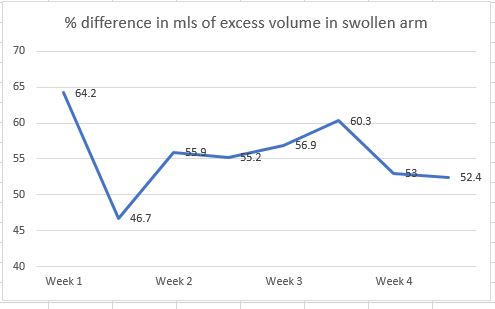
The graph below presents the results over the 4 week period. As you can see, the percentage difference in millilitres of excess fluid volume in the swollen arm compared to the unaffected arm reduces significantly after the first session, then continues to adjust then plateau after the 4th session.

Graph showing % difference in mls of excess volume in swollen arm.

Over the 4 weeks my client also noticed an improved range of motion in the wrist, and more normal sensations with the skin on the back of hand; reduced tightness and more elasticity.

My client has enjoyed the sessions so much, finding them deeply and surprisingly relaxing, and has booked another course which begins in a few weeks time.

If you are interested in trying this technique with me, or know someone who suffers with secondary lymphoedema, or other symptoms that might benefit, please get in touch for an initial chat. I offer 5 weekly sessions at a discounted price of £210. Subsequent courses are 4 weekly sessions at £150.

Other health related problems that have seen good results in the past are:

  • Heavy legs
  • Lipoedema
  • Lipo-lymphoedema
  • Autoimmune disorders
  • Injury recovery
  • Swelling
  • Recovery from cancer treatment

Elder Cottage Clinic, Warton, Preston, PR4. For more information see my dedicated pages https://fyldelymphatics.wordpress.com

The Internal Seasons

I’ve had this blog idea on my “to-do” list for ages, but I’ve not been inspired to write it until today. Do you ever have that? Where something is there to be done but you’re just not inspired to do it until one day, ping! the inspiration comes.

This blog is about outlining the menstrual cycle from a TCM (Traditional Chinese Medicine) point of view, and how are cycles are similar to the seasons. By becoming more aware of our internal cycles we can really look after ourselves in understanding when times of rest, nourishment and calm are needed (Winter) and when times of high energy can bring us productivity and rejuvenation (Spring and Summer). And those times of preparation (Autumn). A bringing together of the physical and the mental/emotional.

However I feel that there is more to this blog than I originally thought. This is because it is becoming more and more apparent to me that we are not just similar to the seasons, we ARE the seasons. We don’t just live here on this planet, we ARE part of the fabric of creation itself. There is no coincidence that our cycles move in time with the moon; that the tides are pushed and pulled by the forces of the lunar cycle, that so many animals, sea creatures and insects follow the phases of the moon for their own reproduction. Everything in nature includes us. There is no separation. When we talk about “connecting with nature” I think what we are actually doing is “reconnecting with who we are”. We are nature. We don’t walk in nature, or spend time in nature; we ARE nature. This is why these times make us feel so good, because there is a sense of coming home, of becoming one, of belonging, of lessening the grips of the idea that we are seperate from the world and from each other. I find I have more and more of these moments of inner knowing, connectedness and understanding of life, and this is the first time I have been able to grab it and get it down into words.

When we discuss the theory of TCM we often mention the seasons and the weather when we talk about particular energies and meridians. TCM philosophy really harnesses the idea of connectedness with our environment and with nature. I really appreciate this concept in my own understandings of life and of health and wellbeing. I also like the idea of likening the menstrual cycle to the ebb and flow of the tides; the tides of Yin and Yang. Understanding these tides and the transitional points between the two can offer huge benefits of understanding to support one’s own monthly cycles:

Phase 1 (days 1-5) is about Blood as we menstruate, it is a restful Yin phase focusing on nourishing ourselves and taking care of ourselves. Honour this time and avoid sexual intercourse and strenuous exercise. The external pathogenic factor of Cold can penetrate particularly at this time so take note of this in the activities you pursue. Remember that Blood is flowing downwards so sanitary items such as tampons obstruct this downward movement. Better to use pads or a menstrual cup.

Phase 2 (days 6-13) is focusing on Yin as increased amounts of oestrogen cause the lining of the uterus to thicken. Eating protein and mineral-rich foods in this phase will help to replenish Blood and Yin. This phase is building towards Yang.

Day 14 is when ovulation happens, and some cramping or spotting can occur as the body prepares to move from Yin to Yang. Get to know your cycles and allow your body and mind space to transition.

Phase 3 (days 15-21) is very Yang focussed; the body is building and nourishing the uterus ready for implantation if fertilization occurs, or shedding the lining if it doesn’t. This segment of the cycle is very energetic. Remember to support yourself during this energetic time with nutrient dense foods and adequate hydration.

Phase 4 (days 22-28) focusses on Qi. As oestrogen levels drop, serotonin levels can also drop and this can affect our mood and emotions. PMS can occur, tears, frustration, anger, as well as physical symptoms such as bloating or breast tenderness. All of these symptoms are based on the lack of free flowing Qi and result in Qi stagnation. So this segment of the cycle it is important to eat clean, take gentle exercise and avoid stimulants in order to support the Liver energy to keep Qi gently flowing freely. It might be a time where you might want to reach for those sugary snacks, so try to substitute those with better choices. We can also choose to eat warming foods because Qi needs heat to keep the fluids moving. Avoiding cold foods and drinks, and exposure to cold weather, swimming and sitting on cold surfaces can all help to support this phase of the cycle.

If you are looking for fertility support in Lancashire please get in touch.

[Perspectives in Foot Reading #2] – An Example

One of the services I provide is “Foot Reading” which can be done in person, or remotely via photographs, messages and/or phone/video calls. This blog gives an outline as to what you might expect to see in a Foot Reading, what information you might receive from my observations, and what kind of suggestions you might be asked to pursue to improve your overall health based on my findings. I hope you find it interesting and useful! If you would like to use this service please get in touch or see this page for further info on price.

Markers observed on the feet are categorised into 4 elements: Earth, Air, Fire and Water. We all need an even balance of these elements, and when one becomes deficient or in excess, this an reveal where imbalances reside and provide a greater awareness into our own physical and mental/emotional health and well-being.

The feet are a wonderful extremity: we tend to neglect our feet, stuffing them into socks and shoes and walking on them all day, however they hold such fascinating insights into our bodies, emotions and our overall health.

As a general guide, the left foot represents the left side of the body and what is going on in the present moment, while the right foot represents the right side of the body and what is still being processed from the past. Together, they form a perfect picture of present and past experiences, as well as a map of the whole body.

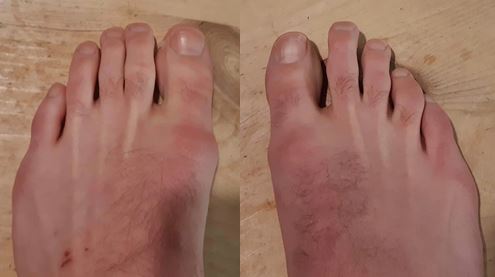
Popped dorsal tendons reveal upper back tension. Popped tendons are a fire marker and tell us that there is potentially heat, over exertion, strain, tension and/or tightness. These tendons are on the top of the foot and beneath the toes, so this is the reflex point for the upper back area across the shoulders and upper thoracic. We can see clearly that the tendons presenting here are beneath the 2nd, 3rd and 4th toes. These represent vertical zones of the feet and are “influencers”. So we could say here that the torso and pelvic regions are influencing the tension held in the upper back.

In addition, these markers are apparent on the top of the foot, which tells us that these issues are exposed to the outside world. Markers on the bottom (or plantar) surface are hidden and are more about what is going on inside of ourselves and which are not as visible or “on show”.

Looking at the bottom or plantar aspect of these feet, we can see that the right foot appears fairly uniform in its position, compared to the left which turns inwards. The left foot is also presenting with more colour which is again a fire marker.

When one foot turns inwards this can reveal an imbalance in the skeletal structure of the body; more weight is likely being put through the lateral edge of the foot where the shoulder, knee and pelvic reflexes reside.

So this can tell us that there is likely to be an issue further up the body, the root cause possibly on the right side of the body causing the left side to compensate.

Lets focus on the toes. These reveal a lot about what is going on in the head, neck and shoulders. Looking at the right foot, the toes seem fairly regular until the 5th toe which is turned and sits tucked underneath the 4th toe. This lateral area of the foot underneath the 5th toe is the shoulder reflex. I often find that 5th toe irregularities are to do with the shoulder leading up into the neck. In addition, and fascinatingly, this individual also has a skin-coloured mole in the right eyebrow; another indication of congestion in the general shoulder area (according to face reading).

Any skeletal irregularities in the feet (and a skin-coloured mole) would be regarded as earth markers; a build up around a vulnerable area, congestion, restriction. Too much earth will result in less mobility and flexibility. In addition too much fire can consume a lot of air (mobility) and dry out the water (flow), leaving an excess of earth (tension, less mobility, feeling stuck).

Mentally and emotionally all of these markers reveal that this person carries a lot on their shoulders, they feel under pressure (from others, or from themselves) and potentially are doing more than they should. Fire markers indicate tendencies to over-do things without scheduling enough rest periods.

Irregularities in the 5th toes indicate emotional insecurities; topics such as finance, home, and their ability to feel confident moving forward in life can be challenging. They represent our sense of security. As this is more apparent on the right foot, it is an indicator of emotional battles from the past still being processed. On the flip side though, these toes also show me that this person has a huge sense of fun!

This person also tends to keep their head separate from their heart; the space between the 1st and 2nd toes reveals a lot about their perceived importance in doing the sensible thing and pushing their hearts desire away, and focussing on the “what I should do” rather than following the freedom of life. As this person has fairly long 2nd toes this shows that they have natural leadership qualities.

To balance out an “infection” of earth, from a physical point of view activities such as massage, stretching and breath-work can help to increase mobility and flexibility. Internally, a lot of hoarding has taken place, so a release of this mental/emotional build up can come from journalling or any form of writing, counselling, crafts and meditation. Reflexology can also be a lovely way to promote deep relaxation and balancing and easing the body and the mind.

To balance out an “infection” of fire, we want to “reduce the forest fire to the hearth”; we don’t want to put it right out, just get it under control and set some boundaries. Physically we can look at hydration, restorative and gentle activities such as yoga and walking. Internally, routines and time budgets can help, as well as venting instead of stoking up the fire with stored anger, and spending time looking at and questioning the real priorities of one’s life.

Are You Getting Enough Vitamin Sea?

Vitamin Sea? What is this I hear you cry?!

During 2018 I discovered my love for wild swimming, and this has become a regular outing for me: in particular, sea-swimming, even during the winter.

What has this got to do with anything?

Well, there are many health benefits to cold water swimming, of which I won’t go into detail about here because they are not relevant to every reader.

What is relevant and universal to all, is the identification of that certain something that makes your heart sing, what excites you, what do you look forward to the most? What is that sparkly thing that gets you out of bed in the morning? What is that one element that keeps you going during the tough times?

We all have these special connections within our lives. Yours might not be sea-swimming, but it could be another sport, or it could be a particular place, activity, food, book, music, event.

It is also important to note that your special connection to something may change over time, and perhaps you fall out of love with it, or it evolves into something else. This is absolutely fine too. Don’t hold onto it if it no longer serves you. Change is always inevitable.

Continue to explore your life, try new things, keep going, be aware of everything, appreciate each moment and those moments that sparkle will stand out (if you are paying attention).

And if you do this, you will find a happiness, a contentment, an eagerness, and a drive that you wholeheartedly know.

But sometimes the hardest part is the identification. We don’t really know what it is we want, or what will bring us happiness or joy. This is where courage has to play a part; we have to face our fears. For example, it may be finding the courage to go forward alone, try something new, it might be doing something that gets the adrenaline pumping, it might be overcoming self-doubt, it might be perseverance, hard work, a struggle of some kind.

Set out to make small steps forward. The greater your fear the higher the sense of achievement. The more nervous you are, the more there is to gain. The steeper the learning curve, the further there is to travel and grow. Don’t compare yourself to others, go at your own pace. If you are surrounded in darkness, don’t try to pull the curtains drawn all at once. Be kind to yourself.

You are in control of your own well being, and what better way to be well? To find your passion and follow it.

Reflexology and Fibromyalgia

What is Fibromyalgia? Fibromyalgia, also called Fibromyalgia Syndrome (FMS), is a long-term condition that causes pain all over the body. As well as widespread pain, people with Fibromyalgia may also have increased sensitivity to pain, fatigue, muscle stiffness, sleep disorders, problems with mental processes (“brain-fog”) e.g. problems with memory and concentration, dizziness and balance problems, headaches and migraines, digestive upsets. The exact cause of Fibromyalgia is unknown, but it’s thought to be related to abnormal levels of certain chemicals in the brain and changes in the way the central nervous system (brain, spinal cord and nerves) processes pain messages that are carried around the body. (1)

ID-100184055How might reflexology help Fibromyalgia sufferers? When we are stressed our bodies are on constant high alert, engaging our sympathetic nervous system ready to “fight or flight”. However this means that the parasympathetic nervous system is shut down, so things like digestion, relaxation and sleep patterns will not have optimum conditions to function properly. Pain is an obvious stress, both physically and mentally.

Reflexology is deeply relaxing which can help the body and mind break the constant stress cycle and seek re-balance. In general, we have around 7000 nerve endings in the feet, making them particularly sensitive and helpful for accessing the whole body. Reflexology might help manage and reduce the symptoms of Fibromyalgia through a tailored treatment plan specific to the patient’s particular issues. Depending on the level of intensity of pain, shortened reflexology treatments might be advisable to begin with. Below are the key symptoms of Fibromyalgia and the subsequent reflex points I can pay particular attention to during treatments:

  • Joint pain: concentrate on the relevant reflex points on the feet for joints concerned e.g. shoulder, knee, hips, jaw. Adrenal gland reflexes can be gently worked to stimulate the production of the body’s own anti-inflammatories and pain management.
  • Fatigue: pay attention to the adrenal glands and pancreas reflexes. This aims to increase energy and re-balance and regulate blood-sugar levels.
  • Sleep disorders: work the diaphragm reflex (to promote relaxation and calmer breathing), pineal and pituitary gland reflexes (to promote a re-balance of circadian rhythms and of the endocrine system in general).
  • Digestive upsets: general relaxation techniques to awaken the parasympathetic nervous system. Colon and small intestine reflex points in particular.
  • Headaches and migraines: concentrate on brain, spine, particularly cervical spine, head and neck area reflexes.
  • Dizziness and balance: concentrate on inner-ear reflex point.

Update Jan 2016 – Since first writing this blog I have trained in Reflexology Lymph Drainage and carried out a case study on a Fibromyalgia client. Further info to follow.

(1) http://www.nhs.uk/Conditions/Fibromyalgia/Pages/Introduction.aspx

Jackie Marsden MAR is a qualified reflexologist and independent consultant (Team Leader) for Neal’s Yard Remedies Organic. Jackie leads and mentors a growing team of consultants (many of whom are therapists integrating organic products into their existing businesses) via the NYRO social selling channel, holding regular team meetings, one-to-one coaching via phone and facetime, and a closed facebook group. All views are my own.

independent-consultant-long-logoGrowyourbusiness

unnamed2mooncup_banner

Image courtesy of stockimages at FreeDigitalPhotos.net