Under Sink Water Filter

The water filtration market can be difficult to navigate. Which one is best? What do I need it to do? What is structured water? What is ionised water? Will a water ioniser filter the water? Will a water filter ionise the water too?

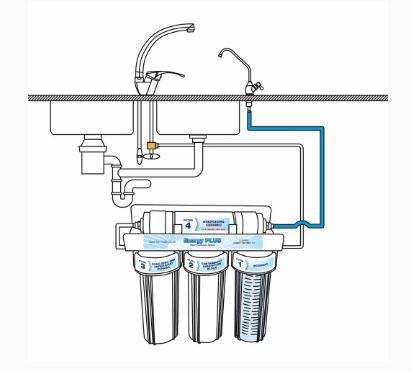
Water filter fitted beneath the sink to connect to a dedicated drinking tap.

After a lot of research on the internet and discussion with industry experts, I have come to the conclusion that the Energy Plus Undersink Water System from Water For Health is the best system which brings the best of both filtered and ionised water, ensures that the water is structured for the highest bio-availability, is affordable in price, easy to install, and has great personal, knowledgeable customer service.

I have been using this system since 2021 and replace the filter cartridges myself annually.

The water passes through 4 filters before coming through your tap:

Filter 1: An ultrafiltration membrane filter cartridge to remove particulate and act as a barrier to bacteria and cysts. It filters down to 0.1 micron, so removing most particulate including microplastics.

Filter 2: An advanced carbon block filter using minerals and polymers to give extremely efficient removal of heavy metalschlorinefluoridepesticideshormones and pharmaceutical resides.

Filter 3: This filter uses a combination of several types of bioceramic minerals including tourmaline, to improve water structure and its beneficial mineral content.

Filter 4: This filter uses a combination of bioceramic filter media to increase the alkalinity of the water and give it antioxidant properties through the release of molecular hydrogen. It also uses granular activated carbon for final filtration of the water.

For more information check out my affiliate link or order directly from me here.

Water and hydration are at the centre of health.

Is Acupuncture Worth it for IVF?

Acupuncture is very much worth it as part of your overall plan in preparing for conception.

Woman receiving acupuncture for fertility issues in her abdomen.

It is well documented that it takes around 100 days/3 months, or 3 cycles, for an egg to be recruited and matured ready for ovulation, and similarly for a full sperm regeneration cycle to complete.

It is hugely important to give yourself time to prepare and improve your overall health and wellness, lifestyle, diet and nutritional aspects before conceiving, whether you plan to do this naturally or via IVF. If the raw materials are not in the best condition possible, then you will not be maximizing your chances for a viable conception, implantation, and ongoing pregnancy and the health of the child.

As an acupuncturist I work closely with couples to look at where problems might be hiding. Sometimes a small imbalance can lead to issues when it comes to fertility. Working holistically, I take a full medical and lifestyle history from couples trying to conceive, then work out a specific and individualized acu-point prescription to help re-balance what I see happening in the body. I look at tongues, ears, feet and feel your abdomen. I ask a lot of questions about your menstrual cycle, menstrual blood and digestive health, as this can tell us as lot about what might be happening within the body.

Acupuncture is hugely effective when it comes to IVF. Particular points can help with innervation to the ovaries and uterus, boosting Blood and Qi, giving a good bump up to the follicles, helping with uterine lining, managing oestrogen levels and holding off OHSS, as well as calming the mind and supporting the couple. It is also excellent for expediting the recovery after egg collection, and preparing the uterus for transfer. Which points are used will be individual to your own picture.

In my own clinical experience, couples who have taken the appropriate time and care to prepare for their next IVF cycle get the best results; either falling pregnant naturally or having a successful IVF cycle.

If you would like to book a full consultation to discuss your own situation please contact me. Prices can be found here.

Does ICSI have all the answers?

Since the advent of ICSI (Intracytoplasmic Sperm Injection) problems with male factor in infertility can be addressed and bypassed with this procedure. The ICSI procedure allows particular sperm to be selected for use and manually injected into the egg by the embryologist using a microscopic needle.

But does ICSI always give us the best outcomes?

If the quality of sperm is sub-optimal, the question one has to ask is what impact will this have on the ongoing pregnancy and health of the child going forward?

In Traditional Chinese Medicine (TCM) our Jing is the substance we inherit from our parents at the moment of conception. Our Jing fuels our growth and development not just through conception and prenatal growth, but all through our lives from infancy to puberty, adulthood and beyond. Jing dictates our constitution and vitality as we move and age through life.

So if we completely disregard the quality of the sperm in favour of the ICSI procedure, what impact will have on the health of the life created? If a sperm is unable to penetrate an egg on its own, what does that say about the underlying Qi of that sperm?

So although ISCI is a wonderful and exceptional advancement in fertility medicine and assisted reproductive techniques, I do believe it should be firmly balanced with other perspectives of male health and vitality.

Sperm are continually created within the body, so taking a break for around 3 months before the next round of IVF is an optimal amount of time to put lifestyle changes in place. Dietary, lifestyle and nutritional changes can have a huge impact on sperm quality.[1] Taking this time and making this effort to improve the underlying Qi and Jing that is passed onto the next generation is fundamentally important. Things to consider:

  • Stop smoking/vaping;
  • Reduced consumption of refined sugars, processed foods,
  • Reduced consumption of alcohol;
  • Increased consumption of a wide variety of vegetables and fruit;
  • Take regular exercise;
  • Increased water intake;
  • Reduce the use of plastics for cooking and water/food storage (switch to glass)
  • Supplement with a good quality preconception multivitamin to include zinc, selenium, omega 3 fatty acids, antioxidants;
  • Reduce stress (look at meditation, reflexology, acupuncture, spending time in nature);
  • Keep mobile phone away from body [2];
  • Ejaculate frequently [3].

Other options to explore before diving straight into IVF/ICSI:

  • Having a full examination to rule out varicocele, hydrocele and other physical abnormalities;
  • Bloods taken for a full hormone profile;
  • Checking the microbiome to rule out any infection which might be causing levels of damage to the sperm.

“Mounting evidence suggests that the gut microbiome plays a key role in normal spermatogenesis and can be negatively impacted by diet and environmental perturbations.” [3]

Of course, every couple is individual, and factors such as age, for example, will also determine your route to IVF and ICSI.

If you are looking for fertility support in Lancashire please get in touch.

If you would like support through your fertility/IVF/ICSI journey with acupuncture please get in touch.

References

[1] https://pubmed.ncbi.nlm.nih.gov/32397485/

[2] https://www.ncbi.nlm.nih.gov/pmc/articles/PMC7848840/

[3] https://rbej.biomedcentral.com/articles/10.1186/1477-7827-10-115

[4] https://www.fertstertreviews.org/article/S2666-5719(23)00001-4/fulltext

PMS and it’s extremes

Woman experiencing severe menstrual cramping.

Approximately 90% of women suffer from Premenstrual Syndrome (PMS) at some point in their lives. During the few days leading up to menstruation can present with all sorts of symptoms such as bloating, irritability, frustration, anger, back ache, acne, abdominal cramping and pain, feeling tearful and emotional, as well as anxious and depressed.

Every cell in our body has a hormone receptor, so PMS can be attributed to over 200 symptoms as fluctuating hormone levels can have an impact everywhere in the body. These may be symptoms you only experience during the build up to your period, or perhaps these are symptoms you already experience, but are exacerbated at this time of your cycle.

In TCM terms, the luteal phase of your cycle e.g. the second half of your cycle between ovulation and your period, is when your body is at its most Yang. It is the part of the cycle where there is the most energy. Your body is gearing up for the possibility of a pregnancy with the surge of progesterone helping to really plump up the uterine lining for an embryo to implant. This surge of hormone and surge of energy can make us feel energised and productive, however as this starts to wane and drop just before our period starts, can suddenly leave us feeling depleted. The smooth flow of Qi is now not so smooth, as the progesterone starts to dip and body temperature starts to drop, our overall hormone levels can quickly leave us feeling grumpy and moody, and present us with physical symptoms too.

Switching between the Yang half of our cycle to the Yin half i.e. our menses, can create Qi stagnation. Getting to know your cycles by charting on a calendar, or Basal Body Temperature (BBT) charting can really help you to understand what is going on inside your body, help you identify symptoms and mood changes, and shed light onto areas that perhaps might need further attention.

For example, some people do not just suffer with “regular” PMS, but can experience more extreme versions such as Premenstrual Dysphoric Disorder (PMDD) and Premenstrual Exacerbation (PME). These extreme versions of PMS can be very difficult to deal with and manage on a monthly basis. “Experiencing PMDD can make it difficult to work, socialise and have healthy relationships. In some cases, it can also lead to suicidal thoughts.”1

Understanding your own personal cycle, the length of your follicular and luteal phases, and looking at your BBT throughout your cycle can open up possibilities to improve symptoms you’re experiencing. You might discover that phases of your cycle are too long/short or your temperature is not high enough or too high for example.

Supporting progesterone can help with PMS. To support progesterone production and your luteal phase, add more nutrient dense calories into your diet at this phase of your cycle. After all, your body is gearing up for a potential pregnancy, and some women find that they are hungrier at this time. Adding more protein, and looking at using adaptogens such as Ashwaganda to help manage stress and change. “Adaptogens are the umbrella term for fungi and plant-derived compounds that help the body adapt to stress.”[2] Magnesium is also said to help, as many of us are depleted in magnesium and it is involved in a myriad of daily bodily functions. Using a topical spray or adding in Epsom Salts to your evening bath are easy ways to get magnesium into your body. Magnesium often becomes low as a result of stress. [3]

Managing stress is also key to supporting your luteal phase. Booking in for regular reflexology or acupuncture can offer you the opportunity to feel relaxed and receive some downtime already scheduled into your diary. With acupuncture in particular, treating throughout the cycle can help you regulate and improve your quality of life. Vitamin B complex supports the body’s ability to handle stress. [3]

Understanding your cycle can help you to prepare and plan for what might be up ahead. Scheduling your diary around your cycle can help you to be more productive when you are feeling at your most energised, and avoid difficult social situations when you’re likely to be feeling fragile. You can also use your cycle to help with meal planning and snacking, and scheduling in more gentle exercise within the luteal phase.

If you would like fertility support in Lancashire and to book in with me please get in touch.

  1. https://www.mind.org.uk/information-support/types-of-mental-health-problems/premenstrual-dysphoric-disorder-pmdd/about-pmdd/
  2. https://www.parsleyhealth.com/blog/what-are-adaptogens/
  3. https://webfmd.com/hpa-axis-dysfunction-treatment/

Fertility and Constipation

Woman experiencing constipation whilst trying to conceive.

If you suffer with regular constipation, and are trying to conceive, then improving your bowel movements can make a huge difference to how you feel and improve your chances of conception.

When we don’t release our waste at least daily, we are storing lots of debris and toxins within the body. We are also compromising our main detox pathway, and this means that new waste cannot be released by the body, leaving us feeling bloated and sluggish, and disrupting chances of conception.

If you are on a lot of medication, for pain for example, then this can also contribute to constipation.

If you find that your faeces is sticky and you are having to wipe a lot to get clean after using the toilet, then you could be at risk of trans-locating bacteria from the bowel into the vagina, causing vaginal dysbiosis: upset with the vaginal biome. If this happens then the vagina is not an environment that is friendly to sperm, and won’t be conducive to conception, as well as potential additional symptoms such as vaginal pain and itching, creating distress and anxiety.

The bowel is the body’s main detox pathway for oestrogen. Excess oestrogen is bound up in the liver and then released into the bowel for excretion. If it is not excreted regularly then this means that excess oestrogen is remaining inside the body, causing imbalance and disharmony. Furthermore, if you have gut dysbiosis, this can signal to the bowel to reabsorb the oestrogen coming from the liver, and send it back into circulation again. This then creates an oestrogen dominant state within the body.

General lifestyle tips for relieving constipation and improving the consistency of the stool is to increase your consumption of vegetables and fruit, and to increase your water intake. Please also see my other blog post on constipation in general, and for self-help tips.

If you are looking for fertility support in Lancashire please get in touch.

If you are experiencing issues like this, or other issues relating to fertility support, please get in touch with me for an appointment.

A Sensible Switch

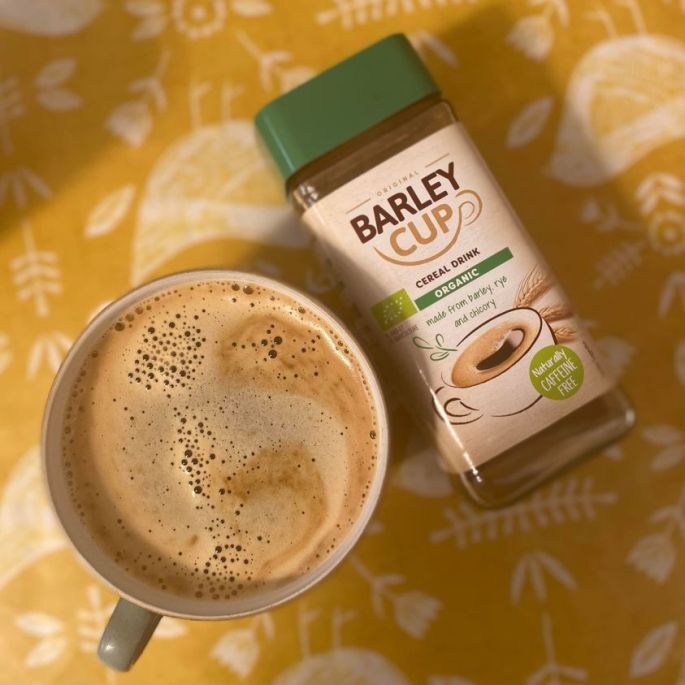
Cup of coffee made from a coffee alternative.

I thought I would write a short blog about a sensible switch that I have made over the past year. Firstly, its my daily coffee. Now although I do sometimes drink real coffee, particularly if I’m out at a meeting or with a friend and we’re in a lovely cafe, I have managed to steer away from real coffee at home. And this is because I came across the product Barley Cup while in my local health food shop back in February.

If you want to try Barley Cup I would recommend the organic version over the others, not just because it is organic, but because it tastes more like real coffee. It also looks and feels like real coffee. It forms a lovely creamy foam when you pour the hot water on (I drink my coffee black but I’m sure it would be the same for those who take milk).

Barley Cup is an instant cereal drink, made of barley, chicory and rye. It has a wonderful aroma and really does provide a substantial coffee fix without the coffee!

Self Help for Constipation

Constipation can vary from being an irritating problem that flares up from time to time, to a debilitating chronic condition causing abdominal pain and other complications.

Physically, constipation can be caused by all sorts of things including a lack of fluid and healthy fats and oils, a diet lacking in fibre, medication and food intolerances. 

Mentally and emotionally it can be triggered by stress, inability to let go of things such as the events from the past, and unwillingness to take in new life, new things, change. 

If there is a lot of faecal compaction the laxatives will only soften the newer stool; the compacted stool will remain. The best way to move stool is to bulk it out with insoluble fibre. This will create a larger stool to push everything through, without absorbing water which would make the stool very hard, difficult and painful to pass. Good sources of insoluble fibre are flax seeds soaked in water, or porridge oats. Both will form a “gloopiness” which is known as mucilage. This is an oily lubricant which will help assist the intestinal tract.

Both reflexology and acupuncture would be beneficial for constipation as both will offer space and time to deeply relax which will switch on the “rest and digest” and break the cycle of “fight or flight”.

Below are some self help tips you can try if you’re are suffering with constipation. These can be tried alongside the general advice of increasing water intake, increasing fibre intake, increasing healthy fats and oils and reducing white refined carbohydrates, sugary foods, caffiene, alcohol and stress.

Look up the following acupuncture points using the internet and gently massage these twice a day for 2 minutes. Do both left and right sides. San Jiao 6 (lower arm) and Gall Bladder 34 (lower leg below the knee).

Ask a friend or family member to gently massage the lower half of the soles of your feet. This general guidance will cover the small and large intestine reflexes. Here is a foot map as a general guide.

Ear points for the intestines (large circle) and rectum (smaller circle) can be gently massaged. Please see the diagram here. Add gentle pressure using finger and thumb, rotate and release. Do this no more than once to begin with, covering the whole area. Then wait as the body digests the action. Note that over stimulation can create feelings of nausia and dizziness, so “less is more” in this case. If any point is sensitive, this is a good indication of imbalance. Treat both ears.

When using the toilet, use a stool to raise up your feet so that you are replicating the squatting position, which is the best position to pass stools. For more information see Squatty Potty.

Ask a friend or family member to massage your abdomen in a clockwise direction. You could also include hips and lower back. Essential oils could also be used. A recommended book would be The Fragrant Pharmacy by Valerie Woomwood. As I’m not a qualified aromatherapist I won’t make suggestions here.

Take a table of flax seeds, cover in water, and soak. Once softened add more water and a small amount of good honey and drink. Do this twice a day. If this is completely undesirable then an alternative option would be to make up porridge using organic oats and water (no milk or sugar). Sweeten lightly with good honey.

Deep breathing exercises. In Traditional Chinese Medicine the Lung and Large Intestine channels are paired; the Lung is the Yin breathing in our essential life Qi, and the Large Intestine is letting go of waste, and the old. Spend a few minutes focusing on taking deep breaths, through the nose and into the belly, and then release. 

As with all self-help information, use at your own risk and do not substitite for prescribed medication or consultation with your GP/medical practitioner.
Reflexology for Diabetics

It is well known that people with diabetes need to look after their feet. In very basic terms, when the blood is not releasing the sugars into the cells of the body, the blood can get syrupy and thick, which means that it isn’t flowing smoothly and is not getting to the extremities as efficiently and as effectively as it should. Because of this, some of the smaller blood vessels become restricted and nerve endings can start to become damaged, causing peripheral neuropathy.

My first ever reflexology client I booked after qualifying was an elderly lady with type 2 diabetes. She was keen to have her feet touched and worked on because of the peripheral neuropathy she was experiencing. Her symptoms were numbness and tingling, making it difficult for her to walk and difficult to sleep. She found the treatments soothing, comforting and relaxing.

It is well known that reflexology can improve circulation within the body: the main contraindication for the treatment is thrombosis and clotting, simply because the improved flow of blood could cause the clot to move. With this in mind, it is a great treatment for diabetics.

Being diagnosed with any type of diabetes, but especially type 2 diabetes diagnosis in later life, can be very difficult to manage.  A massive change in lifestyle, eating habits and general discipline around food choices, exercise, blood sugar monitoring and medication timings can be very stressful not just for those with diabetes but also the surrounding friends and family. This is where regular reflexology treatments can be so beneficial for so many of life’s illnesses and problems, because it is such a great stress-buster.

Regular reflexology will also optimize the condition and health of the skin of the feet and ankles. As diabetics will have restricted blood flow (particularly to the extremities), this can cause excessive dryness, making the skin fragile and thin, and causing serious problems if a wound occurs. Healing will take much longer and may lead to other complications such as infections and ulcers. Ensuring that the skin is thoroughly moisturized and nourished will be hugely beneficial in maintaining the overall health of the feet.

In addition to general reflexology, the specialized sequence of Reflexology Lymph Drainage (RLD) may also be a good choice to make in a multi-faceted approach to managing diabetes. Diabetes causes the lymph vessels to become weak and too permeable, compromising the flow of lymph and thus the immune system.[1] We know that it is likely that the RLD sequence has a causal effect on the lymphatic system through studies conducted and results published around managing breast cancer related lymphoedema.[2] Of course more research is needed to present evidence, but I wholeheartedly believe in the modality of reflexology and the powerful effect it can have on the mind and body.

If you need further support in managing your diabetes take a look at my colleague The Diabetes Lady for online coaching and individualised advice.

Book in for reflexology today.

[1] http://revistaseletronicas.pucrs.br/ojs/index.php/scientiamedica/article/view/10095

[2] http://www.reflexologylymphdrainage.co.uk/abstract-2016.html

Jackie Marsden is a Reflexologist, Acupuncturist and Foot Reading Practitioner, based at Elder Cottage Clinic, Warton, Preston, PR4. She is a full member of the Association of Reflexologists.

Lung Season

As summer draws to a close we start to move away from the relaxed and carefree attitudes of the warmer and longer days, and move into more serious and introspective energies of autumn. This is the season of the Lung.

Create Space

In Traditional Chinese Medicine, the season of the Lung is all about organisation, setting limits and protecting boundaries. It’s element is metal (air); clean, pure and purposeful. It is a great time to have a clear out, get organised and tidy up, creating space. It is important to be letting go of any strong attachments you have to people, objects and experiences: attachment can hinder opportunities to learn and for growth.

Breathe in, Breathe out

The Lung is all about breathing in the new, and letting go of the old or the waste. It is no surprise then to find that the Lung (yin) is paired with the Large Intestine (yang). Yin is fluid and yang is flow. We must have fluid in order to flow. If the fluid becomes depleted, or stagnated, or in excess, then this will consequently effect the flow. Traditional Chinese Medicine understands that life is all about balance: if the body and mind are out of balance then this is where dis-ease can occur.

Grief

The emotion of the Lung is sadness (grief). If we spend a lot of time re-living the past in our minds, or having strong attachments, this can deplete our Lung energy and create deficiency. Of course it is only natural and healthy to experience sadness and loss, but it must be resolved and not prolonged. It must be experienced and learned from, not perpetually endured. Grief cleanses us of what is not needed in our lives. Chronic deficiencies in Lung energy lead to depletion and consequently to depression and other issues.

Things we can do

The Lung is the only yin organ with direct contact to the exterior, and therefore we must take care of this delicate organ by protecting our wind gates and wrapping up warm with collars and scarves as the colder weather prevails.

The climate of Lung season is dryness. We can eat warm and foods that are cooked for longer; nourishing and moisturising, supporting the body and the immune system.

If we live in balance with nature, Autumn is about contracting and slowing down, looking inwards, getting ready to rest (for the winter).

Spend time deep breathing and visualising letting go of everything that no longer serves you.

These are just some simple things we can pay attention to during the season of the Lung. The element of metal gives us our sense of self worth, our own self-value. We must look inside ourselves for that.

Next up: winter – season of the Kidneys.

If you are looking for fertility support in Lancashire please get in touch.

Jackie Marsden is a Reflexologist, Acupuncturist and Foot Reading Practitioner, based at Elder Cottage Clinic, Warton, Preston.

Image courtesy of Graphics Mouse at FreeDigitalPhotos.net

[Recipe #1] Plant-Based Protein Slices

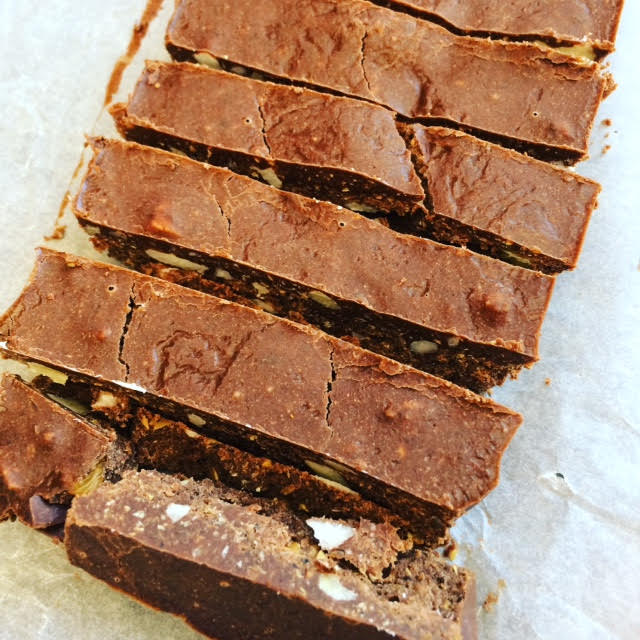
These nutty and chocolate-y slices are exactly what you need if you’re looking for a healthy snack to complement a higher fat/lower carb diet, or if you’re looking for an innocent sweet treat after a meal.

I’m not really one for writing or following recipes: I tend to just throw things together with whatever I have in the cupboards and hope for the best! So when I posted these slices on Instagram I felt a little out of my depth with people asking after the recipe… however, after promising I would share it, here it is:

Ingredients:

  • 3-4 tablespoons of Organic Virgin Coconut Oil
  • 3-4 tablespoons of protein powder. I used That Protein Blissful Brown Rice and Raw Cacao Super Protein. If you didn’t want to use protein powder then just raw Cacao powder would suffice here.
  • 2 tablespoons of Pecan nut pieces.
  • 2 tablespoons of Walnut pieces.
  • 2 tablespoons of Brazil nut pieces (note – use whichever nuts you prefer. Macadamia would also work here).
  • 2 tablespoons of Lidl Alesto Super Seed Mix. This contains milled Golden Linseed, milled hulled Hemp Seeds and milled Chia Seeds.
  • 2 Tablespoons of Holland and Barrett Organic Omega Shake. This contains Pumpkin Seeds, Sunflower Seeds, Brown Linseeds.
  • 1 scoop of Neal’s Yard Remedies Organic Fibre Blend. This powder contains Apple Powder, Psyllium Seed Husk Powder, Inulin Powder, Chia Seed Powder, Hemp Protein Powder, Fructooligosaccharides, Bacillus coagulans for a healthy gut (optional).
  • 1 teaspoon of Agave Syrup and 1 teaspoon of Manuka Honey (these are to sweeten. You can use whatever sweeteners you like and adjust the amounts to taste).

Method:

  1. Line the base of a regular loaf tin.
  2. On a low heat, slowly melt the coconut oil and then remove from heat.
  3. Stir in the remaining ingredients one by one until they represent a pan of delicious melted nutty-chocolate.
  4. Carefully pour into the lined tin and refrigerate overnight.
  5. Once set, slice into portions and enjoy!

Jackie Marsden MAR is a qualified reflexologist, acupuncturist, promoter of healthy living and independent consultant (Group Leader) for Neal’s Yard Remedies Organic. Jackie leads and mentors a growing team of consultants (many of whom are therapists integrating organic products into their existing businesses) via the NYRO social selling channel, holding regular team meetings, one-to-one coaching via phone and facetime, and a closed facebook group. All views are her own.