Thoughts on Sleep

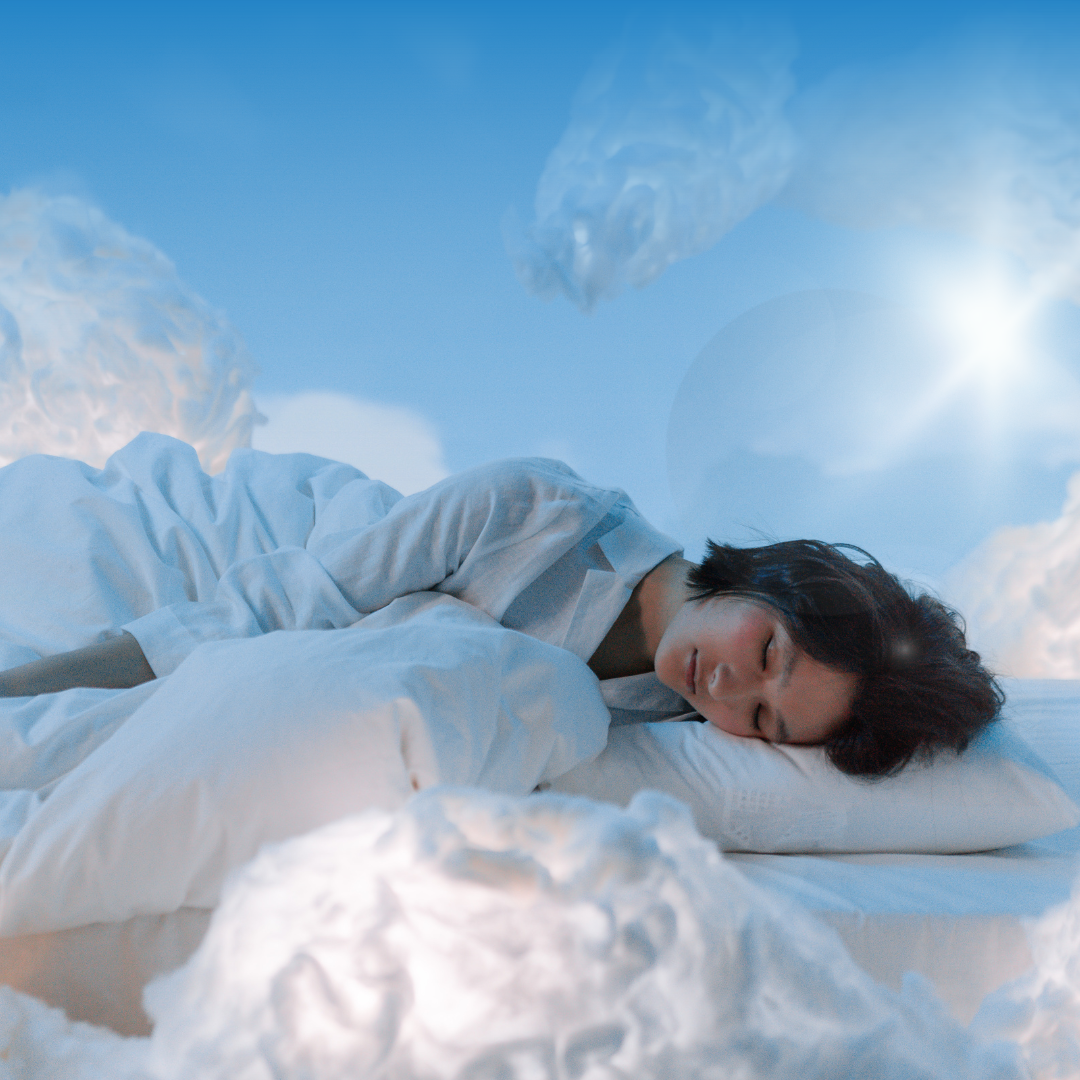
Woman sleeping peacefully.

Aside from nutrition, getting good quality sleep is probably the most important aspect for health and longevity. It is the cornerstone to good health,vitality, living longer and feeling well.

As basic as it sounds, we are designed to live with the diurnal rhythm; we wake with the light, and we sleep in the dark.

From around 5-6pm in the evening, our cortisol levels naturally start to drop, and the natural light starts to dim, and melatonin levels begin to rise. Melatonin is the hormone that makes us feel drowsy and gets us ready for a good night’s sleep.

I love to look at the Yin/Yang aspect of everything, and we can see here we have the dark night time which is Yin, and the light daytime which is Yang. We can also see that cortisol is the Yang to it’s counterpart melatonin, which is Yin. Our Yin and Yang aspects are always ebbing and flowing gently, gradually and naturally. Therefore its a really good idea to get into a winding down routine in the evening to allow our Yin to naturally deepen and do its work for a good night’s rest.

Its a great idea to adjust your daily activities (as much as is possible) to support this natural daily rhythm. Eating breakfast and your main meal, taking physical exercise and doing the main bulk of your work during the morning and earlier part of the day is best as this is when cortisol is at its highest.

As cortisol starts to drop early evening, its better to eat a smaller evening meal at least 3-4 hours before bedtime. The ‘321’ idea is an easy concept to follow:

  • Eat no later than 3 hours before bed
  • Drink no later than 2 hours before bed (any fluids)
  • No screens no later than 1 hour before bed.

If you can’t switch off your mind, meditation is helpful, as is Valerian, chamomile and magnesium. A bath with Epsom salts will give you a great boost of magnesium, and as your body temperature starts to drop afterwards, it will naturally help to make you feel sleepy. A cup of night time tea might also be useful. Try different things and see what helps you – we are all different!

We should be getting around 90 minutes of deep sleep every night and this usually happens earlier into the night. Its during the deep sleep where our body replenishes, heals and rejuvenates.

We should be getting around 2-3 hours of REM sleep a bit later on in the night, after deep sleep, and this is the type of sleep where our mind sifts, sorts through and processes everything that’s happened during the day. I believe this is why meditation can be so useful because sitting quietly and observing our thoughts for a few minutes before bed will get ahead of the sifting and sorting process that happens during REM.

We can disrupt our deep sleep by exercising too much. It’s a bit like taking a car on a very long drive; the engine will have been revved up and used a lot of oil. It will take longer to cool down and get back to normal. It’s the same with our body and mind. It can leave you wired even if you have done a lot and think you should be tired.

If you are a snorer then this will disrupt your sleep patterns, particularly if it causes apnea and wakes you everytime you’re snoring too loudly or gasping for air. It also means that you are not breathing through your nose as much. Nasal breathing increases the gas nitric oxide which is a molecule produced naturally in the body and is important for relaxing blood vessels and allowing them to widen and increase circulation (and so increasing oxygen and nutrient circulation around the body). It also helps us to feel relaxed and switch from ‘fight or flight’ to ‘rest and digest’ i.e. switching off the sympathetic nervous system and switching on the parasympathetic nervous system. Again these are the Yin and Yang aspects of health. Nasal breathing helps us to move out of Yang and into Yin.

Humming on the outbreath creates vibration which will open up the airways and increase nitric oxide, again making us feel relaxed and able to sleep better. So do some “Oms” with your evening meditation and see if you notice the difference!

Going back to snoring; snoring is usually down to raised inflammation making the airways swollen and restricted. Reducing inflammation is something to really work on if you are a snorer; losing weight, eating the rainbow, cutting down on refined carbs and sugars, processed foods, alcohol, smoking, caffeine, upping your omega 3s by eating oily fish, nuts and seeds, olive oil etc.

Working with a practitioner like myself with regular reflexology and/or acupuncture can be so useful in taking care of your overall health and wellbeing, and we can usually pinpoint areas that might be disturbing your ability to get a good night’s sleep.

Overall, getting into good habits by creating a bedtime routine or ritual that you follow each night, tailored particularly to those things that work for you, is the best way to set the stage for a good night’s sleep.

If you are interested in working with me please get in touch.

Links to carefully selected affiliates.
Self Help for Constipation

Constipation can vary from being an irritating problem that flares up from time to time, to a debilitating chronic condition causing abdominal pain and other complications.

Physically, constipation can be caused by all sorts of things including a lack of fluid and healthy fats and oils, a diet lacking in fibre, medication and food intolerances. 

Mentally and emotionally it can be triggered by stress, inability to let go of things such as the events from the past, and unwillingness to take in new life, new things, change. 

If there is a lot of faecal compaction the laxatives will only soften the newer stool; the compacted stool will remain. The best way to move stool is to bulk it out with insoluble fibre. This will create a larger stool to push everything through, without absorbing water which would make the stool very hard, difficult and painful to pass. Good sources of insoluble fibre are flax seeds soaked in water, or porridge oats. Both will form a “gloopiness” which is known as mucilage. This is an oily lubricant which will help assist the intestinal tract.

Both reflexology and acupuncture would be beneficial for constipation as both will offer space and time to deeply relax which will switch on the “rest and digest” and break the cycle of “fight or flight”.

Below are some self help tips you can try if you’re are suffering with constipation. These can be tried alongside the general advice of increasing water intake, increasing fibre intake, increasing healthy fats and oils and reducing white refined carbohydrates, sugary foods, caffiene, alcohol and stress.

Look up the following acupuncture points using the internet and gently massage these twice a day for 2 minutes. Do both left and right sides. San Jiao 6 (lower arm) and Gall Bladder 34 (lower leg below the knee).

Ask a friend or family member to gently massage the lower half of the soles of your feet. This general guidance will cover the small and large intestine reflexes. Here is a foot map as a general guide.

Ear points for the intestines (large circle) and rectum (smaller circle) can be gently massaged. Please see the diagram here. Add gentle pressure using finger and thumb, rotate and release. Do this no more than once to begin with, covering the whole area. Then wait as the body digests the action. Note that over stimulation can create feelings of nausia and dizziness, so “less is more” in this case. If any point is sensitive, this is a good indication of imbalance. Treat both ears.

When using the toilet, use a stool to raise up your feet so that you are replicating the squatting position, which is the best position to pass stools. For more information see Squatty Potty.

Ask a friend or family member to massage your abdomen in a clockwise direction. You could also include hips and lower back. Essential oils could also be used. A recommended book would be The Fragrant Pharmacy by Valerie Woomwood. As I’m not a qualified aromatherapist I won’t make suggestions here.

Take a table of flax seeds, cover in water, and soak. Once softened add more water and a small amount of good honey and drink. Do this twice a day. If this is completely undesirable then an alternative option would be to make up porridge using organic oats and water (no milk or sugar). Sweeten lightly with good honey.

Deep breathing exercises. In Traditional Chinese Medicine the Lung and Large Intestine channels are paired; the Lung is the Yin breathing in our essential life Qi, and the Large Intestine is letting go of waste, and the old. Spend a few minutes focusing on taking deep breaths, through the nose and into the belly, and then release. 

As with all self-help information, use at your own risk and do not substitite for prescribed medication or consultation with your GP/medical practitioner.

The Fascinating Psoas Muscle

The psoas muscles (major and minor) are the only muscles to join the upper body with the lower. The left and right psoas join the lumbar spine to the femur, thus joining the upper body with the lower body. This is quite a special function: think spiritually for a moment and the concept of linking the higher self with the earthy presence.

The psoas muscle is at the core of our functioning  bodies, creating flexibility but also providing a deep stabilizer, “supporting the human body much like an arch does in building structures”. [1]

The psoas muscle supports many of our internal organs or viscera. Think of it as a shelf for the intestines, kidneys, liver, spleen, pancreas and bladder. Any contraction of the psoas muscle will massage these organs, and due to the close proximity to them can “play a role as a reactor to these stimuli, thus affecting what is commonly termed as ‘gut feelings’.” [1]

The psoas meeting point is at the diaphragm at T12 or L1 (it can vary) and this junction in the body is known as the solar plexus. This area, a nerve network, is related to those ‘butterfly’ feelings we can get when we are nervous or excited. It is remarkable that the psoas muscle is also linked to the diaphragm and thus our breath, and those feelings which can effect the frequency of our breath such as nervousness, anxiety, excitement.

The psoas is one of the main muscles affecting the lower back, so with any lower back pain its condition warrants attention. Because of its deep central position, its closeness to our ‘gut feelings’ and our internal viscera, emotional tension can manifest in the psoas creating debilitating back pain and stiffness. If you suffer with lower back pain, ask yourself: do I feel supported in life? Am I worried/anxious/frightened? Is there a change forthcoming? Working through emotions is a key factor in dealing with back pain caused by the deep psoas, as well as finding the right balance of quality of motion and flow without restriction.

It is interesting to map the psoas muscles on the foot from a reflexology viewpoint. You can see that the psoas covers the medial arch of the foot, which is hugely important in supporting and maintaining posture and gait. It covers a very large area of the foot which only highlights (in my opinion) of its huge importance in our lives, providing support in a physical, mental and spiritual perspective. If you suffer with lower back pain, why not try reflexology or self-treat by massaging the area in red shown on the foot map?

I have been on a personal journey with this muscle. Emotional tension building up this year put me in a debilitating situation with such terrible back pain and restricted motion. It was only when discovering the psoas muscle and its functions and representations did I manage to heal myself and come through the dark and into the light.

Liz Koch says “the psoas is no ordinary muscle but a profound segue into the rich, inner and outer world of awareness and consciousness.”

[1] The Vital Psoas Muscle: Connecting Physical, Emotional and Spiritual Wellbeing by Jo-Ann Staugaard-Jones.

Jackie Marsden MAR is a qualified reflexologist, acupuncturist, promoter of healthy living and independent consultant (Group Leader) for Neal’s Yard Remedies Organic. Jackie leads and mentors a growing team of consultants (many of whom are therapists integrating organic products into their existing businesses) via the NYRO social selling channel, holding regular team meetings, one-to-one coaching via phone and Facetime, and a closed Facebook group. All views are my own.

Growyourbusiness
Photo by Lisa Fotios on Pexels.com

Make sure you are properly hydrated with clean, filtered, structured water.

[Yoga Series #3] Engage the Pelvic Floor for Spinal Health

When we talk about pelvic floor muscles it is usually relating to urinary and sexual health, pregnancy or post-partum issues and problems. But actually the pelvic floor is also fundamental to our spinal health.

ID-100197696The deepest muscles of the pelvic diaphragm run from front to back (pubic joint to coccyx). The more superficial layers are those including the anal and urethral sphincters. During yoga the focus should be on engaging the deeper fibres which encourage an upward motion of energy, permitting the diaphragm to lift the base of the rib cage forward.

I have a tendency to over extend my lumbar spine and stick out my bottom: this isn’t good for spinal health, and my yoga journey is now showing me this.

To be able to flex the lumbar spine, the psoas, abs and pelvic floor must concentrically contract. So my natural tendency to over-extend, in combination with attempting postures of deep lumbar-flexion (for example a standing or seated forward bend) without engaging the core muscles properly will lead to pain. Combine this with other personal issues such as emotional stress and poor posture during work (treatments, sitting at desk, driving) has led to much discomfort.

In yoga there are three main diaphragms (pelvic, respiratory and vocal) which come together in movements that are coordinated with inhaling and exhaling. These coordinated actions of the diaphragms (in yoga these are known as “bandhas”) create more stability in the body, protecting it from injury by redistributing mechanical stress.

For example, when performing a forward bend, if the thoracic, abdominal and pelvic cavities are not supported with the breath, then there is no single centre of gravity. This puts extreme pressure on the posterior spinal muscles with a pivotal point in the lumbo-sacral junction, which is vulnerable to damage (exactly where my back pain has been!)

Have you ever reached or bent over to do something and automatically held your breath? The body does this to try and protect our spinal structures.

Actively employing the breath which engages all three diaphragms including the all important pelvic floor muscles, offers the spinal column complete support during a forward bend, by centering gravity in the pelvis, legs and feet, and allowing the spine to relax and allow in space. Remember – build the foundation! This is explained beautifully in [1].

In understanding this during the yoga practice, as well as daily activities, I have managed to reduce my lower back pain considerably. As always, stepping onto the yoga mat takes us on a journey inside the body.

For some fabulous diagrams of the pelvic floor muscles see [2].

[1] Yoga Anatomy by Leslie Kaminoff, Amy Matthews

[2] http://www.dailybandha.com/2015/05/the-pelvic-floor.html

Image courtesy of cooldesign at FreeDigitalPhotos.net

Jackie Marsden MAR is a qualified reflexologist, promoter of healthy living and independent consultant (Team Leader) for Neal’s Yard Remedies Organic. Jackie leads and mentors a growing team of consultants (many of whom are therapists integrating organic products into their existing businesses) via the NYRO social selling channel, holding regular team meetings, one-to-one coaching via phone and facetime, and a closed facebook group. All views are my own.

Growyourbusiness

Are you getting enough Vitamin O?

What am I talking about? Oxygen.

I’m no expert on yoga/breathing/meditation, however what I learn and find useful for myself, I always share where needed, particularly with my clients.

Many people come to me with stress-related issues, anxiety, sleep problems. Our minds wander and we worry, we ask:

  • Why me?
  • Why (insert loved ones name here)?
  • Why did it happen?
  • I wished it hadn’t happened
  • I’m worried it will happen
  • … the list could go on but you get the idea.

While we’re wasting our time doing this, our bodies are responding with the “fight or flight” response. Heart rate quickens, blood pressure increases, our immune and digestive systems start slowing. Our breath becomes shallow.

We need something to get away from the mind’s futile worrying. What could be easier and more opportune than our breath? Take some deep, slow breaths. Allow the oxygen to fill up our chests, our tummies, our whole bodies. Sweep in through the nose, and if you can, out through the nose, if not slowly and gently through the mouth. Try counting 1,2,3,4 as you inhale, 1,2,3,4 as you exhale. Add in some pauses. Count 1,3,3,4 after every inhale and exhale.

These simple techniques should help you tune out your mind’s babble and focus on the present moment. What is actually bothering you right now at this present moment? Nothing.

Posture during these breathing exercises is important too. If you’re doing them in bed in the middle of the night then you should be horizontal and comfortable. Make sure you’re warm and you can relax your muscles. If you’re sitting then it might be useful to use a small cushion to “prop up” your seat bones (those bony bits in your bottom cheeks). Tilting the pelvis forward like this will shift the spine straighter and open up the chest area, allowing more space.

During my reflexology treatments, my sequence always starts with the diaphragm line, followed by lung reflex, to help calm the breath and aid relaxation.

When we breathe we are literally giving our whole bodies oxygen: what could be more holistic?

The breath is so obvious that it often gets overlooked, but this is one of the greatest tools we have to help ourselves.

Are you getting enough Vitamin O?

Jackie Marsden MAR is a qualified reflexologist and independent consultant (Team Leader) for Neal’s Yard Remedies Organic. Jackie leads and mentors a growing team of consultants (many of whom are therapists integrating organic products into their existing businesses) via the NYRO social selling channel, holding regular team meetings, one-to-one coaching via phone and facetime, and a closed facebook group. All views are my own.

independent-consultant-long-logoGrowyourbusiness

unnamed2

Image courtesy of hinnamsaisuy at FreeDigitalPhotos.net