IVF: Why days 3-5 are key

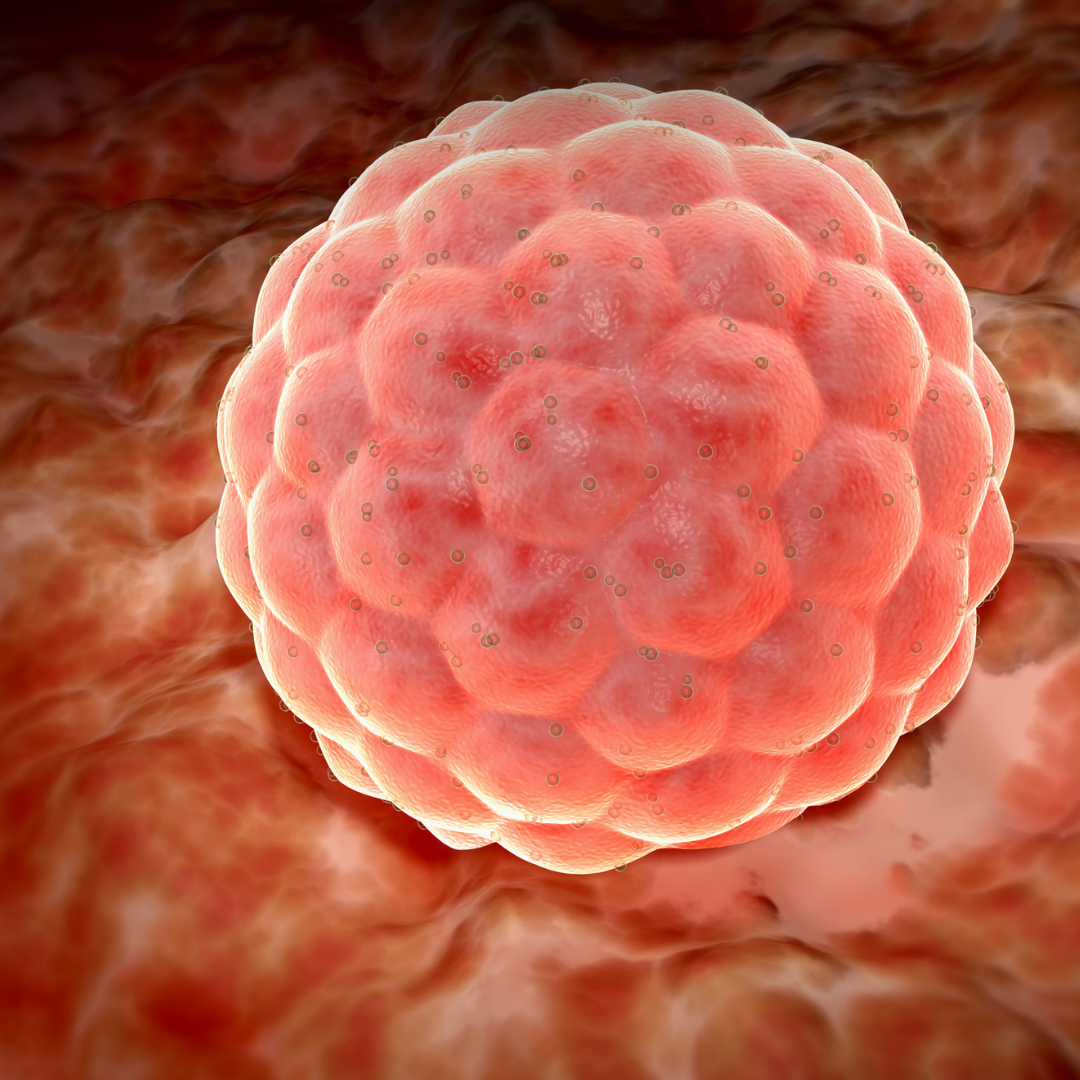
Embryo forming.

When going through IVF, and in particular ICSI (Intracytoplasmic Sperm Injection), its super important to pay as much attention to male factor as it is female.

Usually when using ICSI there is an issue with sperm, and its ability to penetrate the egg for fertilisation. This might be due to poor morphology or low sperm count for example. Or perhaps you have tried IVF before and the eggs failed to fertilise naturally. ICSI allows the sperm to be injected directly into the egg by an embryologist.

Some might say that the ability of the sperm to penetrate the egg is no longer important as this penetration is bypassed by the injection technique.

However, just because the sperm is manually injected into the egg, doesn’t mean that its role is then finished!

As the embryo starts to develop, the egg’s energy is solely used to power cellular division, up to around day 3. From day 3-5, the male chromosomes start to contribute to the development of the embryo.

If you have experienced embryos that have arrested in development at this stage, it is a clear message that what’s actually underneath isn’t healthy enough, the genetic material isn’t viable enough, what’s happening with the male Qi is not good enough for the sperm to power through an embryo development.

Taking time for the man to work on and improve his health and lifestyle for the next 3 cycles before going for another round of IVF is super important and really effective.

Allowing a couple 3 months to prepare for conception, whether that be naturally or through IVF is really good advice. It takes around 100 days for an egg to mature, and the same amount of time for health improvements and lifestyle changes to be reflected in sperm.

Taking the time to really focus on your health and prepare properly really is key when you are trying to conceive.

Book in for acupuncture with me today and start your journey feeling fully supported and empowered through your fertility journey.

If you are looking for fertility support in Lancashire please get in touch.

Let’s talk about periods

Did you know that a true menstrual period only comes if ovulation occurred. This means that if you are on the oral contraceptive pill (OCP) and have “periods”, these are really withdrawal bleeds and not true menstrual periods. This is because the OCP prevents you from ovulating.

If you are trying to conceive then it is wise to give your body time to readjust from stopping OCP and get back to a normal cycle.

Period Flow

The flow of your period should be tracked on the day that menstrual blood starts flowing properly (this would be marked as day 1). Often light spotting can occur beforehand so only class day 1 of your period when it gets going properly.

A normal, healthy period would be 3-5 days of bleeding and have a clear end. A regular flow is normal.

Heavy flow and flooding are something to be flagged. This would be more than 5-7 days of bleeding, or if you are having to change sanitary products more than every 2-3 hours. These issues might indicate issues such as thyroid imbalances, fibroid, low iron.

Likewise, very light pink blood for less than 3 days is also something to be flagged. This might be a sign of low oestrogen levels.

Period Pain

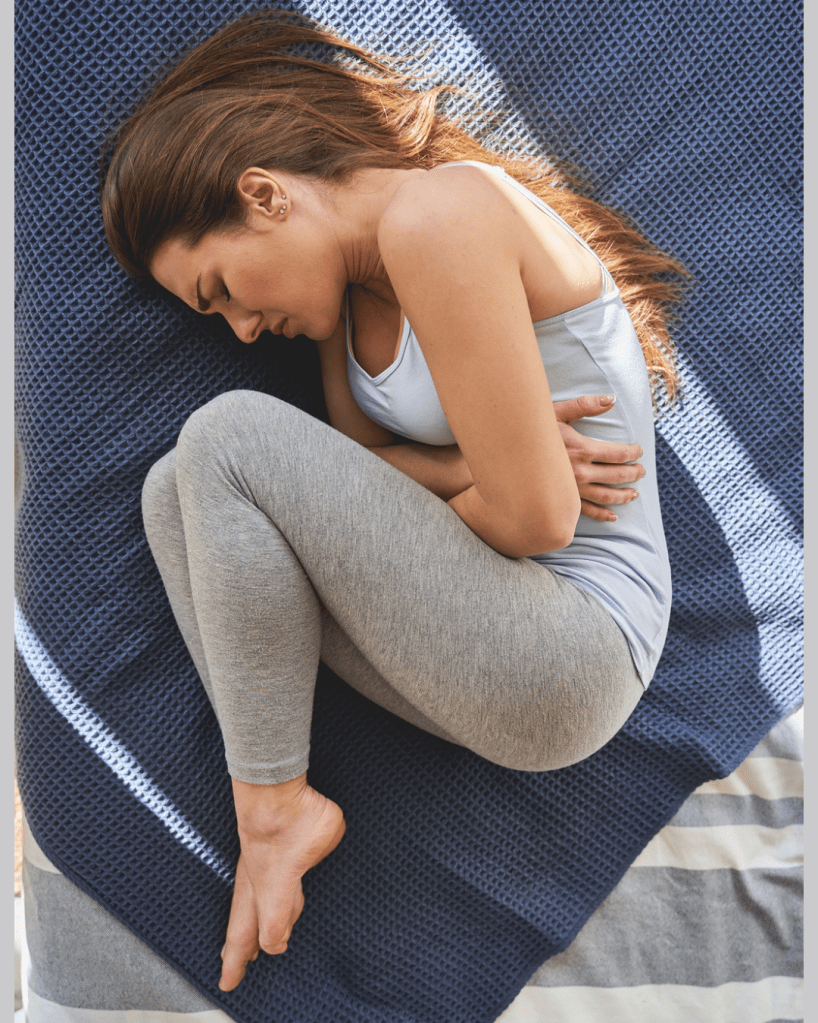
Woman feeling emotional and in pain during menstruation.

Rate your pain levels on a scale of 0-10. Mild cramping when your period starts is normal. Anything more should be flagged. Does it stop you from going to work? Do you need to take pain killers? Do you need to use a hot water bottle? Anything more than a 1 on the scale indicates a red flag. Where is the pain in your body? e.g. headaches, abdominal pain, breast pain, lower-back pain? These can all be clues and could indicate imbalances that can be addressed.

Period Frequency

Cycle length (day 1 to the next day 1) should be 24-35 days in length. There should be a clear start and end to the period.

If you have spotting before or afterwards this is something to be noted. Similarly, the colour of the blood should be a healthy red colour with no clots. If it is pink, dark red, purple, or black, then these are all flags to be noted.

Acupuncture

After discussing all of the above in a consultation, acupuncture can help rebalance the body with certain point prescriptions based on your symptoms. Alongside regular acupuncture, lifestyle changes and wellbeing techniques can also be adopted to optimise health and chances of conception.

There are lots of things to think about and consider with fertility awareness. Education is key and having knowledgeable support from an acupuncturist or reflexologist can be invaluable.

If you are looking for fertility support in Lancashire please get in touch.

Stress is a thief

Woman feeling stressed.

Stress is bandied about a lot across the internet and social media. But lets cut to the chase.

When you are chronically stressed (and this can be any type of stress, worry or fear because the body treats it all the same; as a threat) then your adrenal glands will secrete more of the hormone cortisol in order to keep you safe.

However, cortisol is made up of various ingredients, one of which is pregnenolone. This is where the steal happens. Pregnenolone is a key building block for the sex hormones: oestrogen, progesterone and testosterone. When the body is stressed, it believes it is under threat, and the priority is survival. So of course, the body will prioritise using the ingredients to create cortisol, the stress hormone, over using it to create our sex hormones. Because if your cycle is irregular, or you have unusual mid-cycle bleeding for example, these are not life-threatening. But the body will interpret any stress as life threatening, so other processes of less importance will be “put on the back-burner”.

So if you are having fertility issues of any kind, identifying areas of stress in your life can be a pivotal starting point. Really take some time reviewing your daily activities and routines and see where things could be improved. Spend some time sitting quietly and try not to think about anything. If this is difficult, write down the thoughts or worries that keep reappearing. Other things to consider:

  • Meditation or some sort of spiritual connection
  • Reflexology and/or acupuncture, massage
  • Gentle exercise allowing time for recovery afterwards
  • Setting time aside to do the things you love to do

If you are looking for fertility support in Lancashire please call/email me directly to have a chat and book in.

Buns won’t bake in a cold oven

Pregnant woman, happily holding her womb.

We’ve all heard the old saying “she’s got a bun in the oven”; a simple analogy of stating that someone is pregnant. But actually, this saying is true more than you might think. If you want to bake a bun, the oven must be warm right? The warmth gives all the ingredients the energy to transform together to create the desired outcome: a well-formed bun. This is all true for making babies. The environment in which the baby is conceived and implanted, and then subsequently grown and developed, needs to be one of which is warm.

One of the main areas I look at when seeing fertility clients is their tummy. I look at what they are wearing and whether they feel warm enough. Many women will wear cropped tops, or short tops that sit on the waist. Underwear may also be low sitting, which means the abdominal and lower back area where the uterus sits is not kept layered up and is prone to invasion of cold. Do you remember your mum or your gran telling you to wear a vest and tuck it into your knickers? This is absolutely sound advice for getting and staying pregnant!

Invasion of cold can also come from things like going outside with wet hair, no scarf, no coat, or sitting on cold surfaces. I’m not talking about doing it once, but repeatedly as a habit. Exposing our bodies regularly to cold exposure without warming up properly afterwards can lead to a manifestation of cold in the body. It is well known that going out in the autumn and winter with wet hair and no scarf can lead to us “catching a chill”, and this is the same for the abdominal area, which can lead to (or be a contributing factor of) fertility issues.

When the body is cold, the flow of Qi and Blood slows down. Our bodily fluids need energy from warmth to keep flowing freely and smoothly throughout the body. If the abdomen is on the cold side, this means that Qi and Blood are not flowing freely to and from the uterus, creating stagnation and leading to stasis.

Losing some weight around the middle can help a lot to increase warmth and disperse cold from this area. If you are looking at IVF you will know that there is usually advice as to the recommended BMI they recommend before starting your IVF journey. Lots of studies have also been done around obesity and pregnancy rates, indicating that a smaller waist can contribute to higher pregnancy rates.

When fertility clients come into see me, I will often ask to look at their tongue as well as palpate their tummy. The colour of the tongue can tell us a lot about what might be going on in the body from an acupuncture point of view. If the tongue shows me a blueish tinge then cold will be contributing factor to address.

Other signs of cold, or of Blood Stasis can be seen in menstrual blood, so if you are wanting to get pregnant then it is worth taking a note of your menstrual blood as well as monitoring your cycles. Look at the colour of the menstrual blood; it is bright red, or pink/orange, or dark red or purplish? What are the size of clots (if any) and the colour of those clots? Do you experience any cramping, bloating and pain before and during your period?

General things you can do to help dispel cold and warm up the abdominal area are:

  • Use a hot water bottle on your tummy or lower back regularly – if you’re sitting at your desk for a while use one then, or when relaxing on the sofa, or in bed at night.
  • Moxa patches are a great way to penetrate warmth and dispel cold. These are available in clinic. They simply attach to your tummy or lower back and will stay warm for 12-16 hours.
  • Incorporate herbs and spices into your diet. Things like ginger, garlic, cinnamon, mint, turmeric are all great for dispelling and dispersing stasis in the body and getting things warmed up and moving. Ginger & Turmeric Tea is a good way of doing this.
  • Get regular acupuncture to support your fertility journey.

If you are looking for fertility support in Lancashire please call/email me directly to have a chat and book in.

When East Meets West

I often find myself pondering on the little nuances of my practice. Those little subtleties that signal you to the next revelation or lead you onto another level of awareness.

My recent pondering takes me down both the reflexology and the acupuncture avenues and meets to bring another level or dimension to my understanding.

Acupuncture needle at acupuncture point Liver 3 on the foot.

I have been using the Reflexology Lymph Drainage (RLD) technique a lot lately, and really focussing a lot of attention on this sequence; looking at the particular reflexes and how the areas of the body represented by these points actually function. One of the key points of the RLD sequence is the reflex point for the Subclavian Vein (SV). This point is on the dorsal of both feet and is situated exactly at the same acupoint Liver 3.

The SV is an important point for the RLD sequence, as this is where the lymphatic system, once finished cleaning and transporting lymph through the body, will return it back into the cardiovascular system i.e. the blood. This point gets used A LOT during the RLD sequence; after every sweep and general movement, we ask the body to deposit the lymph back to the cardiovascular system via the techniques of reflexology. It is gently stimulated a minimum of 18 times on each foot, plus additional linking at the end.

From an acupuncture point of view, this point is known as Liver 3. The energy of the Liver is to govern “spreading and draining”. By this we mean that it is responsible for maintaining the free flow of Qi (energy). Liver Qi can be restricted emotionally by anger, and physically by damp-heat. “When Liver Qi stagnates, it gives rise to sensations of pressure, distention and pain”. So these are the same symptoms that we are addressing in the RLD sequence; pressure and distention from oedema, and subsequent pain that this causes. Oedema is a “damp” symptom; fluid starts to stagnate and that is what is known as “damp”. If it stagnates for long enough it can start to warm up which is known as “damp-heat”.

On each acupuncture meridian, there is a principal or “source” point which is known as the most powerful point of that particular channel. Liver 3 is the source point for the Liver channel and it is the main point we would chose to promote free-flowing Qi. In addition, this point (or points if we are thinking bilaterally) combined with Large Intestine 4 (Li4) on the hands, make up the “four gates” which are used for the relief of pain. What is interesting to me is that Li4 is the exact same point we would use for the SV in RLD on the hands!

We might ask what this all means? It just consolidates for me that what we do from either angle, whether its from a western medical viewpoint or whether it is from a Traditional Chinese Medicine viewpoint, it all slots together. The two approaches fit neatly together side by side. They both make sense.

The Internal Seasons

I’ve had this blog idea on my “to-do” list for ages, but I’ve not been inspired to write it until today. Do you ever have that? Where something is there to be done but you’re just not inspired to do it until one day, ping! the inspiration comes.

This blog is about outlining the menstrual cycle from a TCM (Traditional Chinese Medicine) point of view, and how are cycles are similar to the seasons. By becoming more aware of our internal cycles we can really look after ourselves in understanding when times of rest, nourishment and calm are needed (Winter) and when times of high energy can bring us productivity and rejuvenation (Spring and Summer). And those times of preparation (Autumn). A bringing together of the physical and the mental/emotional.

However I feel that there is more to this blog than I originally thought. This is because it is becoming more and more apparent to me that we are not just similar to the seasons, we ARE the seasons. We don’t just live here on this planet, we ARE part of the fabric of creation itself. There is no coincidence that our cycles move in time with the moon; that the tides are pushed and pulled by the forces of the lunar cycle, that so many animals, sea creatures and insects follow the phases of the moon for their own reproduction. Everything in nature includes us. There is no separation. When we talk about “connecting with nature” I think what we are actually doing is “reconnecting with who we are”. We are nature. We don’t walk in nature, or spend time in nature; we ARE nature. This is why these times make us feel so good, because there is a sense of coming home, of becoming one, of belonging, of lessening the grips of the idea that we are seperate from the world and from each other. I find I have more and more of these moments of inner knowing, connectedness and understanding of life, and this is the first time I have been able to grab it and get it down into words.

When we discuss the theory of TCM we often mention the seasons and the weather when we talk about particular energies and meridians. TCM philosophy really harnesses the idea of connectedness with our environment and with nature. I really appreciate this concept in my own understandings of life and of health and wellbeing. I also like the idea of likening the menstrual cycle to the ebb and flow of the tides; the tides of Yin and Yang. Understanding these tides and the transitional points between the two can offer huge benefits of understanding to support one’s own monthly cycles:

Phase 1 (days 1-5) is about Blood as we menstruate, it is a restful Yin phase focusing on nourishing ourselves and taking care of ourselves. Honour this time and avoid sexual intercourse and strenuous exercise. The external pathogenic factor of Cold can penetrate particularly at this time so take note of this in the activities you pursue. Remember that Blood is flowing downwards so sanitary items such as tampons obstruct this downward movement. Better to use pads or a menstrual cup.

Phase 2 (days 6-13) is focusing on Yin as increased amounts of oestrogen cause the lining of the uterus to thicken. Eating protein and mineral-rich foods in this phase will help to replenish Blood and Yin. This phase is building towards Yang.

Day 14 is when ovulation happens, and some cramping or spotting can occur as the body prepares to move from Yin to Yang. Get to know your cycles and allow your body and mind space to transition.

Phase 3 (days 15-21) is very Yang focussed; the body is building and nourishing the uterus ready for implantation if fertilization occurs, or shedding the lining if it doesn’t. This segment of the cycle is very energetic. Remember to support yourself during this energetic time with nutrient dense foods and adequate hydration.

Phase 4 (days 22-28) focusses on Qi. As oestrogen levels drop, serotonin levels can also drop and this can affect our mood and emotions. PMS can occur, tears, frustration, anger, as well as physical symptoms such as bloating or breast tenderness. All of these symptoms are based on the lack of free flowing Qi and result in Qi stagnation. So this segment of the cycle it is important to eat clean, take gentle exercise and avoid stimulants in order to support the Liver energy to keep Qi gently flowing freely. It might be a time where you might want to reach for those sugary snacks, so try to substitute those with better choices. We can also choose to eat warming foods because Qi needs heat to keep the fluids moving. Avoiding cold foods and drinks, and exposure to cold weather, swimming and sitting on cold surfaces can all help to support this phase of the cycle.

If you are looking for fertility support in Lancashire please get in touch.

Self Help for Constipation

Constipation can vary from being an irritating problem that flares up from time to time, to a debilitating chronic condition causing abdominal pain and other complications.

Physically, constipation can be caused by all sorts of things including a lack of fluid and healthy fats and oils, a diet lacking in fibre, medication and food intolerances. 

Mentally and emotionally it can be triggered by stress, inability to let go of things such as the events from the past, and unwillingness to take in new life, new things, change. 

If there is a lot of faecal compaction the laxatives will only soften the newer stool; the compacted stool will remain. The best way to move stool is to bulk it out with insoluble fibre. This will create a larger stool to push everything through, without absorbing water which would make the stool very hard, difficult and painful to pass. Good sources of insoluble fibre are flax seeds soaked in water, or porridge oats. Both will form a “gloopiness” which is known as mucilage. This is an oily lubricant which will help assist the intestinal tract.

Both reflexology and acupuncture would be beneficial for constipation as both will offer space and time to deeply relax which will switch on the “rest and digest” and break the cycle of “fight or flight”.

Below are some self help tips you can try if you’re are suffering with constipation. These can be tried alongside the general advice of increasing water intake, increasing fibre intake, increasing healthy fats and oils and reducing white refined carbohydrates, sugary foods, caffiene, alcohol and stress.

Look up the following acupuncture points using the internet and gently massage these twice a day for 2 minutes. Do both left and right sides. San Jiao 6 (lower arm) and Gall Bladder 34 (lower leg below the knee).

Ask a friend or family member to gently massage the lower half of the soles of your feet. This general guidance will cover the small and large intestine reflexes. Here is a foot map as a general guide.

Ear points for the intestines (large circle) and rectum (smaller circle) can be gently massaged. Please see the diagram here. Add gentle pressure using finger and thumb, rotate and release. Do this no more than once to begin with, covering the whole area. Then wait as the body digests the action. Note that over stimulation can create feelings of nausia and dizziness, so “less is more” in this case. If any point is sensitive, this is a good indication of imbalance. Treat both ears.

When using the toilet, use a stool to raise up your feet so that you are replicating the squatting position, which is the best position to pass stools. For more information see Squatty Potty.

Ask a friend or family member to massage your abdomen in a clockwise direction. You could also include hips and lower back. Essential oils could also be used. A recommended book would be The Fragrant Pharmacy by Valerie Woomwood. As I’m not a qualified aromatherapist I won’t make suggestions here.

Take a table of flax seeds, cover in water, and soak. Once softened add more water and a small amount of good honey and drink. Do this twice a day. If this is completely undesirable then an alternative option would be to make up porridge using organic oats and water (no milk or sugar). Sweeten lightly with good honey.

Deep breathing exercises. In Traditional Chinese Medicine the Lung and Large Intestine channels are paired; the Lung is the Yin breathing in our essential life Qi, and the Large Intestine is letting go of waste, and the old. Spend a few minutes focusing on taking deep breaths, through the nose and into the belly, and then release. 

As with all self-help information, use at your own risk and do not substitite for prescribed medication or consultation with your GP/medical practitioner.

Ear Points for Headache

Headaches and migraines can be painful at best and debilitating at worst. There are so many triggers for headaches including dehydration, food, stress, hypertension, hormonal surges, bright lights, and strong smells (to name but a few). To ease a headache, many of us will reach for the painkillers to get through the day.

In this post, I’d like to share 3 ear points to use for the symptom of headache. Find each point, add gentle pressure using finger and thumb, rotate and release. Do this no more than once to begin with, and then wait as the body digests the action. Note that over stimulation can create feelings of nausea and dizziness, so “less is more” in this case. If any point is sensitive, this is a good indication of imbalance.

Point 1: Liver Yang

This is on the outer edge of the ear known as the Helix. Gently palpate in this area to see if there is a sensitive spot. Then gently add pressure, rotate and release.

In Traditional Chinese Medicine, Liver energy is responsible for the smooth flow of Blood and Qi, as well as emotions. If you are feeling angry or frustrated then Liver Yang might be accumilating in the upper body and head, causing symptom of headache.

Point 2: Subcortex.

The area marked here includes the Brain and Head. Gently squeeze this area placing the forefinger inside of this flap (known as the Antitragus) and the thumb on the outside. Add pressure, rotate and release.

As the symptom we are addressing is located in this body part, it is a straightforward action of stimulating the reflex point to have a corresponding effect on the body.

Point 3: Ear Shenmen.

This point is great for regulation and calm, and also used for the relief of pain. Place forefinger on the point, and support with thumb behind the ear. Add pressure, rotate and release.

In Traditional Chinese Medicine, Shenmen translates to “door of the mind”. By using this point we not only aim to calm the mind, but we also look to calm the heart.

By using these points, the intention is to provide rapid pain relief, or reduction of pain, from the symptom of headache.

As with all self-help information, use at your own risk and do not substitute for prescribed medication or consultation with your GP/medical practitioner.

Make sure you are properly hydrated with clean, filtered, structured water.

Contact me to book in for Reflexology or Acupuncture at Elder Cottage Clinic, Warton PR4.

Links to carefully selected affiliates.

Acupoints for Self Help

This short article outlines some key point prescriptions for common ailments that can be used at home with gentle acupressure or stick-on magnets. Use all the points within each combination bi-laterally.

These points are fairly easy to find via a search engine in order for you to see the locations. Massage each point gently for approximately 2 minutes, at least once a day but more often if you can. Notice a difference straight away or after a few sessions.

Inflammation

Any ailments caused by an excess of heat and inflammation, use Large Intestine 11 and 4, as well as Spleen 6. Magnets would be an excellent choice for this point combination as they are naturally cooling.

Pain

As a general prescription for pain, use Stomach 36, Large Intestine 4 and Liver 3.

Anxiety

For any anxiety related symptoms especially nausea, use Pericardium 6 and Heart 7, found on the wrists.

Toothache

To reduce pain and discomfort from toothache, use Stomach 44 and Large Intestine 4.

Sore Throat

To ease a sore throat use Kidney 6 and Lung 7 together.

What are you shouldering?

In Traditional Chinese Medicine, the Large Intestine channel starts at the tip of the radial side (thumb side) of the second finger and runs up along the arm to the elbow crease then up to the anterior (front) shoulder,a cross to the neck and ending at the nose. It is a primary channel to be affected when it comes to shoulder and elbow problems.

I have recently treated many clients with acupoints on the shoulder, elbow and arm. One client in particular presented with debilitating hip and sciatic pain on the left. After assessing her feet for foot-reading and reflexology based markers it was plain to see that the right shoulder was not happy. This reflex point was screaming red and presenting with a lot of heat; it was particularly eye-catching. After discussing my findings we agreed to use acupuncture moving forward. Palpating particular points around the shoulder and into the arm indicated tenderness and a desire to be “worked” and released. After two sessions the client is enjoying significant pain reduction and improved sleep patterns.

Mentally and emotionally we can “shoulder” a lot of emotion, burden and responsibility. If we don’t address this then physical pain can manifest. What I find interesting is that the Large Intestine channel runs along here, and if we consider what it does as a physical functioning organ; to process and eliminate waste, then mentally and emotionally we have to work on “letting go” of the burdens and responsibilities that we unnecessarily place on our (metaphorical) shoulders.

In Traditional Chinese Medicine the Large Intestine is paired with the Lung. We breathe in new life force (Qi) with the Lungs and eliminate the old (waste) through the Large Intestine. In many clients I have seen with issues affecting the shoulder and/or elbow is that there is often an imbalance in the chest too (smokers, COPD, grief). If we continue to hold on to things that do not serve us, it will start backing up and impacting on how much new energy we can let in.

As a therapist I have experienced my own health issues (and continue to) as well as observed health issues in others. I can help my clients feel better but ultimately it is down to them to go away and do the work. We cannot treat the physical without looking at the mental/emotional aspect too. I share what I learn with them in clinic and through this blog in the hope that I live a life from which others can benefit by realising or recognising aspects in themselves.