How does Acupuncture work?

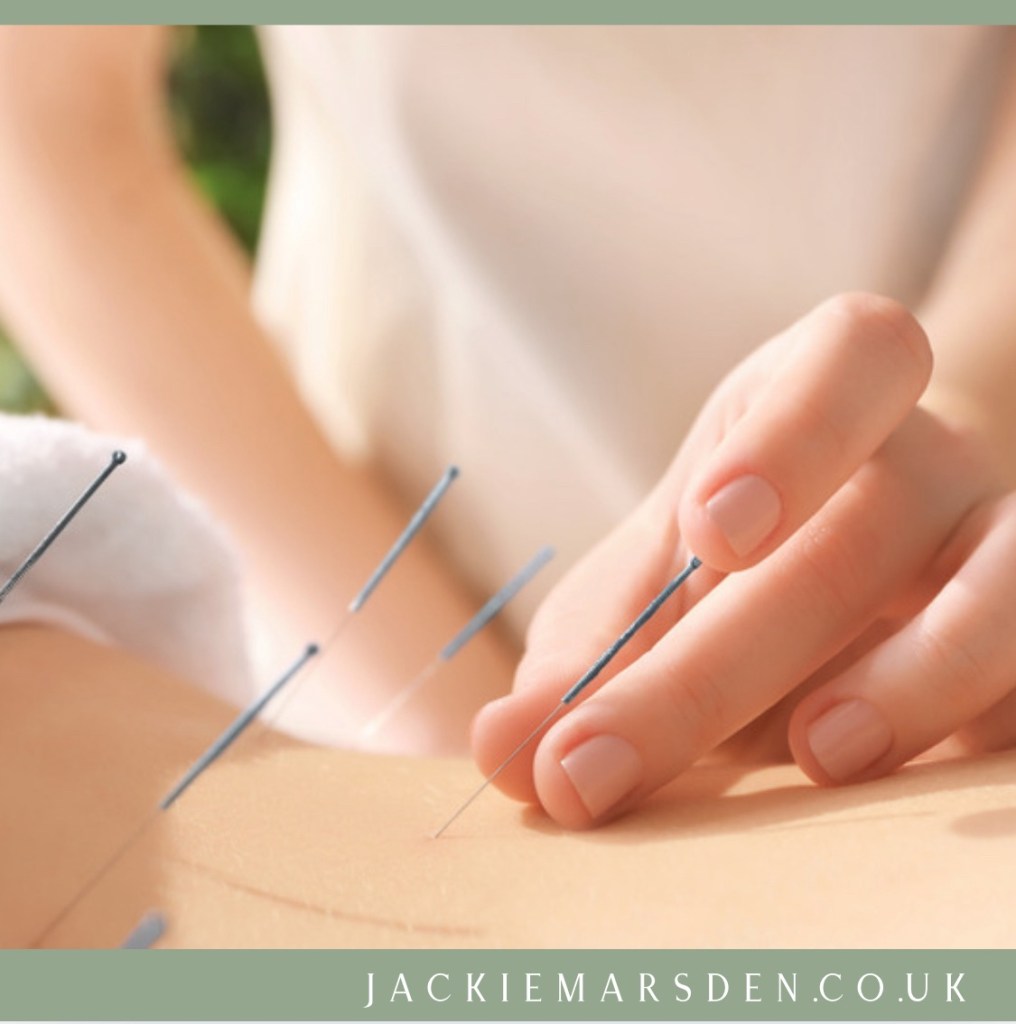
Fertility acupuncture in abdomen.

Traditional Acupuncture uses the understanding of health and wellness that’s been developed over thousands of years (Traditional Chinese Medicine). This theory uses the concept of Qi (energy) our life force energy. Qi flows up and down the meridian system which is a network of channels connecting the main organs with the rest of the body.

When we are well, the Qi is said to be flowing freely. When we are unwell, the Qi is said to be blocked, or stagnant, and not flowing as freely.

Acupuncture uses particular points on the channels to rebalance the flow of Qi and improve our physical, mental and emotional wellbeing.

A good analogy is of the body as a circuit board. An acupuncturist uses these circuits to rewire and reconnect the flow of electricity.

Evidence based research on how acupuncture works is highlights its impact on the central nervous system (CNS). The CNS governs fight or flight vs rest and digest. When we are chronically stressed we get stuck in fight or flight. Acupuncture appears to release endorphins, natural pain killers and those happy chemicals, to rebalance the CNS. The process acupuncture ignites within the body increases blood circulation, reduces inflammation, helps regulate blood sugars and reduces stress, which can all have a positive impact on our wellbeing.

If you’d like to try acupuncture for your own wellbeing book in today.

When East Meets West

I often find myself pondering on the little nuances of my practice. Those little subtleties that signal you to the next revelation or lead you onto another level of awareness.

My recent pondering takes me down both the reflexology and the acupuncture avenues and meets to bring another level or dimension to my understanding.

Acupuncture needle at acupuncture point Liver 3 on the foot.

I have been using the Reflexology Lymph Drainage (RLD) technique a lot lately, and really focussing a lot of attention on this sequence; looking at the particular reflexes and how the areas of the body represented by these points actually function. One of the key points of the RLD sequence is the reflex point for the Subclavian Vein (SV). This point is on the dorsal of both feet and is situated exactly at the same acupoint Liver 3.

The SV is an important point for the RLD sequence, as this is where the lymphatic system, once finished cleaning and transporting lymph through the body, will return it back into the cardiovascular system i.e. the blood. This point gets used A LOT during the RLD sequence; after every sweep and general movement, we ask the body to deposit the lymph back to the cardiovascular system via the techniques of reflexology. It is gently stimulated a minimum of 18 times on each foot, plus additional linking at the end.

From an acupuncture point of view, this point is known as Liver 3. The energy of the Liver is to govern “spreading and draining”. By this we mean that it is responsible for maintaining the free flow of Qi (energy). Liver Qi can be restricted emotionally by anger, and physically by damp-heat. “When Liver Qi stagnates, it gives rise to sensations of pressure, distention and pain”. So these are the same symptoms that we are addressing in the RLD sequence; pressure and distention from oedema, and subsequent pain that this causes. Oedema is a “damp” symptom; fluid starts to stagnate and that is what is known as “damp”. If it stagnates for long enough it can start to warm up which is known as “damp-heat”.

On each acupuncture meridian, there is a principal or “source” point which is known as the most powerful point of that particular channel. Liver 3 is the source point for the Liver channel and it is the main point we would chose to promote free-flowing Qi. In addition, this point (or points if we are thinking bilaterally) combined with Large Intestine 4 (Li4) on the hands, make up the “four gates” which are used for the relief of pain. What is interesting to me is that Li4 is the exact same point we would use for the SV in RLD on the hands!

We might ask what this all means? It just consolidates for me that what we do from either angle, whether its from a western medical viewpoint or whether it is from a Traditional Chinese Medicine viewpoint, it all slots together. The two approaches fit neatly together side by side. They both make sense.

A healthy mid-life means an easier menopause

The most important thing to know about the menopause is prevention, so if you are a woman in your midlife, getting the support and balance you need will help you in your menopausal years. This blog aims to explains the menopause in Traditional Chinese Medicine (TCM) terms, and gives indicators on how you can support yourself as well as receiving treatments in-clinic.

As a therapist with a predominantly female clientele, and a 40-something woman myself, I have a particular interest in this subject. Many women suffer with the two main symptoms of menopause: hot flushes and dryness (an excess of heat and a lack of moisture). In addition to these symptoms, women can also feel emotionally unstable, have difficultly sleeping and concentrating, experience frequent headaches, feel lethargic and tired, irritable, anxious, depressed and nervous.

Although the menopause usually comes at around the age of 50, the decline in the ovarian follicles and in oestrogen occurs throughout our lives. The number of follicles at birth has already halved by puberty, and continues to decline up to the menopause. Thus the menopausal symptoms can start to appear at an earlier stage in life, so we are never too young to take notice.

In TCM, from our conception, our Kidneys store our vital life essence (Jing). Jing circulates over long periods, dominating our developmental stages (usually 7 year cycles in women and 8 year cycles in men). Our Kidneys dominate growth and reproduction. They also dominate water metabolism and bone, and produce marrow (brain). So you can see that our Kidney energy is very important in not only giving us our life force and will-power, it also governs our reproductive systems, and works closely with the lungs to moisten the body, as well as strengthens our skeletal system. These are all closely linked to common health problems in women (osteoporosis, dryness, infertility, irregular menstrual cycles and fatigue to name a few).

Thinking about menopause, anything that will weaken our Kidney energy is going to have an impact on our menopause. Our busy modern day lives seem to dictate a very stressful way of living. For example, parents going out to work as well as looking after children will often feel overwhelmed and unrested, causing tiredness, fatigue and irritability. Smoking will “burn fluids” and dry out moisture. Irregular diets high in beige carbs, processed foods and sugars will create “phlegm” (this is a TCM term for thick stagnation). Too much tea, coffee and alcohol is very “yang” in nature and therefore will add heat to the body and thus aggravate symptoms such as hot flushes. Not enough fluid/water intake will have an effect on moisture levels. Emotional stress will also deplete Kidney energy.

As women, we need to create space in our lives to allow balance. We need to replenish our Kidney energy with enough rest between busy times, we need to eat and drink in moderation and eat well; foods that are nutrient dense and foods that add moisture. Drink enough fluids. Only do what we can comfortably do and don’t over stretch ourselves. If we do all of this then we will naturally regulate our day-to-day emotional stresses, but anything lying deeper should be dealt with and not “carried” as this will also deplete the Kidneys, as well as create excess Heart energy adding fire/heat, exacerbating hot flushes, irritability and dryness.

If you are interested in receiving some acupuncture or reflexology sessions please contact me directly for an initial chat.

If you are looking for fertility support in Lancashire please get in touch.

Jackie Marsden is a Reflexologist, Acupuncturist and Foot Reading Practitioner, based at Elder Cottage Clinic, Warton, Preston, PR4. She is a full member of the Association of Reflexologists.

Dry Eye Syndrome

Dry eye syndrome can occur when the eyes do not produce enough tears or the tears evaporate too quickly. This can leave incredibly dry eyes, or the other extreme, the eyes can water continually to try and remedy the imbalance.  This condition can affect up to 60% of menopausal/perimenopausal women. There is some evidence that shows imbalances in progesterone, testosterone and oestrogen can affect the eye. There are progesterone, testosterone and oestrogen receptors on the cornea and the meibomion glands (sebaceous glands located on the rim of the eyelid).[1] This means that there is a connection between tears and the sex hormones. There is an understanding that dry eyes can result from a deficiency in any one of the sex hormones.
ID-100202869In treating a client with dry eye syndrome, I developed a treatment plan focusing on re-balance and detoxification. Attention to the endocrine system is key, along with the liver, gallbladder, and also the urinary system, particularly the kidney.

In Traditional Chinese Medicine (TCM) the organ of the liver rules the eye; the eye it its outlet. So dry eyes might be an indicator that the body is not efficient in detoxifying or there might be an imbalance which is preventing this from happening optimally.

The eye and the kidney, in reflexology terms, are within the same zone, zone 2. In addition, thinking about meridians (the TCM energy channels) the kidney’s paired meridian is the bladder, and this starts in the medial aspect of the eye. For this reason I decided to pay attention to the urinary system during the treatments.

Sure enough, some nodules presented around the bladder and ureter on the left foot. The following day my client contacted me to tell me that she discovered she was suffering with cystitis. It was fascinating to to find symptoms of an imbalance presenting in the feet before it had presented itself to the person. My client self-treated the cystitis with an over-the-counter remedy which cleared it up in two days. But one could argue, without the reflexology treatment, the bout might have lasted longer, or been more severe.

Another interesting consequence of the treatment was that the client’s eyes stopped watering during the treatment. An instant effect like this I find truly remarkable, even though they continued to water after the treatment.

Let’s return to the liver: TCM would suggest that the liver be worked as the eye is the outlet for this organ, but also it’s pairing: the gall bladder. Emotionally the liver is associated with anger, so as a therapist it is beneficial to remain open minded about what is going on “inside” your client, mentally and emotionally, and not just recently, but long-standing emotions that can manifest in different ways. Similarly, the kidney is associated with the emotion of fear, and this conjures up images of water (crying, tears, weeping, bed-wetting, urinating).

Similarly to my advice given for perimenopause, eating a balanced diet of whole foods, whole grains, organic vegetables and fruit, reduced sugar and processed foods, and a reduction in the use of stimulants such as caffeine and alcohol, can help in re-balancing. In addition, an uptake in omega-3 can also help reduce inflammation caused by dry eye syndrome, as well as balance tear stimulation and the secretion of sebum which assists eye lubrication.

Another client who suffers with chronic dry eye syndrome as an after effect of cancer treatment, has been successful in dramatically improving symptoms by taking re-hydration salts daily. (Please consult your GP if you are currently on medication such as water or blood pressure tablets before trying this.)

Dehydration can be a cause of a wide range of health problems, and by installing a filter to restructure the tap water you are drinking to make it more bioavailable to the body is a good idea.

In addition to these options, omega 7, found in Sea Buckthorn Oil, is widely recommended by many for help with dryness during perimenopause and menopause. Not just dry eyes, but also dry skin, and intimate dryness. I recommend those made by Cytoplan. Please reach out to me if you need help or advice.

THIS IS NOT A SUBSTITUTE FOR MEDICAL ADVICE. PLEASE CONSULT YOUR MEDICAL PRACTITIONER OR GP.

[1] http://www.womentowomen.com

Jackie Marsden MAR is a qualified reflexologist and independent consultant (Team Leader) for Neal’s Yard Remedies Organic. Jackie leads and mentors a growing team of consultants (many of whom are therapists integrating organic products into their existing businesses) via the NYRO social selling channel, holding regular team meetings, one-to-one coaching via phone and Facetime, and a closed Facebook group. All views are my own.


independent-consultant-long-logoGrowyourbusiness

unnamed2

mooncup_banner

Image courtesy of stockimages / FreeDigitalPhotos.net