Why am I not getting pregnant?

It is quite common to think that it is easy to get pregnant. At school we were scared into believing that it is really easy to get pregnant and there was a huge push to educate on contraception. But statistically it takes time to fall pregnant.

For women up to and including the age of 25, 60% will be pregnant at 6 months of trying; 85% at a year. And of 100 couples trying to conceive, 40 will not be pregnant after 5 months, and 15 will not have conceived after a year of trying.

For women of 35 or over the statistics lengthen: 60% will be pregnant at a year, and 85% at 2 years. Age being the factor to reduce the chances of conception.

Men account for almost 40% of the reasons behind fertility treatment.

When that positive pregnancy test doesn’t come quickly, anxiety and worry can quickly set in, and this level of stress only adds to the problem. And this then often leads to a quick jump into IVF without properly giving the issue enough time and attention it needs to potentially happen naturally.

What can I do?

Get to know your cycles. Understanding your menstrual cycle is key to timing intercourse properly and knowing the signs of ovulation and a healthy follicular and luteal phase, as well as a healthy bleed. Don’t rely on apps to tell you when you are ovulating and when you should be next on your period; look for that egg white mucus and make a note of which day of your cycle this is observed. Take your basal body temperature first thing every morning with a properly calibrated thermometer and mark this on a chart. Look at your mentrual blood and observe its colour, texture, and notice any prementrual pains and tension you feel, and whether this carries on into your period. Doing this for a few months can built up a good picture of your menstrual health and allows you to time intercourse accordingly (every other day between the end of your bleed and ovulation).

What do you class as normal? By this I mean, what are the things that you regularly put up with that really you shouldn’t have to. Such as extreme pain, running to the toilet after eating certain foods, avoiding particular foods/products because they irritate your tummy or skin, heart burn, fatigue, heavy periods, painful periods, acne, hot flushes, IBS, constipation, diarrhoea, headaches. Symptoms you put up with could be indicators of imbalances that need to be smoothed out in order to create a baby-friendly body.

Dig a little deeper. Get tested properly. A basic Day 2 hormone panel from the GP is a good starting point, but even that can be difficult to get. Progesterone needs to be tested separately 7 days after you have ovulated (another good reason to get to know your cycle). A full thyroid panel is also useful, as is Vitamin D and iron levels. Consider using Medichecks or another company to get these panels done privately if necessary.

Look at him. As previously mentioned, 40% of all fertility treatment is because of male factor. It is so easy to improve sperm quality quickly by improving diet, nutritional choices, reducing alcohol and smoking, and keeping those testicles cool and free. Reduce the use of hot baths, saunas, hot tubs. Reduce sitting around in tight clothing. Look at hobbies which can increase the heat to this area: cycling, gaming etc. Use a good quality men’s fertility health supplement like Ovum. Keep mobile phones out of front trouser pockets.

Common obstacles to wellness

Woman receiving a facial massage.

Many people find it difficult to find the time for wellbeing. Juggling work and family commitments can be a challenge, and before we know it another week has passed and another opportunity to book in for that reflexology or acupuncture session has gone.

As women I think we often find that, in altruistic fashion, put our own needs at the bottom of the priority list. Our children/partners/work all often take priority over ourselves and what we need to keep well and feel good.

Sometimes we might even feel that having that massage or facial is actually a luxury, and not an essential, and then we simply don’t prioritise it at all, and may even cross it off the to-do list completely!

But it is so important to take care of our health while we still have it. If we become unwell and ill-health prevails, that is when we will be unable to cope with family commitments and go to work.

Preventative healthcare is so important particularly for women as we spin so many plates in our various roles as mother, sister, daughter, wife/partner, carer, money-earner, housekeeper, cook, cleaner… the list goes on! If we don’t take care of ourselves while we have so many responsibilities, the stress of it all will start to take its toll.

So put yourself first, at least once a month, for just an hour. Book in for that treatment and make sure your cup is replenished so that you’re fully topped up and resourced for the month ahead.

More on Endometriosis

Endometriosis comes from the retrograde menstrual blood flow. This means that when we menstruate, some of the uterine shedding doesn’t flow downwards and out through the vagina; some of it will move up through the Fallopian tubes and into the ovary, and sometimes beyond and into the pelvic cavity.

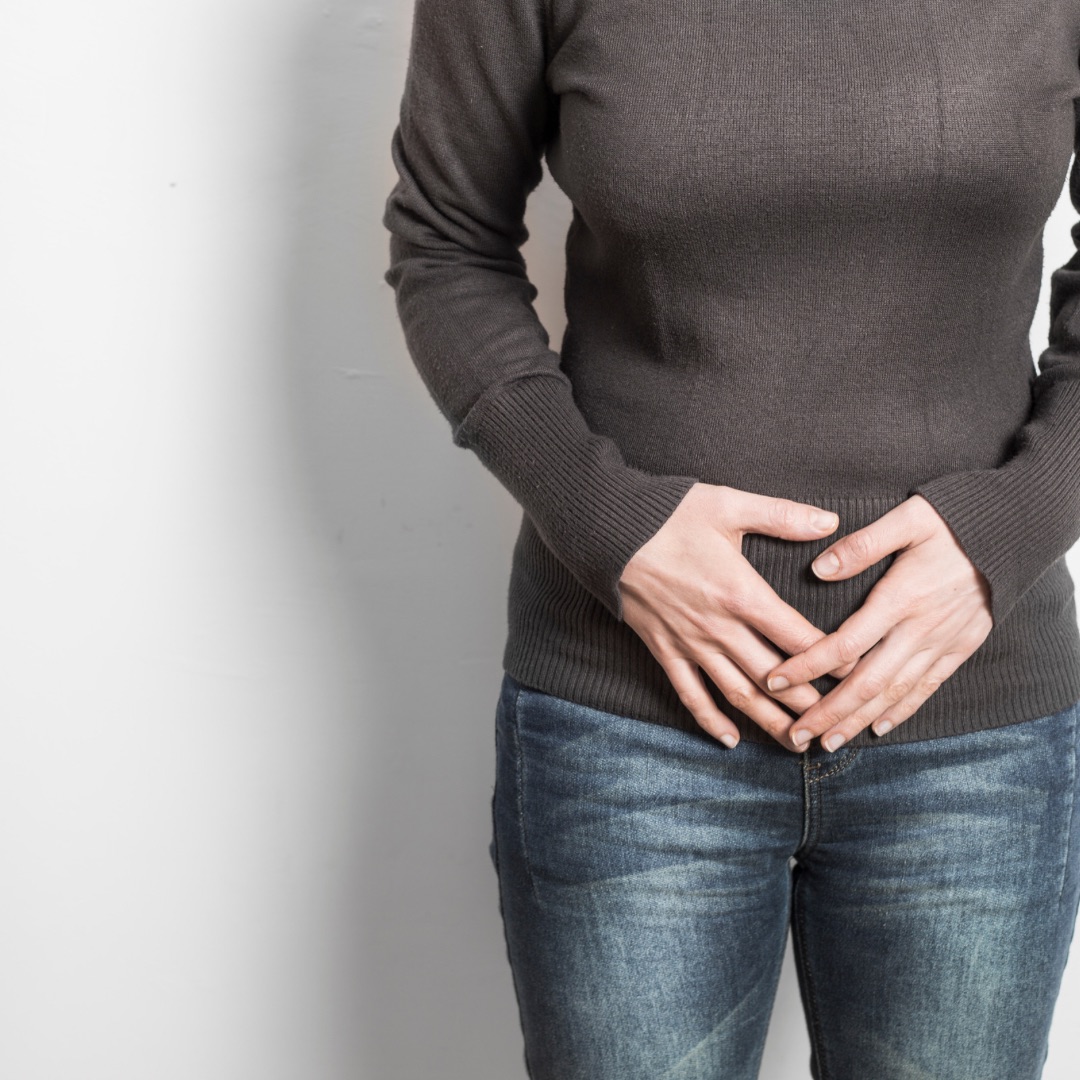
Woman experiencing period pain.

These pieces of the endometrium are then implanted outside of the uterus, and will bleed during subsequent menses. This means that there is menstrual blood outside of the uterus which the body sees as a foreign invader; the body doesn’t recognise it outside of the uterine cavity. This creates inflammation and pain, and triggers an auto-immune response.

This also can create an oestrogen-dominant state within the body, because of the excess oestrogenic tissue outside the uterine cavity.

Endometriosis doesn’t just create “period pains” and heavy bleeding. It also can have a huge impact on reproductive health, digestive health and bowel movements, urinary and bladder health, mental/emotional health. It can also cause fatigue, shortness of breath, nausea, vomiting, and pain.

In Traditional Chinese Medicine principles, we need to move Liver Qi Stagnation and clear Blood Stasis. This means that the Qi (energy) of the body is not free-flowing, which causes pain. It also means that if these continue to stagnate then the Blood cannot flow as it should and it gets locked down.

Depending on your particular symptoms and observations an acupuncture prescription will be created to help encourage the restoration of balance within the body.

If you prefer a Reflexology approach, then Reflexology Lymph Drainage could be the sequence of choice. This sequence specifically targets the lymphatic reflexes on the feet, with the intention of modulating the immune system (the white blood cells of the immune system live in the lymphatic fluid) and reducing the inflammatory effect on the body.

Some lifestyle interventions you can do to help yourself:

  • Do not wear tampons. These block the natural downward movement of menstrual blood.
  • Do not have intercourse during your period and the post-partum period.
  • Do less exercise during menses.
  • Avoid pelvic examinations and abdominal massage/pressure during menses.
  • Avoid exposure to cold water during menses.
  • Eat an anti-inflammatory diet, increasing your intake of phyto-nutrients, fruit and vegetables, nuts and seeds, and reducing refined sugars, alcohol, caffeine.
  • Remove all oestrogen-mimicking plastics and personal care products from your home. Anything from synthetic fragrances, plug-ins, candles, food stored/cooked in plastics, washing plastic tupperware/bowls/cups in really hot water and with a harsh detergent, switch to more environmentally friendly cleaning products and glass tupperware. See my other post on detoxing holistically.

For more information please see my other blog post.

Feel at the endo’ your rope with Endometriosis?

Woman experiencing menstrual cramping and heavy bleeding due to endometriosis.

Endometriosis is a condition where the cells of the endometrium (the uterine lining) are laid down outside of the uterus, usually within the pelvic cavity but sometimes also further afield, like in the nostril for example.

Often endometriosis is found on the ovaries, fallopian tubes, or even the bladder and bowel.

When menses occurs, the endometriosis tissue bleeds too. This means that menstrual blood is flowing into areas where it shouldn’t. The body’s immune system will kick in, and attack the endometriosis tissue, creating high levels of inflammation and pain.

Other symptoms might include pain while emptying bladder, during bowel movements, and during or after intimacy. IBS symptoms may also be present; diarrhoea or constipation.

Often endometriosis takes a long time to diagnose, because it really can only be seen via laparoscopy or MRI, although sometimes it can be detected via ultrasound. Initially pain and IBS symptoms will be dealt with via pain killers, and heavy periods are often managed via the oral contraceptive pill. Although these firefighting methods might help, they don’t get to the root of the issue.

High levels of inflammation can cause all sorts of havoc within the body. A disordered immune system will have an impact on thyroid, joints, musculo-skeletal health, intestinal and bowel health, sexual health and mental wellbeing. Higher levels of the wrong type of bacteria can be prolific within the microbiome. Oestrogen dominance can also prevail.

What are the answers?

If you suspect you have endometriosis its imperative that your symptoms are investigated further.

Anything you can do to modulate your immune system will help. Eating an anti-inflammatory diet and removing known stimulants and food triggers is important. Seek help from an Acupuncturist specialising in fertility or women’s health, or a reflexologist specialising in Reflexology Lymph Drainage.

If you are experiencing problems and would like to book in with me please get in touch.