Trying to Conceive? Why Natural Skincare Matters More Than You Think

When you are trying to conceive, it is natural to focus on diet, supplements and lifestyle. You might start tracking your cycle, supporting your hormones, or eating more nourishing, fertility-friendly foods. But one area that is often overlooked is the everyday products we apply to our skin, hair and body.

We are usually careful about what we eat, but do we pay the same attention to what we put on our skin? The skin is permeable and many ingredients in personal care products are absorbed into the bloodstream. This becomes particularly relevant in the preconception phase, when you are working to create the healthiest possible internal environment for pregnancy.

The Problem with Petrochemicals

A large number of mainstream skincare, body care and cosmetic products are based on petrochemicals. These are substances derived from petroleum and crude oil. They may be used to preserve products, make them feel silky, create foam or fragrance, or simply to bulk them out because they are cheap and widely available.

Petrochemicals can burden the liver and disrupt the endocrine system. Some are known or suspected endocrine-disrupting chemicals, which means they can interfere with your hormones. This is especially important during the delicate process of trying to conceive, when hormonal balance is essential for ovulation, implantation and embryo development.

Petrochemical-Derived Ingredients to Avoid

Here are some common ingredients that may appear in your skincare products, all of which are derived from petrochemicals and can impact fertility:

  • Paraffinum liquidum (mineral oil) Often used in moisturisers, this is a by-product of petroleum refining. It forms a film on the skin that may block pores and inhibit natural detoxification.
  • Propylene glycol Common in creams and serums to help retain moisture, but it can irritate the skin and increase the penetration of other chemicals.
  • Parabens (methylparaben, propylparaben, butylparaben) Used as preservatives, they mimic oestrogen in the body and are linked to hormonal disruption.
  • Phthalates Often hidden under the word “fragrance” or “parfum,” these are plasticisers that can disrupt reproductive hormones and have been associated with reduced fertility.
  • Sodium lauryl sulphate (SLS) and sodium laureth sulphate (SLES) These are foaming agents that can irritate the skin and are often contaminated with by-products of the petrochemical industry.
  • Synthetic fragrance or parfum A single artificial fragrance can contain dozens of undisclosed chemicals, many of which are derived from crude oil and may disrupt hormones or sensitise the skin.

The Preconception Window is Precious

In the months leading up to conception, your body is preparing in subtle but powerful ways. Detoxification, hormonal signalling, egg and sperm quality, and the uterine environment are all influenced by your internal balance. Reducing your toxic load by avoiding petrochemicals is a simple but significant step that supports these natural processes.

Nourish Yourself Naturally

Choosing natural personal care products is an act of self-love. Look for certified organic or naturally formulated options that are free from petroleum-derived ingredients, artificial fragrance and synthetic preservatives.

Brands such as Neal’s Yard Remedies focus on high-quality botanical ingredients that support rather than suppress your body’s natural rhythms. Begin with the products you use most often, such as body lotion, deodorant and facial care. These small shifts create long-term benefits, not only for fertility but for overall well-being.

Conclusion

Trying to conceive is a time to simplify, nourish and connect more deeply with yourself. By making thoughtful changes to the products you use every day, you support your body in doing what it was made to do. Natural personal care is not about being perfect. It is about creating space for your hormones to settle, your liver to work freely, and your skin to breathe.

You deserve to feel safe, supported and ready. Let nature take care of you, so you can take care of what matters most.
What is the difference between regular acupuncture and fertility acupuncture?

Fertility acupuncture is very similar to regular acupuncture in that it will still try to address common issues such as pain, digestive issues, headaches, hormonal imbalances etc. as part of the wider picture of a fertility patient. However it focuses a lot on reproductive health and treating the meridians that target this area of health. Common points are found on the wrists, ankles, feet, lower legs, abdomen and lower back.

Fertility acupuncture aims for the optimal internal environment for each particular patient. This means that it’s not a generic set of acupuncture points for everyone; each patient is treated as an individual. There is no one size fits all in any aspect of health.

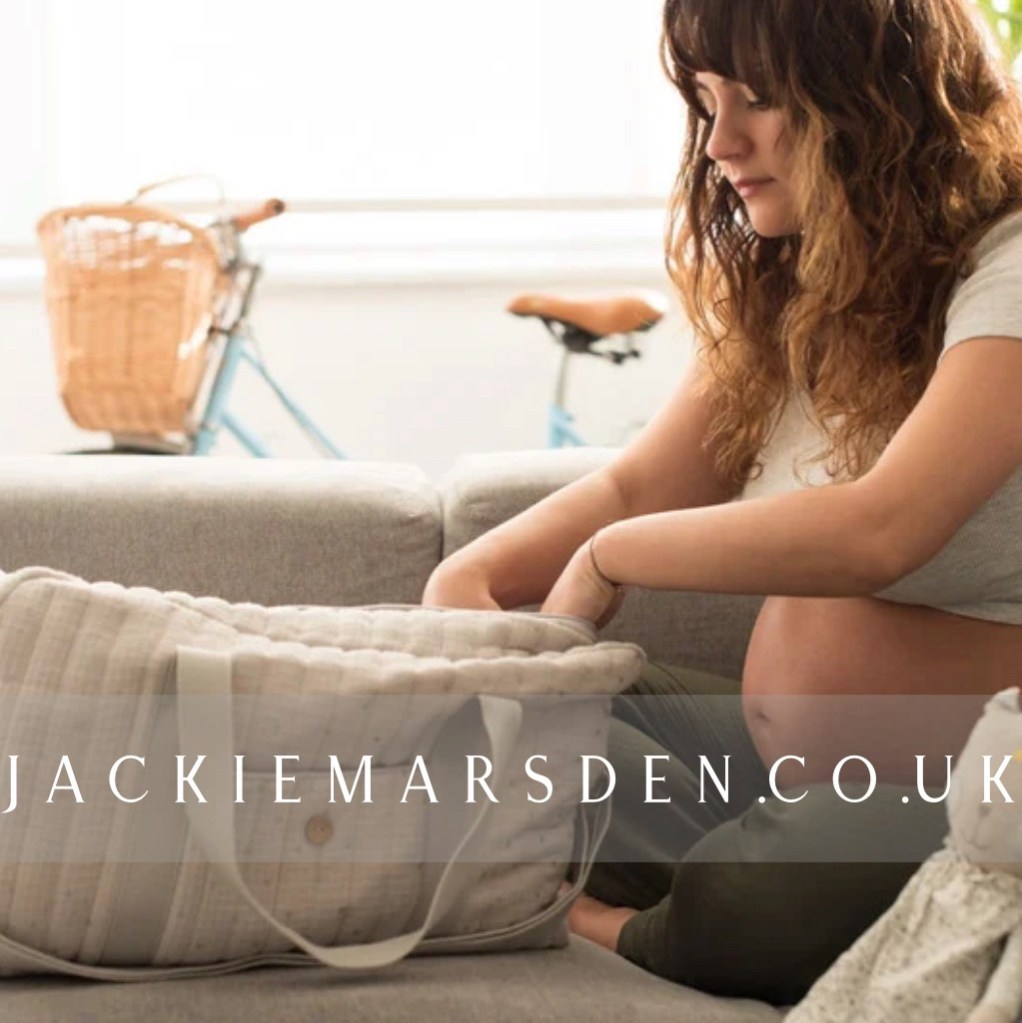
Happy pregnant woman preparing for her baby.

Fertility acupuncture tends to prioritise regulating the menstrual cycle, increasing blood flow to the ovaries and uterus, and regulating sperm health for the men. Stress management and building resilience to stress is also key when trying to conceive. This is something that is always prioritised in clinic.

When coming for fertility acupuncture it’s advisable to plan to come weekly for 3 months as this is the length of time it takes for an egg to be recruited, matured and finally ovulated. What we do now has an effect on those eggs ovulating (or collected via IVF) three months down the line.

During those 3 months we treat through the menstrual cycle, meaning that when you’re bleeding the focus is on good blood flow and emotional support as a period means no pregnancy. During the follicular phase the focus is on follicular development so good blood flow to the ovaries and uterine lining.

Fertility acupuncture works with each phase of assisted reproductive techniques such as IVF/ICSI to really enhance your response to the treatment you’re having, and manage the side effects of the medication.

When you work with a fertility acupuncturist, you gain insights and education from someone who has a regular practice in this area of health; someone who understands the process and what is involved. It’s not just needles; it’s fully rounded support.

If you would like to discuss your situation with me or would like to book in with the clinic in Warton, near Preston, Lancashire, please get in touch. Please read some of the success stories from the clinic here.

Why does IVF fail the first time?

Often the first round of IVF is used as a diagnostic. This means that the clinic will use a first round to assess where particular issues might be.

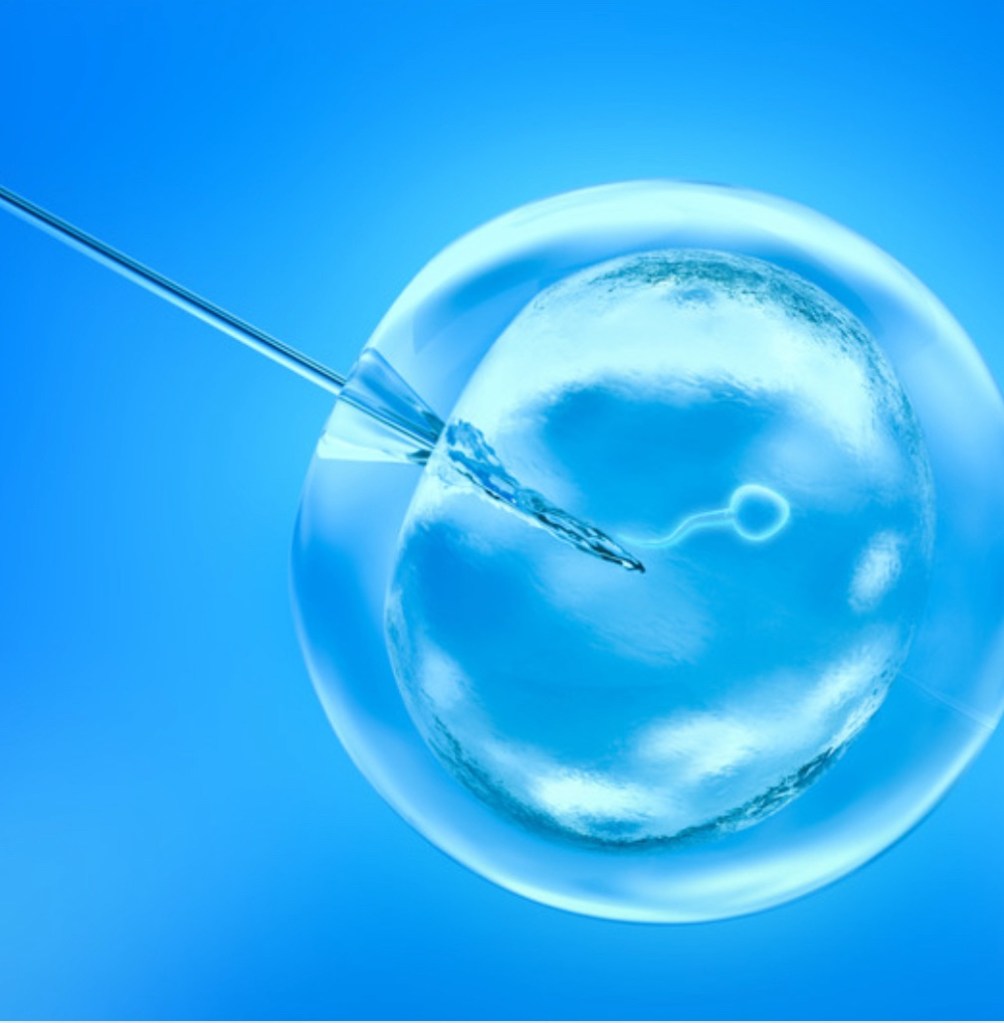
Human sperm being injected into an egg via ICSI.

For example, if the embryos are failing at day 3 then this can tell us that there is a problem with the health of the sperm.

Another example would be if the embryos are graded well but there is still no pregnancy then this could potentially mean there is an issue with the uterus, lining or progesterone receptivity.

Depending on where the procedure failed can give clues as to what is creating the unexplained infertility picture.

Unfortunately this first round is not something that should be taken lightly. Often it is a huge financial investment, not to mention the physical demands on the body, as well as the mental and emotional strain the process has on a couple.

When I work with clients I try to allow us at least 12 weeks to prepare for the next round of IVF. I take a very well-rounded consultation and full health intake to make sure we can drill down to where potential problems are sitting, and then increase the chances of a successful outcome.

Unfortunately I have seen scenarios where, had the couple not come for acupuncture, could have been a very different outcome. For example a couple who had all embryos fail at day 3 were told they needed donor eggs. No mention of improving the health of the sperm, which can be so easy to do with lifestyle and nutritional changes. Luckily this couple worked with me for 3 months and had a successful second cycle with their own eggs, and are now proud parents of a baby boy.

I’ve also seen clinics attempt a second cycle without really looking at the first one in detail. For example one client approached me after a failed fresh cycle. It was clear that there were microbiome issues and also a potential progesterone receptivity issue that we pushed to be checked during the second cycle, and the transfer was consequently halted due to low progesterone. Once we had this confirmed, a third cycle was successful after careful adjustment and monitoring of progesterone medication.

My training and continued learning and development gives me the tools to ask the right questions and see the infertility picture through a different lens. With access to the understanding of Chinese Medicine we can often see where problems lie early on.

If you are trying to conceive and need help, support or advice please get in touch.

IVF Acupuncture – Does it Work?

IVF acupuncture is acupuncture to support you through the IVF process.

Artistic interpretation of ovaries, uterus, cervix and vagina.

Ideally you will work with me for 3 months before your IVF treatment begins so that you are fully prepared for success.

Many clients come to me after they have had an unsuccessful first round. We look at the unsuccessful cycle and review what happened, and reflect upon what can be done differently next time.

It is such an emotionally challenging and stressful time for couples; having independent support is invaluable. It’s not simply needles; it is having someone to talk to and knowing someone has your back throughout the journey.

Acupuncture points are often chosen on the lower leg, ankles and feet, wrists and abdomen. But everyone is individual and points are chosen based on your particular pattern.

Acupuncture is powerful after egg collection to help your body heal from this procedure quickly so that you are ready and energised for the embryo transfer around 5 days later.

Getting 1-2 acupuncture treatments in after egg collection, and then one before embryo transfer can be really helpful.

A “baby bank” with details of couples who have trusted in me to support them through their fertility journeys is forthcoming. I am also preparing an e-book to help you set good foundations for your fertility journey.

PMS and it’s extremes

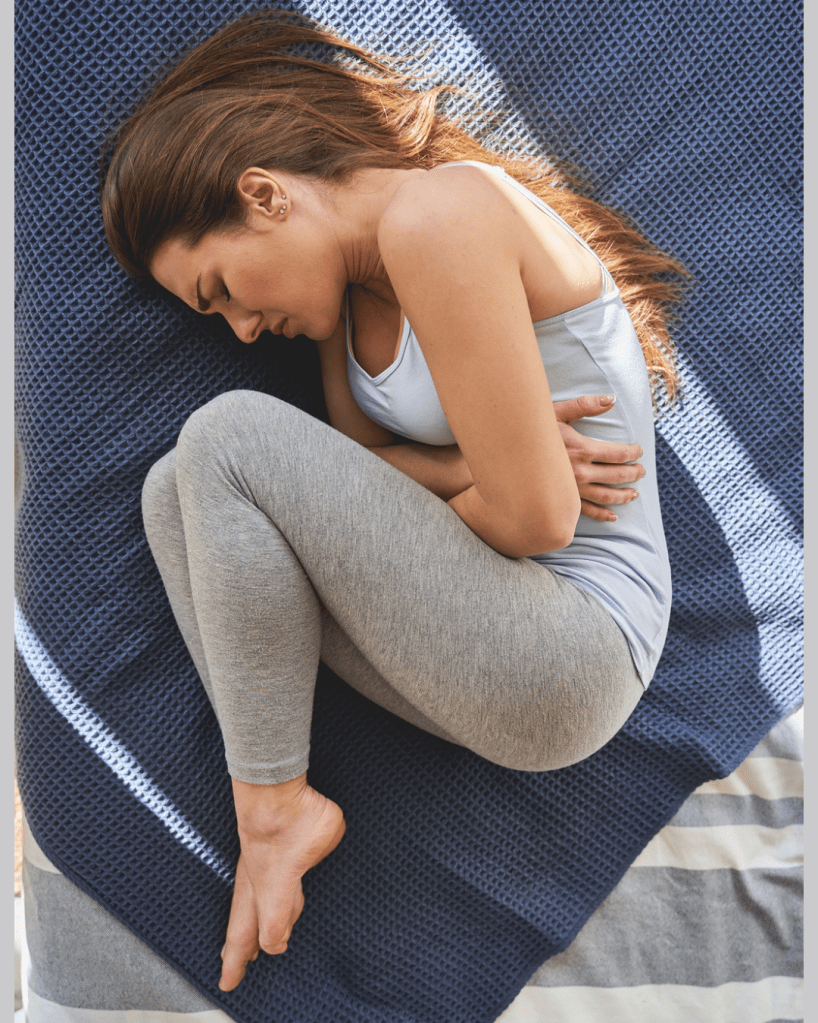
Woman experiencing severe menstrual cramping.

Approximately 90% of women suffer from Premenstrual Syndrome (PMS) at some point in their lives. During the few days leading up to menstruation can present with all sorts of symptoms such as bloating, irritability, frustration, anger, back ache, acne, abdominal cramping and pain, feeling tearful and emotional, as well as anxious and depressed.

Every cell in our body has a hormone receptor, so PMS can be attributed to over 200 symptoms as fluctuating hormone levels can have an impact everywhere in the body. These may be symptoms you only experience during the build up to your period, or perhaps these are symptoms you already experience, but are exacerbated at this time of your cycle.

In TCM terms, the luteal phase of your cycle e.g. the second half of your cycle between ovulation and your period, is when your body is at its most Yang. It is the part of the cycle where there is the most energy. Your body is gearing up for the possibility of a pregnancy with the surge of progesterone helping to really plump up the uterine lining for an embryo to implant. This surge of hormone and surge of energy can make us feel energised and productive, however as this starts to wane and drop just before our period starts, can suddenly leave us feeling depleted. The smooth flow of Qi is now not so smooth, as the progesterone starts to dip and body temperature starts to drop, our overall hormone levels can quickly leave us feeling grumpy and moody, and present us with physical symptoms too.

Switching between the Yang half of our cycle to the Yin half i.e. our menses, can create Qi stagnation. Getting to know your cycles by charting on a calendar, or Basal Body Temperature (BBT) charting can really help you to understand what is going on inside your body, help you identify symptoms and mood changes, and shed light onto areas that perhaps might need further attention.

For example, some people do not just suffer with “regular” PMS, but can experience more extreme versions such as Premenstrual Dysphoric Disorder (PMDD) and Premenstrual Exacerbation (PME). These extreme versions of PMS can be very difficult to deal with and manage on a monthly basis. “Experiencing PMDD can make it difficult to work, socialise and have healthy relationships. In some cases, it can also lead to suicidal thoughts.”1

Understanding your own personal cycle, the length of your follicular and luteal phases, and looking at your BBT throughout your cycle can open up possibilities to improve symptoms you’re experiencing. You might discover that phases of your cycle are too long/short or your temperature is not high enough or too high for example.

Supporting progesterone can help with PMS. To support progesterone production and your luteal phase, add more nutrient dense calories into your diet at this phase of your cycle. After all, your body is gearing up for a potential pregnancy, and some women find that they are hungrier at this time. Adding more protein, and looking at using adaptogens such as Ashwaganda to help manage stress and change. “Adaptogens are the umbrella term for fungi and plant-derived compounds that help the body adapt to stress.”[2] Magnesium is also said to help, as many of us are depleted in magnesium and it is involved in a myriad of daily bodily functions. Using a topical spray or adding in Epsom Salts to your evening bath are easy ways to get magnesium into your body. Magnesium often becomes low as a result of stress. [3]

Managing stress is also key to supporting your luteal phase. Booking in for regular reflexology or acupuncture can offer you the opportunity to feel relaxed and receive some downtime already scheduled into your diary. With acupuncture in particular, treating throughout the cycle can help you regulate and improve your quality of life. Vitamin B complex supports the body’s ability to handle stress. [3]

Understanding your cycle can help you to prepare and plan for what might be up ahead. Scheduling your diary around your cycle can help you to be more productive when you are feeling at your most energised, and avoid difficult social situations when you’re likely to be feeling fragile. You can also use your cycle to help with meal planning and snacking, and scheduling in more gentle exercise within the luteal phase.

If you would like fertility support in Lancashire and to book in with me please get in touch.

  1. https://www.mind.org.uk/information-support/types-of-mental-health-problems/premenstrual-dysphoric-disorder-pmdd/about-pmdd/
  2. https://www.parsleyhealth.com/blog/what-are-adaptogens/
  3. https://webfmd.com/hpa-axis-dysfunction-treatment/

Let’s talk about periods

Did you know that a true menstrual period only comes if ovulation occurred. This means that if you are on the oral contraceptive pill (OCP) and have “periods”, these are really withdrawal bleeds and not true menstrual periods. This is because the OCP prevents you from ovulating.

If you are trying to conceive then it is wise to give your body time to readjust from stopping OCP and get back to a normal cycle.

Period Flow

The flow of your period should be tracked on the day that menstrual blood starts flowing properly (this would be marked as day 1). Often light spotting can occur beforehand so only class day 1 of your period when it gets going properly.

A normal, healthy period would be 3-5 days of bleeding and have a clear end. A regular flow is normal.

Heavy flow and flooding are something to be flagged. This would be more than 5-7 days of bleeding, or if you are having to change sanitary products more than every 2-3 hours. These issues might indicate issues such as thyroid imbalances, fibroid, low iron.

Likewise, very light pink blood for less than 3 days is also something to be flagged. This might be a sign of low oestrogen levels.

Period Pain

Woman feeling emotional and in pain during menstruation.

Rate your pain levels on a scale of 0-10. Mild cramping when your period starts is normal. Anything more should be flagged. Does it stop you from going to work? Do you need to take pain killers? Do you need to use a hot water bottle? Anything more than a 1 on the scale indicates a red flag. Where is the pain in your body? e.g. headaches, abdominal pain, breast pain, lower-back pain? These can all be clues and could indicate imbalances that can be addressed.

Period Frequency

Cycle length (day 1 to the next day 1) should be 24-35 days in length. There should be a clear start and end to the period.

If you have spotting before or afterwards this is something to be noted. Similarly, the colour of the blood should be a healthy red colour with no clots. If it is pink, dark red, purple, or black, then these are all flags to be noted.

Acupuncture

After discussing all of the above in a consultation, acupuncture can help rebalance the body with certain point prescriptions based on your symptoms. Alongside regular acupuncture, lifestyle changes and wellbeing techniques can also be adopted to optimise health and chances of conception.

There are lots of things to think about and consider with fertility awareness. Education is key and having knowledgeable support from an acupuncturist or reflexologist can be invaluable.

If you are looking for fertility support in Lancashire please get in touch.

The Internal Seasons

I’ve had this blog idea on my “to-do” list for ages, but I’ve not been inspired to write it until today. Do you ever have that? Where something is there to be done but you’re just not inspired to do it until one day, ping! the inspiration comes.

This blog is about outlining the menstrual cycle from a TCM (Traditional Chinese Medicine) point of view, and how are cycles are similar to the seasons. By becoming more aware of our internal cycles we can really look after ourselves in understanding when times of rest, nourishment and calm are needed (Winter) and when times of high energy can bring us productivity and rejuvenation (Spring and Summer). And those times of preparation (Autumn). A bringing together of the physical and the mental/emotional.

However I feel that there is more to this blog than I originally thought. This is because it is becoming more and more apparent to me that we are not just similar to the seasons, we ARE the seasons. We don’t just live here on this planet, we ARE part of the fabric of creation itself. There is no coincidence that our cycles move in time with the moon; that the tides are pushed and pulled by the forces of the lunar cycle, that so many animals, sea creatures and insects follow the phases of the moon for their own reproduction. Everything in nature includes us. There is no separation. When we talk about “connecting with nature” I think what we are actually doing is “reconnecting with who we are”. We are nature. We don’t walk in nature, or spend time in nature; we ARE nature. This is why these times make us feel so good, because there is a sense of coming home, of becoming one, of belonging, of lessening the grips of the idea that we are seperate from the world and from each other. I find I have more and more of these moments of inner knowing, connectedness and understanding of life, and this is the first time I have been able to grab it and get it down into words.

When we discuss the theory of TCM we often mention the seasons and the weather when we talk about particular energies and meridians. TCM philosophy really harnesses the idea of connectedness with our environment and with nature. I really appreciate this concept in my own understandings of life and of health and wellbeing. I also like the idea of likening the menstrual cycle to the ebb and flow of the tides; the tides of Yin and Yang. Understanding these tides and the transitional points between the two can offer huge benefits of understanding to support one’s own monthly cycles:

Phase 1 (days 1-5) is about Blood as we menstruate, it is a restful Yin phase focusing on nourishing ourselves and taking care of ourselves. Honour this time and avoid sexual intercourse and strenuous exercise. The external pathogenic factor of Cold can penetrate particularly at this time so take note of this in the activities you pursue. Remember that Blood is flowing downwards so sanitary items such as tampons obstruct this downward movement. Better to use pads or a menstrual cup.

Phase 2 (days 6-13) is focusing on Yin as increased amounts of oestrogen cause the lining of the uterus to thicken. Eating protein and mineral-rich foods in this phase will help to replenish Blood and Yin. This phase is building towards Yang.

Day 14 is when ovulation happens, and some cramping or spotting can occur as the body prepares to move from Yin to Yang. Get to know your cycles and allow your body and mind space to transition.

Phase 3 (days 15-21) is very Yang focussed; the body is building and nourishing the uterus ready for implantation if fertilization occurs, or shedding the lining if it doesn’t. This segment of the cycle is very energetic. Remember to support yourself during this energetic time with nutrient dense foods and adequate hydration.

Phase 4 (days 22-28) focusses on Qi. As oestrogen levels drop, serotonin levels can also drop and this can affect our mood and emotions. PMS can occur, tears, frustration, anger, as well as physical symptoms such as bloating or breast tenderness. All of these symptoms are based on the lack of free flowing Qi and result in Qi stagnation. So this segment of the cycle it is important to eat clean, take gentle exercise and avoid stimulants in order to support the Liver energy to keep Qi gently flowing freely. It might be a time where you might want to reach for those sugary snacks, so try to substitute those with better choices. We can also choose to eat warming foods because Qi needs heat to keep the fluids moving. Avoiding cold foods and drinks, and exposure to cold weather, swimming and sitting on cold surfaces can all help to support this phase of the cycle.

If you are looking for fertility support in Lancashire please get in touch.

Acupuncture for Infertility

Acupuncture is a tried and tested system of traditional medicine, which has been used in China and other eastern cultures for thousands of years to restore, promote and maintain good health.

Research has found that acupuncture treatments can have a positive effect on those trying for a baby and can actually aid the conception process.

Fertility focused acupuncture treatments can help to increase blood flow to the reproductive organs, balance hormonal levels, regulate the menstrual cycle and help improve the lining of the uterus and quality of eggs released. Additionally, conditions such as polycystic ovaries and endometriosis have also been shown to improve with acupuncture.

Benefits to male fertility have also been helped by acupuncture with positive effects on sperm count, sperm morphology and mobility.

Some of the positive effects of acupuncture in fertility treatments are thought to include:

  • regulates the menstrual cycle and promotes regular ovulation
  • regulates the hormones to produce larger numbers of follicles
  • improves the functions of ovaries to produce better quality eggs
  • enhances the vitality of sperm
  • relieves the side effects of drugs used in IVF
  • increases the thickness of the uterine lining so to encourage successful implantation
  • reduces the chance of miscarriage

It is known that stress has an adverse effect on the fertility hormones. Acupuncture can be used to support the process, thus enabling couples to cope with any stress and anxieties they may experience during this time. The acupuncture treatment can help promote a calm, positive and relaxed frame of mind which can bring a more successful outcome for conception.

If you are looking for fertility support in Lancashire please get in touch.

Information for this blog has been taken from British Acupuncture Council

Jackie Marsden MAR is a qualified reflexologist and clinical acupuncturist, working from Elder Cottage Clinic, Warton, nr. Preston.