PMS and it’s extremes

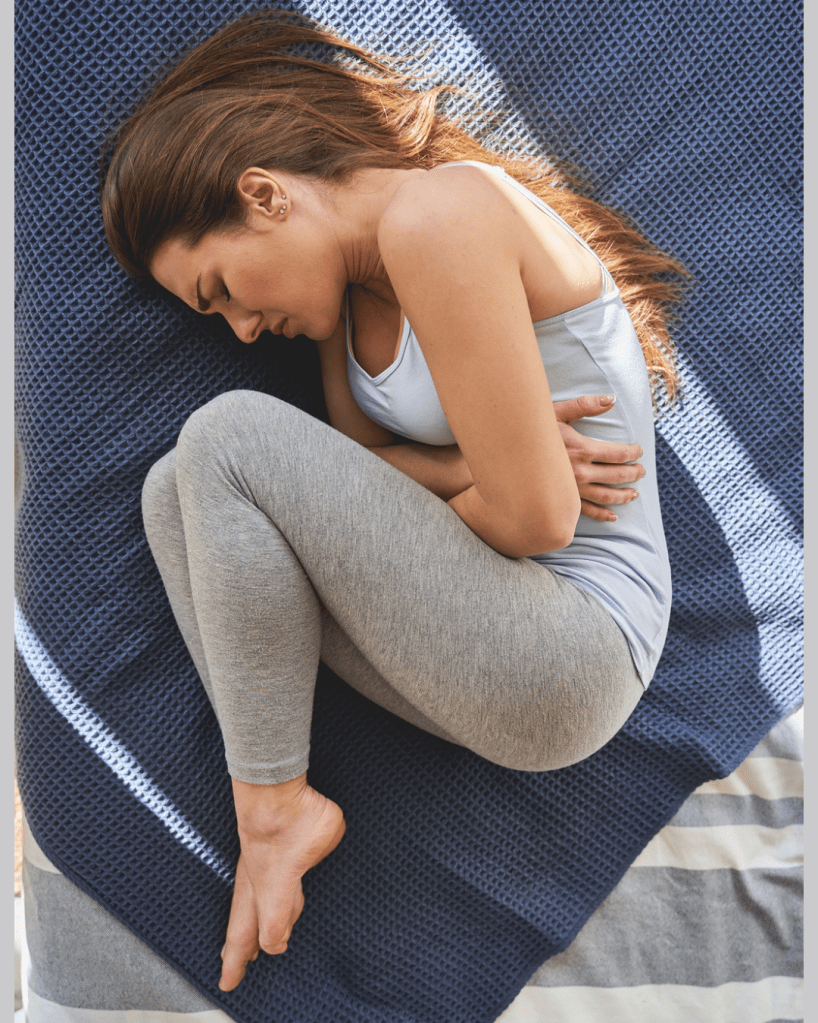
Woman experiencing severe menstrual cramping.

Approximately 90% of women suffer from Premenstrual Syndrome (PMS) at some point in their lives. During the few days leading up to menstruation can present with all sorts of symptoms such as bloating, irritability, frustration, anger, back ache, acne, abdominal cramping and pain, feeling tearful and emotional, as well as anxious and depressed.

Every cell in our body has a hormone receptor, so PMS can be attributed to over 200 symptoms as fluctuating hormone levels can have an impact everywhere in the body. These may be symptoms you only experience during the build up to your period, or perhaps these are symptoms you already experience, but are exacerbated at this time of your cycle.

In TCM terms, the luteal phase of your cycle e.g. the second half of your cycle between ovulation and your period, is when your body is at its most Yang. It is the part of the cycle where there is the most energy. Your body is gearing up for the possibility of a pregnancy with the surge of progesterone helping to really plump up the uterine lining for an embryo to implant. This surge of hormone and surge of energy can make us feel energised and productive, however as this starts to wane and drop just before our period starts, can suddenly leave us feeling depleted. The smooth flow of Qi is now not so smooth, as the progesterone starts to dip and body temperature starts to drop, our overall hormone levels can quickly leave us feeling grumpy and moody, and present us with physical symptoms too.

Switching between the Yang half of our cycle to the Yin half i.e. our menses, can create Qi stagnation. Getting to know your cycles by charting on a calendar, or Basal Body Temperature (BBT) charting can really help you to understand what is going on inside your body, help you identify symptoms and mood changes, and shed light onto areas that perhaps might need further attention.

For example, some people do not just suffer with “regular” PMS, but can experience more extreme versions such as Premenstrual Dysphoric Disorder (PMDD) and Premenstrual Exacerbation (PME). These extreme versions of PMS can be very difficult to deal with and manage on a monthly basis. “Experiencing PMDD can make it difficult to work, socialise and have healthy relationships. In some cases, it can also lead to suicidal thoughts.”1

Understanding your own personal cycle, the length of your follicular and luteal phases, and looking at your BBT throughout your cycle can open up possibilities to improve symptoms you’re experiencing. You might discover that phases of your cycle are too long/short or your temperature is not high enough or too high for example.

Supporting progesterone can help with PMS. To support progesterone production and your luteal phase, add more nutrient dense calories into your diet at this phase of your cycle. After all, your body is gearing up for a potential pregnancy, and some women find that they are hungrier at this time. Adding more protein, and looking at using adaptogens such as Ashwaganda to help manage stress and change. “Adaptogens are the umbrella term for fungi and plant-derived compounds that help the body adapt to stress.”[2] Magnesium is also said to help, as many of us are depleted in magnesium and it is involved in a myriad of daily bodily functions. Using a topical spray or adding in Epsom Salts to your evening bath are easy ways to get magnesium into your body. Magnesium often becomes low as a result of stress. [3]

Managing stress is also key to supporting your luteal phase. Booking in for regular reflexology or acupuncture can offer you the opportunity to feel relaxed and receive some downtime already scheduled into your diary. With acupuncture in particular, treating throughout the cycle can help you regulate and improve your quality of life. Vitamin B complex supports the body’s ability to handle stress. [3]

Understanding your cycle can help you to prepare and plan for what might be up ahead. Scheduling your diary around your cycle can help you to be more productive when you are feeling at your most energised, and avoid difficult social situations when you’re likely to be feeling fragile. You can also use your cycle to help with meal planning and snacking, and scheduling in more gentle exercise within the luteal phase.

If you would like fertility support in Lancashire and to book in with me please get in touch.

  1. https://www.mind.org.uk/information-support/types-of-mental-health-problems/premenstrual-dysphoric-disorder-pmdd/about-pmdd/
  2. https://www.parsleyhealth.com/blog/what-are-adaptogens/
  3. https://webfmd.com/hpa-axis-dysfunction-treatment/

The Dirty Truth about Tampons (and pads)

Did you know that sanitary products are categorised as “medical devices”. “So what?” you might say. This categorisation means that manufacturers are exempt from listing the ingredients used in producing tampons and sanitary pads.

Are they really safe?

The exemption from listing the ingredients is worrying for a number of reasons. The skin around our vagina, and the vaginal tissue itself is highly vascular, leaving it permeable to a wide range of compounds. In other words,  any chemical or toxin is absorbed at a higher rate and will quite possibly enter the blood stream. Chemicals or toxins entering the body via the skin by-pass the filters of the digestive system, and thus are potentially a greater danger to our health. (1)

Other personal care products such as wipes, shampoos, washes etc. are regulated as cosmetics and thus must list all ingredients used. But shouldn’t the ingredients of tampons and sanitary pads be disclosed too? I believe that they should so that women can make informed choices on what they put on their skin and what they place inside their bodies.

Undisclosed substances contained in tampons, sanitary towels and wipes, such as preservatives, pesticides, fragrances and dyes could have possible and serious health effects emerging in the form of an allergic rash, genital irritation, the onset of asthma and an increased risk of cancer.(2) There is also a question mark over their impact on fertility.

The cost to our planet

Tampons and sanitary pads create huge waste, which is an ever increasing problem for our planet.

On average a woman will use 11,000 tampons or pads in their lifetime (3). Each one takes years to degrade. This figure is quite staggering – but then – think about how many women are on the planet and how many women to come? We are needlessly creating mountains of waste. We need to do something different.

The personal cost – what is it really?

On average a woman uses around 22 sanitary items per cycle, and spends around £90 per year. (4) Multiply this by 40 years of menstruation, each woman can spend on average £3600 on tampons and pads. Compare this to a Mooncup which cost £23.50 and will last years and years. (3)

Mooncup – what’s that?

The Mooncup is a reusable menstrual cup, around two inches long and made from soft medical grade silicone. It is worn internally a lot lower than a tampon but, while tampons and pads absorb menstrual fluid, the Mooncup collects it. This means it doesn’t cause dryness or irritation, and also that it collects far more (three times as much as a tampon!). Because the Mooncup is reusable, you only need one so it saves you money and helps the environment, too. (3)

MC-A-BG

The Mooncup is designed to be folded and inserted into the vagina, then removed, rinsed and reinserted up to every 8 hours. A light seal is formed with your vaginal walls, allowing menstrual fluid to pass into the Mooncup without leakage or odour. This seal is released for removal, allowing you to empty the contents, rinse or wipe and reinsert. Comfortable, convenient and safe: the Mooncup can be used overnight and when travelling, swimming or exercising. (3)

What next?

Buy a Mooncup, start using it, and never have to buy, use or dispose of tampons and pads ever again!

Note the links to Mooncup are my affiliate links. I am only affiliated to brands/products that I use myself, and wholeheartedly believe in.

If you are looking for fertility support in Lancashire please get in touch.

References

(1) http://articles.mercola.com/sites/articles/archive/2013/05/22/feminine-hygiene-products.aspx

(2) http://www.dailymail.co.uk/femail/article-2528510/Are-tampons-toxic-How-feminine-care-products-contain-undisclosed-ingredients-linked-allergic-rashes-asthma-cancer.html

(3) http://www.mooncup.co.uk/wc.php?u=3243

(4) http://www.theguardian.com/environment/ethicallivingblog/2009/aug/17/eco-friendly-periods-mooncup

Jackie Marsden MAR is a qualified reflexologist and independent consultant (Team Leader) for Neal’s Yard Remedies Organic. Jackie leads and mentors a growing team of consultants (many of whom are therapists integrating organic products into their existing businesses) via the NYRO social selling channel, holding regular team meetings, one-to-one coaching via phone and facetime, and a closed facebook group. All views are my own.

mooncup_bannerindependent-consultant-long-logoGrowyourbusiness


