How does reflexology work?

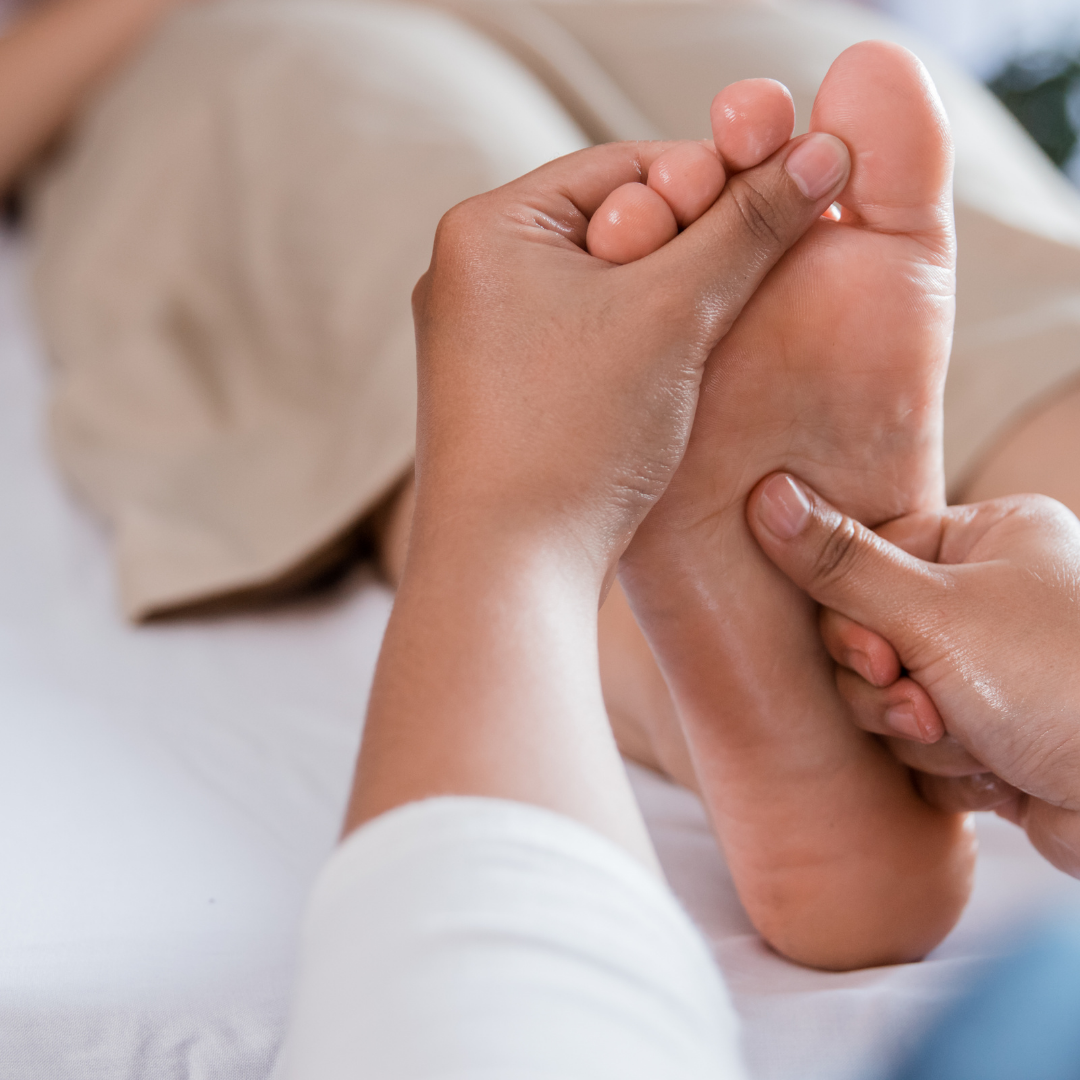
Reflexologist touching the solar plexus reflex point on a woman’s foot.

Reflexology is based on the philosophy that the entire body is mapped onto the feet. However, this doesn’t explain simply, how touching the feet can affect the body in such a profound way.

The feet are a sensory-rich area of the body. We have around 7000 nerve endings in the feet. By stimulating these nerve endings through the power of touch, a reflexologist sends signals from the feet up to the brain, via the spinal cord, and thus encompassing the whole body. A typical reflexology session lasts around 45 minutes, so imagine how many of these signals are sent, received and processed throughout that period of time!

These neurological pathways are opened up and in some ways reawakened, particularly if the client tends to keep feet covered in socks and shoes. This is a lot of stimulation for the brain to receive, and therefore creates a profound state of relaxation as the body relaxes into the sensation of gentle touch.

It is generally accepted that gentle touch stimulates the production of oxytocin, our love hormone, helping us emotionally. And relaxation switches on the parasympathetic nervous system (rest and digest), which is the Yin to the Yang of the sympathetic nervous system (fight and flight).

Ultimately the power of touch, stimulating the sensory-rich feet, over the period of time, creates profound relaxation, promotes much healing and a return to homeostasis.

Shine a Light on Lipoedema

Lipoedema is a chronic disorder of the connective tissue and fat tissue, mainly affecting women. It is thought to be a genetic and inherited disease, but can skip a generation.

The onset of Lipoedema is not well understood, however it is usually via a hormonal trigger, either at puberty, after pregnancy or menopause. Once triggered, there is an abnormal laying down of adipose tissue. This usually happens around the hips, legs, buttocks, knees (although sometimes it can be found in the arms). Hands and feet are usually unaffected. The fat deposited is usually evenly balanced between each side of the body, and creates a dimpled “orange peel” appearance.

During stressful times, a “growth spurt” can happen and another laying down of additional adipose tissue happens.

Lipoedema can create difficulties in walking and general movement, finding clothes to fit comfortably, and mental/emotional trauma. The areas affected can be painful and throb; feeling heavy and touch-sensitive. Bruising can happen easily, and the condition of the skin can deteriorate if not looked after properly.

The adnormal amounts of adipose tissue can start to block the lymphatic system, creating additional swelling of lymph fluid. This condition is sometimes referred to lipo-lymphoedema.

Reflexologist holding the pituitary reflex point on the big toe.

The community of Reflexology Lymph Drainage practitioners has seen much success in managing this condition with the techniques of reflexology. Patients report that their legs feel “empty” after a treatment which lasts a few days. Patients have also experienced the fat tissue starting to soften, creating a normal “wobble” instead of a solid, thickened, unmoveable texture. Pitting indendation starts to reduce considerably in some patients.

As a reflexologist I have lots of techniques in my toolbox; endocrine work is also be applied to the reflexes to address and manage the hormonal aspect of this condition (where appropriate).

Short demo on adding in the leg reflex to the RLD sequence. This additional technique is essential in treating lipoedema patients.

If you are interested in trying Reflexology Lymph Drainage to help with Lipoedema or Lymphoedema please get in touch via phone/text.

Lymphoedema – Lighten the Load

Lymphoedema can be a debilitating condition where the lymphatic system is compromised and thus a build up of fluid creates swelling in an area of the body.

Primary Lymphoedema is thought to be hereditary. Fluid starts to pool at the base of a limb due to the inadequacy of the lymphatic system’s ability to drain fluid.

Woman wearing compression bandage for lymphoedema.

Secondary Lymphoedema can appear after an operation, or after an accident or injury. The cause of fluid build up can be due to the lymphatic tissue becoming damaged, or removed (for example an axillary clearance).

Swelling can make that area of the body painful, heavy, tight and restricted. The tissues of the skin can become very uncomfortable and delicate, prone to damage and infection. It can be difficult to find clothes to fit, and can create mental/emotional instability.

The treatment for lymphoedema is compression, exercise/movement and good skincare. Sometimes Manual Lymph Drainage is offered which is a massage technique which re-reoutes the fluid away from the affected site.

Reflexology Lymph Drainage is a technique based on the principles of Manul Lymph Drainage, but transposed onto the reflexes of the feet or hands.

The beauty of this technique is that it is completely non-invasive; patients do not need to get undressed. It can be done in-clinic via the feet, or remotely via a taught self-help sequence carried out on the hands.

Much research is still being carried out around this technique; however what the reflexology community have seen up to this date is that the technique and sequence supports the theory of reflexology. By isolating and working the lymphatic reflexes of the feet or hands, has an effect on the body. As a community, we have been witness to some incredibly rewarding results for our clients.

Please contact me to have an initial discussion and to book in.